


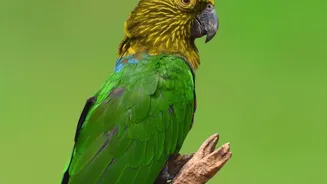
The Rare Gift of Vocal Learning
At the heart of a parrot's ability to speak is a skill called vocal learning. This is the ability to modify vocal output based on auditory experience—in simple terms, learning to make new sounds by listening to and imitating others. Most animals can't
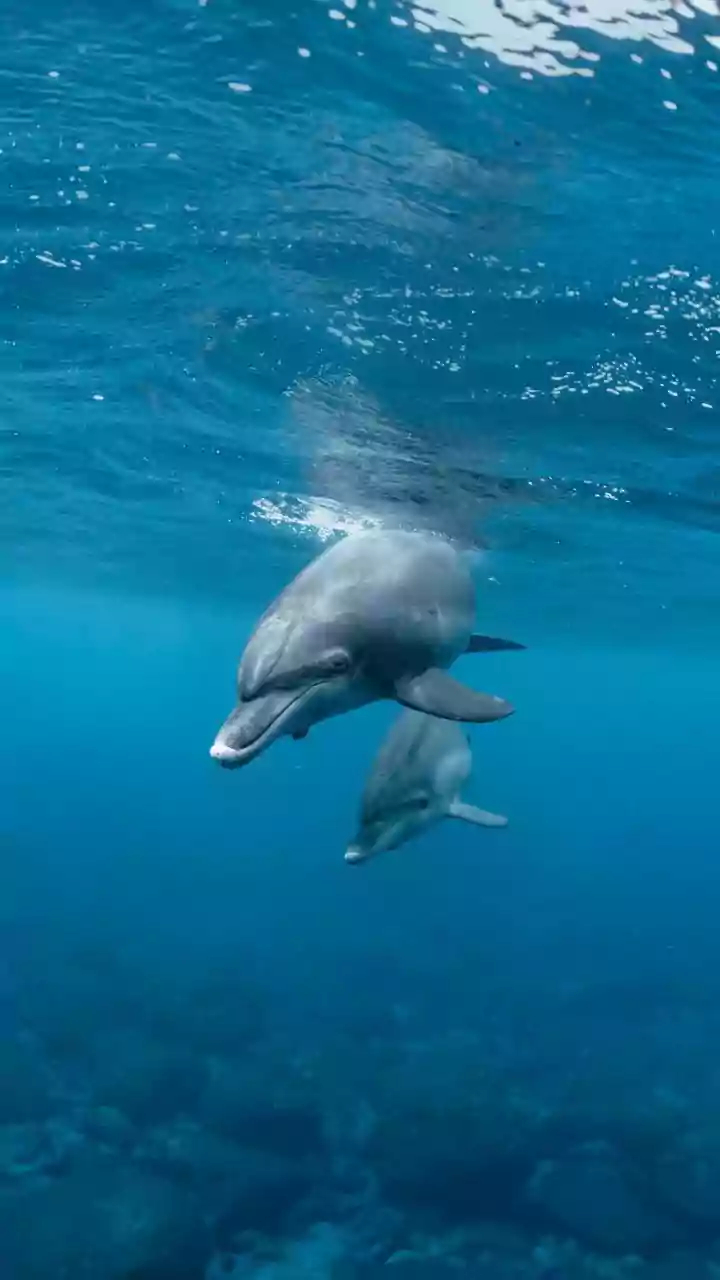
do this. A dog, for instance, can learn to understand the word 'sit', but it can't learn to say the word 'sit'; it can only bark. That's because its vocalizations are largely innate. Vocal learning is a rare trait, found in only a few animal groups: humans, bats, cetaceans (dolphins and whales), elephants, and three specific groups of birds—songbirds, hummingbirds, and, of course, parrots. This ability is an example of convergent evolution, meaning it evolved independently in these different lineages, highlighting its special nature.
A Uniquely Wired Brain
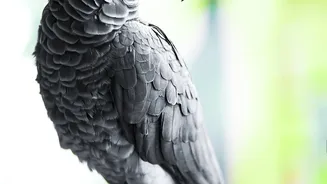
So why are parrots such exceptional mimics, even compared to other vocal-learning birds? The secret lies in their unique brain structure. Scientists have discovered that parrot brains possess a specialized 'song system' that is fundamentally different from that of other birds. While songbirds also have vocal learning centers, research led by neuroscientist Erich Jarvis found that parrots have a unique duplicated system: an inner 'core' and an outer 'shell' region. This shell structure, found only in parrots, is believed to give them their enhanced ability to imitate a wide range of sounds. Studies have shown that parrot species known for being better talkers, like the African Grey, tend to have larger and more defined shell regions. These brain areas for vocal learning are nested within regions that control motor skills, which might also explain why some parrots can even learn to dance to a beat.
How the Sounds Are Made
Unlike humans, who use vocal cords in the larynx, parrots produce sound using an organ called the syrinx. This organ is located at the base of the windpipe where it splits into the lungs. By controlling the muscles around the syrinx, a parrot can manipulate the flow of air to create vibrations and produce a wide variety of sounds. They then use their thick, muscular tongue and beak to shape these raw sounds into the clear words and phrases we recognize as speech. The mechanics are completely different from our own, yet the result can be astonishingly similar.
More Than Just Mimicry?
The question everyone asks is whether parrots actually understand what they're saying. The answer is complex, but evidence suggests it can be more than mindless imitation. Parrots are highly social animals that, in the wild, use vocalizations to bond and communicate with their flock. When living with humans, they see their owners as part of their flock and use mimicry as a way to interact and bond. This social drive is key. Furthermore, studies have shown that some parrots can learn to associate words with their meanings. The most famous example is Alex, an African Grey parrot studied by Dr. Irene Pepperberg for 30 years. Alex could identify objects, colours, shapes, and quantities, and use words to communicate his wants. While not all parrots reach Alex's level, many learn to use words in the correct context, such as saying 'hello' when someone enters a room or requesting a specific food. This shows a level of contextual understanding that goes far beyond simple recording and playback.