




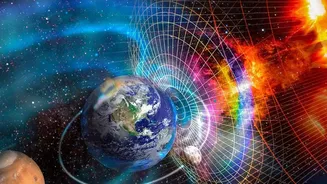
The Sun’s Constant, Gusty Breath
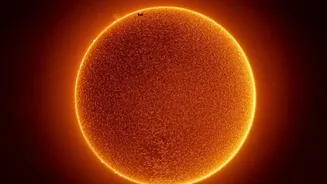
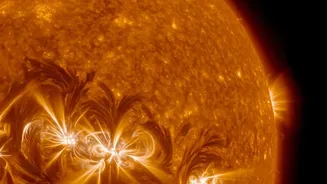
Our sun is more than just a source of light and heat; it’s an active, dynamic star that constantly releases a stream of charged particles called the solar wind. This plasma, a superheated gas of protons and electrons, flows outward in all directions,
bathing all the planets in our solar system. This wind isn't a gentle breeze. It travels at incredible speeds, often between 400 and 800 kilometers per second. Sometimes, massive solar events like coronal mass ejections (CMEs) can unleash powerful gusts, creating what we call space weather. This isn't weather you can feel on your skin, but its effects are very real for our technology-dependent world.
A Cosmic Obstacle Course
The journey from the sun to Earth, about 150 million kilometers, is not a simple straight line for the solar wind. As it travels, it interacts with magnetic fields and other particles, causing it to change in speed, density, and temperature. This evolution means that what leaves the sun is not exactly what arrives at Earth. Predicting the exact impact of a solar gust has been a major challenge for scientists. Existing spacecraft provide valuable data, but they often give us only about 30 to 60 minutes of warning before a major solar event hits our planet's magnetic field. That’s like knowing a storm is coming but only seeing the full forecast moments before the rain starts.
Meet Our New Space Weather Forecaster: IMAP
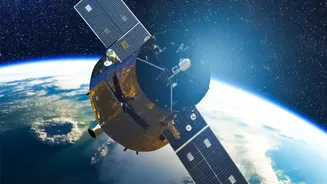
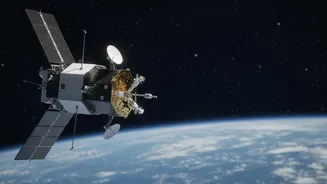
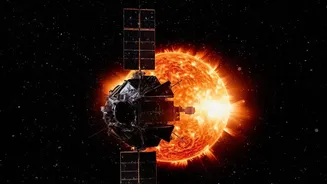
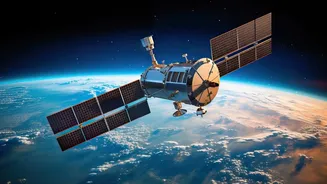
This is where NASA's Interstellar Mapping and Acceleration Probe (IMAP) comes in. Launched in 2025, IMAP is our new eye in the sky, strategically positioned about 1.5 million kilometers from Earth, directly in the direction of the sun. This location, known as the first Lagrange point (L1), allows IMAP to constantly sample the solar wind before it gets close to our planet. The mission has two main goals: to map the boundary of our solar system, and to provide critical, real-time observations of the solar wind. It's equipped with a suite of ten advanced instruments designed to measure the properties of the particles streaming from the sun with incredible detail.
The Power of 'Near-Real-Time' Data
The truly revolutionary aspect of IMAP is its ability to provide 'near-real-time' data through a system called I-ALiRT (IMAP Active Link for Real-Time). This system continuously beams back crucial information, not just with a better warning time, but with a higher level of detail than ever before. Scientists can now see the composition and structure of the solar wind more clearly, allowing them to create much more accurate models of how it will interact with Earth's magnetic field. This is the difference between simply saying 'it will rain' and being able to predict exactly when, where, and how heavily the downpour will occur.
Why This Matters for India
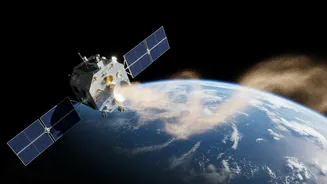
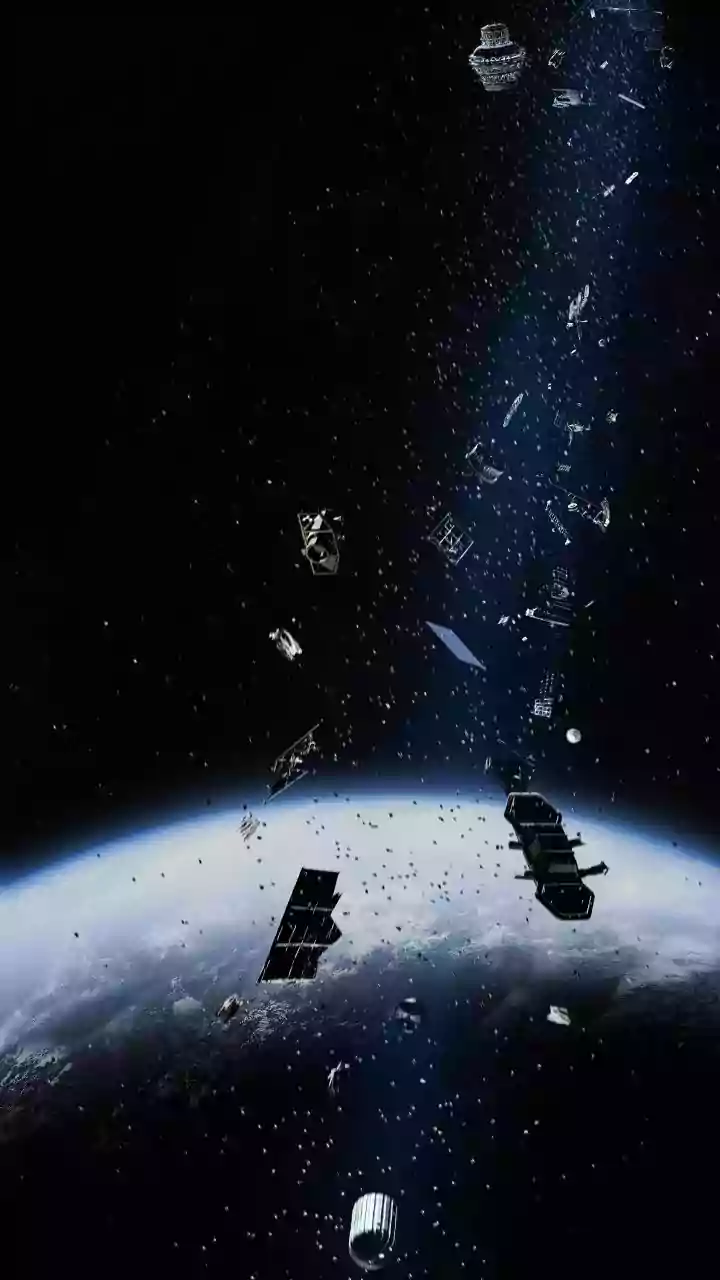
For a nation like India, which is rapidly expanding its technological infrastructure, better space weather forecasting is not just a scientific curiosity; it's a national necessity. Severe space weather can disrupt GPS signals, which are vital for everything from aviation to navigation apps. It can damage our growing fleet of communication and observation satellites, including those operated by ISRO. Furthermore, intense geomagnetic storms can induce powerful electrical currents in our power grids, potentially leading to widespread blackouts that could cripple the economy. By providing more accurate and timely warnings, the data from IMAP allows operators to take protective measures, such as temporarily shutting down sensitive satellite components or adjusting power grid loads, safeguarding India's critical assets.