
A Discovery Unlike Before
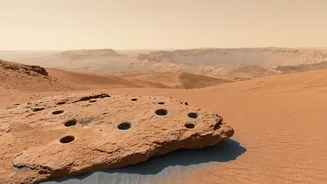
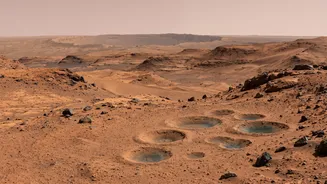
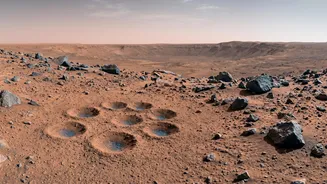
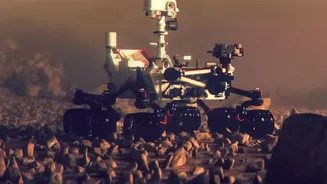
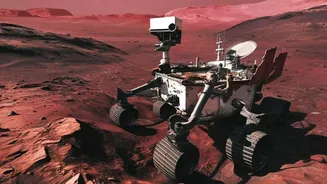
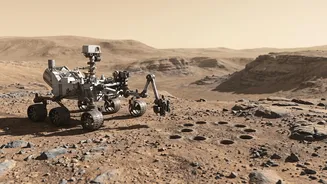
While trundling through a region known as Valle Grande, a wide valley cutting through Mount Sharp, the Curiosity rover spotted something odd. Dotted across the bedrock were small, pitted holes. Holes themselves aren't new on a planet constantly bombarded
by meteorites and shaped by erosion. However, these particular depressions were different. According to mission scientists, the pits are unusually broad and shallow, unlike anything the rover has encountered in its 14 years on the Martian surface. The discovery, made in the vast Gale Crater, has prompted a new investigation into the planet's complex geological processes.
Ruling Out the Usual Suspects
On both Earth and Mars, a common way for such pits to form is through a process of erosion. A harder piece of rock or a mineral nodule gets embedded in softer bedrock. Over eons, the softer rock erodes away, and the harder object eventually breaks apart or gets dislodged, leaving a cavity behind. The problem with this new discovery is that the usual evidence is missing. NASA scientists noted that the pits were not accompanied by any obvious objects that might have once filled them. This lack of a clear culprit has sent researchers back to the drawing board, forcing them to consider more complex or previously unseen formation mechanisms.
The Hunt for an Explanation
With the simple explanation off the table, scientists are exploring other possibilities. The answer likely lies hidden in the intricate history of the rock layers of Mount Sharp, which are believed to hold a record of Mars's environmental past. One possibility is an unfamiliar erosion process, or perhaps a unique property within this specific layer of rock. The area is also notable for rapid changes in the appearance of its rock beds, suggesting the environment underwent swift transformations billions of years ago. While there is currently no evidence to suggest a biological origin—such as trace fossils from ancient burrowing organisms—the possibility, however remote, is a reminder of why such discoveries are so tantalizing. The search for answers continues, with teams analyzing the chemistry and structure of these features for more clues.
The Challenge of Remote Geology
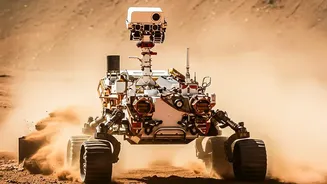
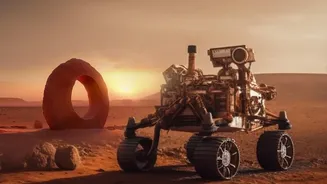
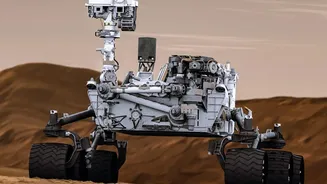
Figuring out this Martian mystery from millions of miles away is a significant challenge. To get a better understanding, the Curiosity rover is using its suite of advanced instruments. The Mars Hand Lens Imager (MAHLI) has been taking detailed, close-range photographs of the holes. Meanwhile, the rover's Mastcam has captured overlapping stereo images of the surrounding landscape. By combining these images, the science team at NASA can create detailed 3D models of the surface. These models will allow them to precisely measure the shape and depth of the pits, which could help them work backward to deduce how they formed. For now, the holes remain an open question, a geological puzzle waiting to be solved by the tireless robotic explorer.