



A Panoramic View of the Galaxy
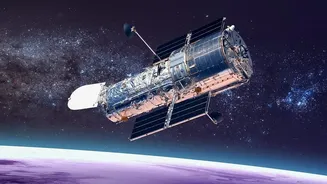
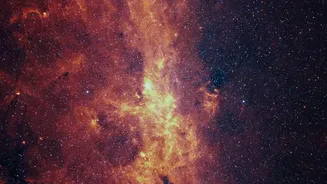
Unlike its famous predecessors, Hubble and James Webb, which offer detailed, zoomed-in portraits of cosmic objects, Roman is a wide-angle surveyor. Its Wide Field Instrument has a field of view more than 100 times larger than Hubble's, allowing it to
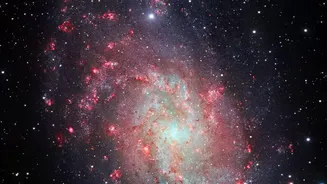
capture enormous patches of the sky in a single pointing. This capability is crucial for its exoplanet-hunting mission. Instead of staring at one star hoping to see a planet, Roman will simultaneously monitor hundreds of millions of stars, dramatically increasing the odds of a discovery. This approach shifts the goal from finding individual planets to creating a massive statistical survey—a true galactic census.
Hunting Worlds with Warped Spacetime
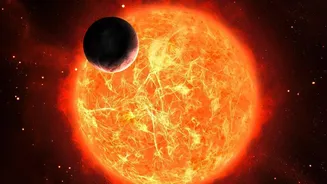
Roman’s primary method for discovering new worlds is a phenomenon straight out of Einstein's theories: gravitational microlensing. This occurs when a star with an orbiting planet passes in front of a more distant background star from our perspective. The gravity of the foreground star acts like a natural magnifying glass, bending and amplifying the light of the star behind it, causing a temporary brightening. If that foreground star has a planet, the planet’s own smaller gravity creates a secondary, brief flicker in the light. This technique is sensitive enough to find planets down to the mass of Mars and is especially good at detecting worlds in colder orbits, far from their star—a region previous surveys have struggled to explore.
Finding Planets Gone Rogue
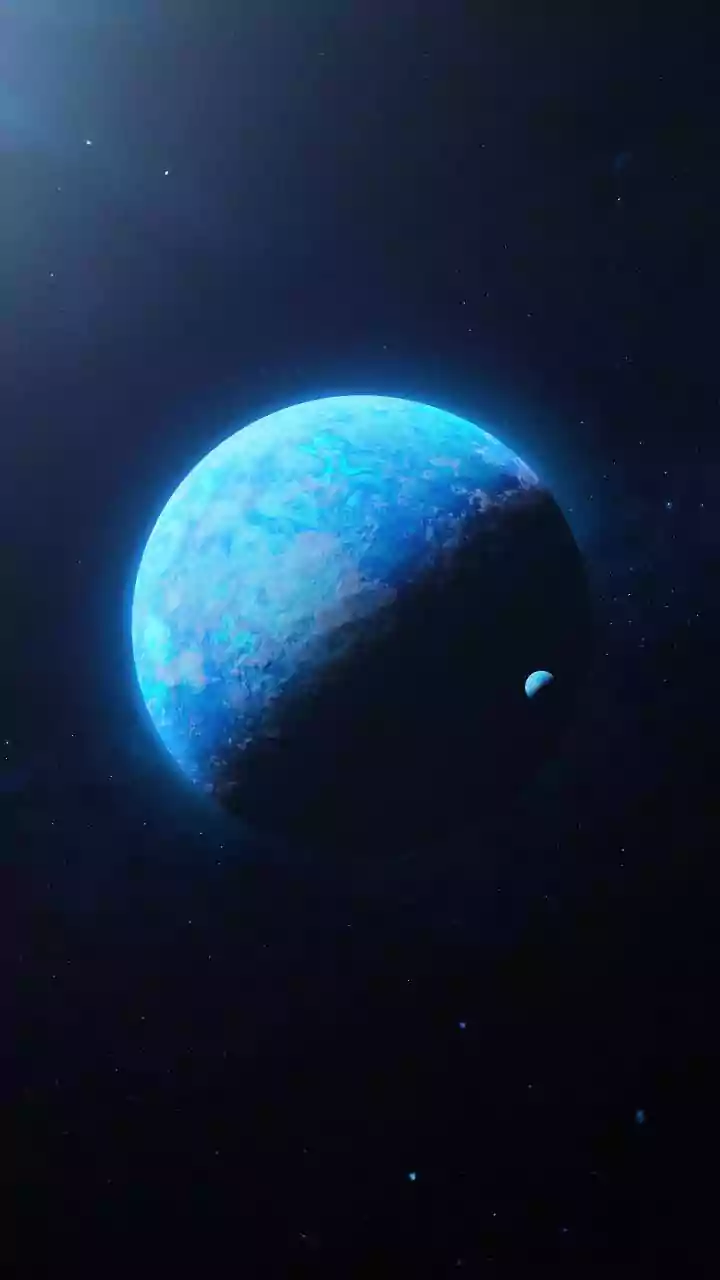
One of the most intriguing possibilities of the microlensing survey is its ability to find free-floating, or 'rogue', planets. These are worlds that have been ejected from their original star systems and now wander through interstellar space alone. Because microlensing relies on the gravity of an object, not its light, it is the only method that can reliably detect these dark, isolated worlds. By counting these lone wanderers, scientists hope to better understand the chaotic early days of planetary system formation. Roman is expected to detect hundreds of these free-floating planets, providing the first real data on how common they are in our galaxy.
The Power of a Direct Look
In addition to its wide-field survey, Roman carries a groundbreaking piece of technology called the Coronagraph Instrument. A coronagraph works like an artificial eclipse, using a system of masks and mirrors to block the overwhelming glare of a star. This allows the telescope to directly image the faint light reflected by planets orbiting that star. Roman's coronagraph is a technology demonstration, designed to be 100 to 1,000 times more powerful than previous space-based versions. It will be capable of imaging Jupiter-sized planets in nearby systems, paving the way for future missions, like the planned Habitable Worlds Observatory, that aim to directly photograph Earth-like planets.
Building a Cosmic Catalogue
By combining its microlensing survey, its ability to detect transiting planets, and its direct imaging technology, Roman is projected to discover thousands of new exoplanets. Estimates suggest it could find over 1,000 planets through microlensing and another 100,000 using the transit method, which spots the dip in a star's light as a planet passes in front of it. This enormous dataset will provide a new framework for understanding planetary systems. It will help astronomers answer fundamental questions: How common are rocky planets? Are solar systems like our own typical or rare? By providing the 'what' and 'where', Roman will set the stage for other telescopes like the James Webb Space Telescope to perform detailed follow-up studies, analysing atmospheres and searching for clues about habitability.