


The Tale of Two Roots
In the vibrant world of Indian vegetables, carrots (gajar) and beetroots (chukandar) hold a special place. They are affordable, available year-round, and incredibly versatile. We see them grated into colourful salads, blended into wholesome juices, and simmered
in hearty sabzis. Both are lauded for their health-giving properties, but they are not interchangeable. While they share some nutritional ground, like being low in calories and high in fibre, their unique compounds mean they go to work in our bodies in very different ways. Understanding these differences can help you choose the right root for your specific health goals.
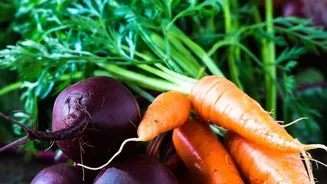
Carrot: The Champion of Vision and Skin
The carrot's claim to fame is its incredible concentration of beta-carotene, the pigment that gives it a bright orange hue. Our bodies convert this powerful antioxidant into vitamin A, a nutrient absolutely essential for good health. Perhaps its most famous benefit is supporting eye health; adequate vitamin A helps protect our eyes and can lower the chances of conditions like cataracts and age-related vision loss. But the benefits don't stop there. The same vitamin A is vital for healthy skin, and the vitamin C in carrots aids in collagen production, which keeps skin firm. Furthermore, carrots provide a good dose of vitamin K, which is important for bone health, and their fibre content helps regulate blood sugar and digestion.
Beetroot: The Heart and Stamina Booster
Beetroot’s deep, purplish-red colour comes from antioxidants called betalains. However, its most significant health impact comes from its high content of dietary nitrates. In the body, these nitrates are converted into nitric oxide, a molecule that helps relax and widen blood vessels. This process can lead to lower blood pressure and improved blood flow, making beetroot a fantastic food for heart health. This effect on blood flow also has benefits for physical performance. Some athletes consume beetroot juice to enhance stamina and endurance, as better blood flow means more oxygen is delivered to the muscles. Additionally, beetroots are an excellent source of folate (vitamin B9), which is crucial for cell growth and function, and a good source of iron, which helps transport oxygen in the blood.
A Nutritional Head-to-Head
So how do they stack up directly? When comparing 100 grams of each, their calorie and carbohydrate counts are nearly identical. Carrots are the undisputed winner for vitamin A, containing hundreds of times more than beetroot. They also offer significantly more vitamin K. On the other hand, beetroot takes the lead with minerals, containing more iron and manganese. It is also vastly superior in its folate content, a critical B vitamin. For fibre, potassium, and vitamin C, the two are quite comparable. Essentially, if your focus is vision, skin health, or a general vitamin boost, carrots have the edge. If you are concerned about blood pressure, athletic performance, or need more folate and iron, beetroot is your go-to root.
Better Together on Your Plate
Instead of choosing one over the other, the best approach is to include both in your diet. Their nutritional profiles are complementary, meaning they work well together to provide a broader range of health benefits. The vitamin A from carrots supports immunity, while the nitrates in beetroot support circulation. In Indian cuisine, combining them is easy and delicious. A classic koshimbir or grated salad with both carrot and beetroot, tempered with mustard seeds and lemon juice, is a refreshing and nutrient-dense side dish. Blending them into a juice offers a concentrated dose of their respective vitamins and minerals. They can also be cooked together in a poriyal (stir-fry) with coconut or added to a raita for a cooling and colourful dish.