







More Than Just Fun
At its heart, dance is an expressive and freeing activity. Combining it with aerobics creates a powerful workout that often doesn't feel like one. Studies have consistently shown that aerobic dance programs can improve cardiorespiratory endurance, which
is the body's ability to sustain prolonged exercise. For many, the appeal lies in the fusion of music and movement, which can create a highly engaging experience that promotes consistency. Unlike staring at a treadmill clock, a dance session is a journey, with each song bringing a new wave of energy and a different set of challenges. This inherent fun factor is crucial for long-term adherence to any fitness regimen.
The Science of Building Stamina
Endurance, or stamina, relies on the efficiency of your heart, lungs, and circulatory system to deliver oxygen to your muscles during sustained physical activity. Improving it means training these systems to work better and longer. This is achieved through a principle known as 'progressive overload'. In simple terms, you must gradually and systematically increase the demands placed on your body. If a workout is always easy, your body has no reason to adapt and get stronger. By slowly increasing the duration or intensity of your dance sessions, you challenge your cardiorespiratory system, forcing it to adapt and improve its capacity.
The 'Gradual Build' Secret
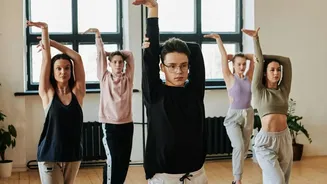
The key to unlocking endurance gains is not to start at maximum effort. Going too hard, too soon can lead to burnout or injury. The secret is a gradual build-up of intensity. Think of it like a story with a beginning, middle, and end. A well-structured dance aerobics session should start with a warm-up at a lower intensity to prepare your muscles and heart. From there, the intensity should progressively increase. This could mean faster movements, larger ranges of motion, or more complex choreography. This method of gradually increasing difficulty allows your body to adapt safely and effectively, pushing your limits without breaking them. Short bursts of higher intensity, known as interval training, can also be woven into your routine to further boost endurance.
Music as the Ultimate Motivator
The 'music-led' aspect of the headline is not just a gimmick; it's backed by science. Music has a profound effect on exercise performance. Listening to music can reduce your rate of perceived exertion, meaning the workout feels easier than it actually is. A fast-tempo beat can increase your heart rate and motivate you to move faster, effectively helping you increase intensity. Furthermore, synchronizing your movements to a rhythm enhances motor coordination and can boost self-confidence, creating a positive feedback loop that makes you want to keep going. By curating a playlist that starts slow, builds to a high-energy peak, and then winds down, you essentially have a personal trainer in your ears, guiding your workout's intensity curve.
Structuring Your Endurance-Building Session
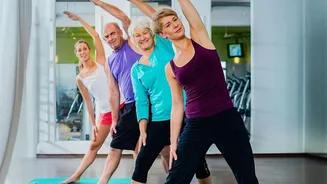
To put this into practice, structure your dance aerobics workout with intention. Start with a 5-10 minute warm-up using slower music (around 120 beats per minute) and simple movements. Gradually transition to faster, higher-energy tracks (130-140 BPM) for the main part of your workout, which should last 20-40 minutes. During this phase, challenge yourself with more dynamic movements like jumps or faster footwork. Listen to your body; you should be breathing harder but still able to hold a conversation. Finally, dedicate the last 5-10 minutes to a cool-down, using slow, calming music to bring your heart rate down and stretch the muscles you've worked. This structured approach ensures you get the benefits of progressive overload in every single session.