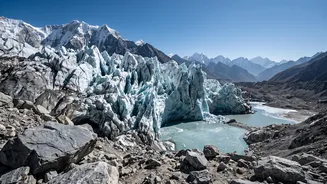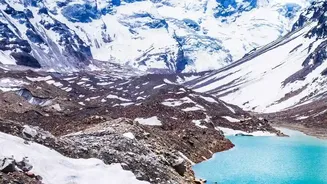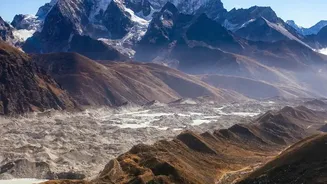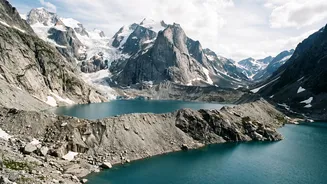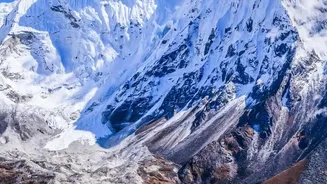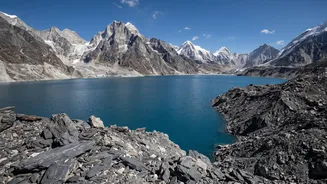






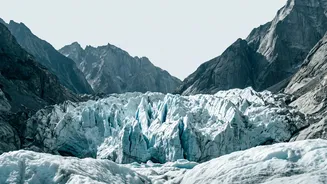
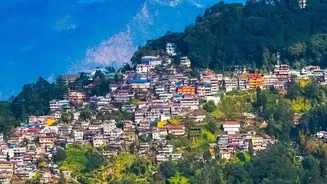
High in the Himalayas, serene turquoise lakes are expanding. But these beautiful bodies of water are also ticking time bombs, posing a deadly threat of catastrophic floods to the millions of people living in the valleys below.
Anatomy of a Mountain Flood
A Glacial Lake Outburst Flood,
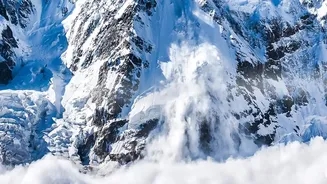
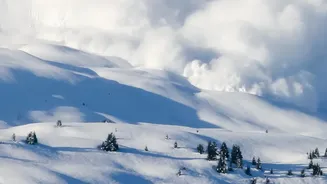
or GLOF, is a sudden and powerful release of water from a lake formed by a melting glacier. These lakes are often held back by natural dams made of loose rock and soil, known as moraines. These moraine dams are inherently unstable. As rising temperatures cause glaciers to melt at an accelerated rate, the lakes behind them swell, putting immense pressure on these fragile barriers. A trigger event—such as a landslide, an ice avalanche falling into the lake, or even just the pressure of the water itself—can cause the dam to breach, unleashing a devastating torrent of water, ice, and debris downstream with little to no warning.
A Warming Climate's Deadly Consequence
The link between climate change and the growing GLOF hazard is direct and undeniable. The Hindu Kush Himalaya region is warming at a rate nearly double the global average, causing rapid glacial retreat. Since 1990, the number and size of glacial lakes have increased by over 50%. A recent report from India's Central Water Commission found that in India alone, the area of glacial lakes grew by nearly 34% between 2011 and 2024. This expansion means that not only are new 'ticking time bombs' being formed, but existing ones are becoming larger and more dangerous. The frequency of GLOF events has risen dramatically, increasing fivefold since the mid-20th century, with ice avalanches and intense rainfall being the most common triggers.
Life in the Shadow of the Lakes
For the communities nestled in the Himalayan valleys of states like Sikkim, Uttarakhand, and Himachal Pradesh, the threat is existential. Globally, about 15 million people are exposed to GLOF risks, with those in High Mountain Asia being the most vulnerable. A single event can wipe out entire villages, destroy critical infrastructure like roads, bridges, and hydropower dams, and wash away agricultural land, devastating livelihoods. The 2013 Kedarnath disaster in Uttarakhand, triggered by the collapse of the Chorabari glacial lake, resulted in over 6,000 deaths. More recently, the 2023 South Lhonak Lake burst in Sikkim killed dozens, displaced thousands, and caused widespread destruction. Studies show India has recorded the highest number of deaths from GLOFs in the entire Himalayan region.
A Race Against Time and Terrain
Mitigating the GLOF risk is a monumental challenge. The remote, high-altitude locations of these dangerous lakes make monitoring and intervention difficult and costly. However, efforts are underway. India's National Disaster Management Authority (NDMA) has issued guidelines and is implementing a risk mitigation project focused on the most vulnerable states. This includes identifying high-risk lakes, with Sikkim (16) and Himachal Pradesh (14) having the most in the highest-risk category. Strategies involve installing sensor-based early warning systems, as recently done at Vasundhara Tal in Uttarakhand, which use satellite communication to transmit real_time data on water levels and ground stability. In some cases, engineering solutions like controlled draining of lakes are also being explored.
Beyond Warnings to Building Resilience
While early warning systems are crucial, they are only one part of the solution. Long_term resilience requires a multi_pronged approach. This includes stricter land_use planning to regulate construction in high_hazard zones, designing climate_resilient infrastructure, and empowering local communities with knowledge and preparedness training. Since many Himalayan rivers and glacial lakes cross national borders, international cooperation, particularly with neighbouring countries like Nepal, Bhutan, and China, is essential for sharing data and coordinating cross_border flood warnings. The devastation from a GLOF that originates in one country can travel hundreds of kilometres downstream into another, making collaboration a non_negotiable aspect of regional safety.