






The Allure of the Hardtail
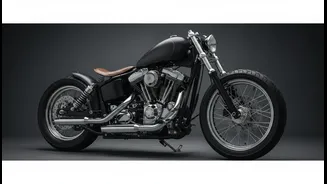
There is an undeniable purity to a hardtail motorcycle. With no rear suspension, the frame flows in an unbroken line from the steering head straight to the rear axle. This creates a minimalist, mechanical look that is the foundation of classic bobber
and chopper styles. This aesthetic harks back to the post-WWII era, when returning veterans would strip their bikes of anything non-essential to reduce weight and create a raw, rebellious look. However, that visual purity comes at a cost: ride quality. With nothing to absorb bumps other than the tire and the rider's spine, true hardtails can be punishing on anything but the smoothest roads. This has long been the core dilemma for enthusiasts who crave vintage style but also want to ride for more than an hour at a time.
The Softail's Clever Disguise
Harley-Davidson offered a revolutionary solution to this problem with its Softail chassis. The genius of the Softail frame is that it masterfully hides the rear suspension, typically a monoshock, underneath the seat and transmission. This preserves the clean, rigid-frame appearance while providing the performance and comfort of a modern suspension system. It allows designers to create bikes that look like they've rolled straight out of the 1940s but handle with contemporary predictability and control. The new Deadwood is the latest and perhaps most focused expression of this philosophy, built specifically to celebrate the hardtail look.
Introducing the 2026 Deadwood
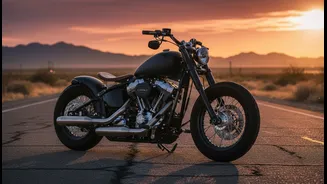
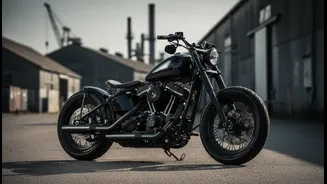
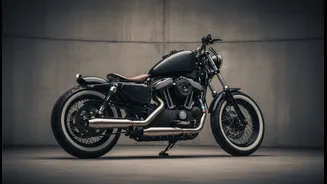
The new Deadwood is a factory-built bobber that leverages the Softail platform to make a powerful heritage statement. Named for the historic South Dakota town central to the Sturgis Motorcycle Rally, the bike is a deliberate nod to early customization culture. Harley-Davidson has stripped the bike of nearly all chrome and brightwork, opting for a blacked-out finish on everything from the engine and exhaust to the handlebars and wheels. The only flashes of chrome are on the lower rocker covers and pushrod tubes, intentionally highlighting the classic V-shape of the Milwaukee-Eight 117 engine. It’s a minimalist approach that’s all about silhouette and attitude.
Engineering the Hardtail Illusion
Several key design choices transform the base Softail into the Deadwood. The bike features a low, tuck-and-roll solo seat that fully exposes the rear fender, enhancing the stripped-down aesthetic. By forgoing saddlebags, the clean lines of the Softail's rear section are left completely visible, reinforcing the hardtail illusion. A lowered rear suspension and a chopped, detachable windshield give the Deadwood a slammed, aggressive profile. The bike's stance is low and lean, with one of the lowest seat heights in Harley-Davidson’s 2026 lineup, making it both visually striking and accessible.
Modern Tech in a Vintage Package
Despite its vintage-inspired looks, the Deadwood is packed with modern technology. It comes standard with a full suite of rider safety enhancements, including cornering ABS, traction control, and drag torque slip control. The rider can also choose between three ride modes—Road, Sport, and Rain—to adjust performance characteristics. Full LED lighting, a USB-C charging port, and a five-inch instrument cluster that combines an analog speedometer with a multi-function LCD display further bridge the gap between old-school cool and new-school function.