







The Force of a Single Drop
It seems improbable that something as soft as a water droplet could damage a hard surface. Yet, we see its effects everywhere. New research, often using high-speed cameras and advanced sensors, is finally quantifying the immense power hidden in a single
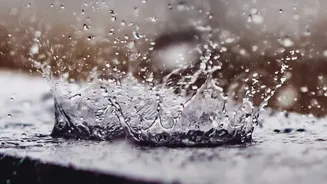
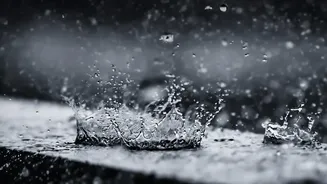
raindrop. A study from the University of Minnesota found that when a droplet hits a surface, the impact force spreads out at supersonic speeds, creating a shock wave. Each drop essentially releases its energy explosively, giving it the power to dislodge particles and wear down surfaces over time. Think of it less like a gentle tap and more like a miniature explosion happening millions of times over during a storm. A single, large raindrop can hit the ground at over 30 kilometres per hour, dislodging soil particles and splashing them up to 1.5 metres away.
What the New Science Reveals
For decades, scientists understood the basics of 'splash erosion'—the first stage of water-driven soil loss. However, recent studies have provided a much clearer picture of the mechanics. By using techniques like high-speed stress microscopy, researchers can now measure the precise shear stress and pressure a droplet exerts. This has overturned older assumptions. For instance, on a sloped surface, it was once thought that soil particles splashed out evenly. Advanced imaging shows this is false. The downward momentum of the raindrop combines with the angle of the slope to act like a tiny bulldozer, pushing the vast majority of soil particles downhill. This new level of detail is crucial, as it allows for more accurate modelling of erosion, helping to predict which landscapes are most at risk.
The Monsoon's Hidden Cost in India
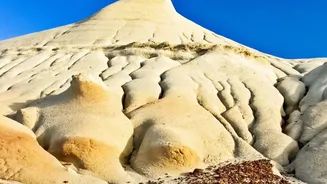
Nowhere is this science more relevant than in India, where the monsoon is both a life-giver and a destructive force. Around 68% of soil erosion in India is caused by water, a process kickstarted by raindrop impact. States like Assam, Meghalaya, and those along the Western Ghats are particularly vulnerable. The Brahmaputra valley is a major hotspot, with some studies showing catastrophic levels of soil loss. India's average rate of soil erosion is significantly higher than the global average, posing a direct threat to agricultural productivity and the national economy. When topsoil is lost, it's not just dirt that washes away; it's vital nutrients, organic matter, and the very foundation of our food security. This eroded soil also clogs rivers and reservoirs, increasing flood risk and reducing water storage capacity.
From Micro-Bombs to Macro Problems
The journey from a single drop to a national problem follows a clear path. First, the 'splash' from raindrops breaks down soil aggregates and clogs the tiny pores in the ground. This creates a hard crust on the surface, which drastically reduces the amount of water that can soak in. Instead of infiltrating the soil, rainwater begins to run off the surface, collecting in thin layers ('sheet erosion') and then carving small channels ('rill erosion'). Untreated, these rills can grow into massive gullies, rendering farmland unusable and even threatening infrastructure like roads and buildings. Understanding that this entire destructive cascade begins with the kinetic energy of individual raindrops highlights the importance of the first line of defence: keeping the soil covered.
Why This Research Matters for Our Future
Pinpointing the exact mechanisms of raindrop erosion isn't just an academic exercise. This knowledge has profound practical applications. For engineers, it can inform the design of more resilient materials, from building coatings to the protective surfaces on wind turbine blades, which also suffer from rain erosion. For farmers and land managers, it reinforces the critical importance of conservation strategies. Maintaining ground cover through vegetation or crop residue is the most effective way to disarm the raindrop bombs before they strike. Studies show that keeping more than 70% of the ground covered can dramatically reduce soil detachment. As climate change alters rainfall patterns, potentially bringing more intense storms, this fundamental understanding of drop-by-drop damage will be essential for protecting our most valuable natural resource: the soil itself.