

A New Class of Cosmic Explorer
On September 23, 2026, NASA announced it was moving forward with PRIMA, a space telescope set to explore the universe in far-infrared light. More than just another mission, PRIMA is the inaugural venture in the agency's new "Probe Explorers" program.
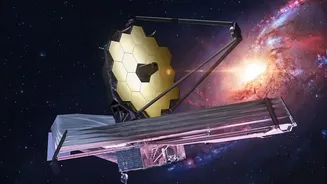
Recommended by the National Academies' 2020 Decadal Survey, this new class of mission is designed to fill a crucial strategic gap. Probe missions are more ambitious and capable than smaller "Explorer" missions but are capped at around $1.2 billion, making them more focused and affordable than flagship observatories like the James Webb Space Telescope (JWST) or the Nancy Grace Roman Space Telescope. This new mid-tier category allows NASA to tackle high-priority science without the massive budget of a flagship, creating a sustainable pipeline of major projects. PRIMA's selection sets the template for this new, powerful class of billion-dollar explorers.
What Will PRIMA Actually Do?
PRIMA is designed to peer into the parts of the universe that are hidden from telescopes like Hubble or even Webb. It will observe in far-infrared wavelengths, a part of the light spectrum that is perfect for studying the cold, dusty, and distant universe. Since the retirement of the European Space Agency's Herschel Space Observatory in 2013, there has been a significant gap in our ability to see the cosmos in this light. PRIMA will fill that void. Its primary science goals are ambitious and wide-ranging. Scientists plan to use it to trace how galaxies and their central supermassive black holes grow together, understand how the universe's dust and heavy elements were created over time, and investigate the very origins of planets outside our own solar system. According to Nicky Fox, an associate administrator at NASA, the mission will help us understand "how water on Earth came to be."
The Technology Behind the Vision
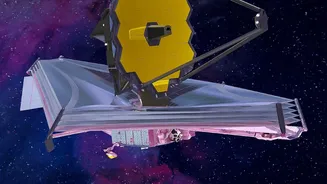
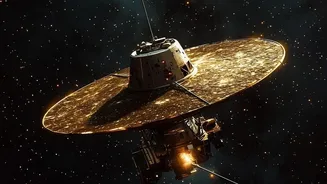
To achieve its goals, PRIMA will feature a 1.8-meter (5.9-foot) telescope mirror that is cryogenically cooled. This extreme cooling is essential for a far-infrared telescope, as it prevents the instrument's own heat from overwhelming the faint cosmic signals it's trying to detect. The observatory will host two main instruments: PRIMAger, an imaging polarimeter to map large swathes of the sky, and FIRESS, a high-resolution spectrometer to analyze the chemical composition and physical properties of distant objects. These instruments will be orders of magnitude more sensitive than previous far-infrared missions, allowing astronomers to see the universe with unprecedented sharpness in this wavelength. The technology, developed over decades by institutions like Caltech and NASA's Jet Propulsion Laboratory, represents a massive leap forward for far-infrared astronomy.
Why Far-Infrared Is a Game-Changer
While JWST was designed to see in near- and mid-infrared, PRIMA pushes further into the far-infrared, opening a unique window. This part of the spectrum is crucial because it allows scientists to see through the immense clouds of cosmic dust that obscure star and planet formation from other telescopes. It also picks up the faint heat glow from some of the coldest objects in the universe. Scientists specifically hope to use PRIMA to study protoplanetary disks—the swirling clouds of gas and dust where new planets are born. As one researcher noted, key questions about the role of water in planet formation and the true mass of these disks can only be answered with the spectral lines visible in the far-infrared, which are beyond JWST's capabilities.
The Road to Launch
With its selection, PRIMA now enters what NASA calls "Phase B," a period of preliminary design and technology development. Over the next couple of years, the mission team will finalize the engineering plans and a review will assess its technical readiness and budget performance. If it passes this crucial confirmation step, the mission will proceed to construction, with a targeted launch date of 2033 for a five-year primary mission. The selection of PRIMA marks a major commitment from NASA to maintaining a steady cadence of powerful new observatories, ensuring that the next decade of astronomical discovery will be just as exciting as the last.