







A Change in Official Language
In late September 2026, President Donald Trump signed an executive order directing all executive branch departments and agencies to replace the term 'Artificial Intelligence' (AI) with 'Super Intelligence' (SI) in official documents and public communications.
The order argues that the original term, coined decades ago, no longer adequately represents the transformative power and potential of modern systems. According to the administration, 'Super Intelligence' more accurately reflects a technology that is amplifying human ingenuity rather than simply mimicking it. This change formalizes a rebranding that Trump began promoting weeks earlier, stating a personal dislike for the word 'artificial,' which he suggested sounds 'fake'.
The 'Super Intelligence Force'
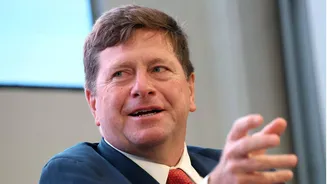
Coinciding with the rebranding, the White House announced the formation of a 'Super Intelligence Force' (SIF). This new task force is chaired by the Director of National Intelligence, Jay Clayton, and includes other high-ranking officials. Its stated purpose is to coordinate the government's efforts to ensure America leads the world in this critical technology, managing both its risks and opportunities. The SIF will engage with industry leaders, public interest groups, and infrastructure providers to guide the nation's strategy, highlighting the administration's focus on maintaining a competitive edge, particularly against rivals like China.
A Strategy of Acceleration
This rebranding is more than just a semantic change; it's a clear statement of policy. The administration's narrative frames the development of SI as a race that America must win. This perspective favors rapid innovation and a more hands-off regulatory approach, emphasizing voluntary guardrails agreed upon with industry leaders. Following a White House summit, top tech executives signed what the president called a 'morally binding' accord to self-police the technology, committing to internal and external safety audits. The push for 'Super Intelligence' is tied to a belief that slowing down for regulation would be a strategic error, risking a loss of leadership on the global stage.
Mixed Reactions and Implications
The move has generated a wide range of reactions. While some tech executives have started to adopt the new terminology, at least in the president's presence, many companies have remained publicly noncommittal about changing their own branding. Some analysts see the term 'super' as aligning with the reality that these systems are increasingly exceeding human performance in specific tasks. However, marketing experts and critics warn the term could cause confusion, as 'superintelligence' already has a specific, hypothetical meaning in the tech world referring to a future AI far beyond human intellect. There is concern that this rebranding could inflate public expectations or, conversely, heighten fears about the technology's current capabilities.