




A Historic Mission with a Special Menu
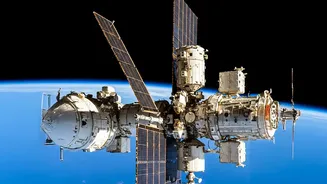
The Axiom-4 (Ax-4) mission, which flew from June to July 2025, was a landmark private spaceflight to the International Space Station (ISS). Aboard the SpaceX Dragon spacecraft were four astronauts, including Commander Peggy Whitson and three crew members
representing their nations' return to human spaceflight after decades: Poland’s Sławosz Uznański-Wiśniewski, Hungary’s Tibor Kapu, and India’s own Shubhanshu Shukla, serving as the mission’s pilot. For India, Shukla’s flight was a momentous occasion, marking the nation's second-ever government-sponsored astronaut in space. While the mission's primary goals were scientific research and international collaboration, it also became a unique platform for cultural exchange, most notably through its food.
From India to Orbit: The Chosen Dishes
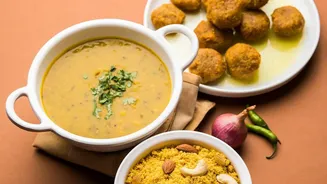
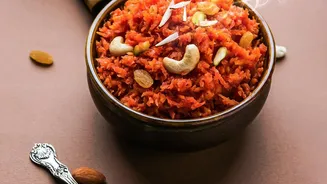
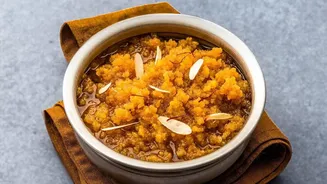
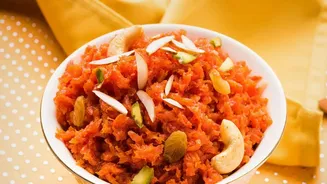
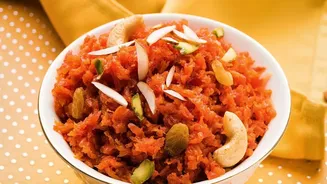
In a recent interview, Shukla shared details about the special Indian foods that accompanied him to orbit. While a wider menu was initially prepared, only three dishes successfully navigated the rigorous certification process for space travel: Gajar Ka Halwa, Moong Dal Ka Halwa, and Amras (mango pulp). These items, developed by the DRDO's Mysuru-based Defence Food Research Laboratory (DFRL), represented a sweet taste of home amidst the stars. Reports from the mission noted that the international crew thoroughly enjoyed the Indian sweets, so much so that Shukla himself humorously mentioned that none was left for him. The selection of these familiar comfort foods highlights a growing understanding of the importance of morale and psychological well-being for astronauts on long-duration missions.
The Intense Science of Space Cuisine
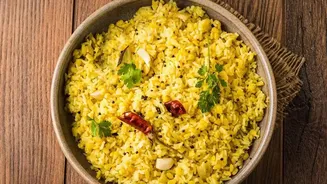
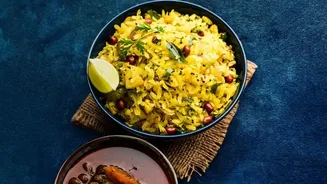
Getting food approved for space is far more complex than just packing a meal. The process is a scientific feat in itself, which explains why only three of the many dishes proposed by DFRL made the final cut. Space food must have a long shelf life without refrigeration, remain nutritionally stable, and be completely free of harmful microbes. Furthermore, it has to be designed for a microgravity environment. Foods cannot create crumbs, which could float into and damage sensitive equipment or be inhaled by astronauts. They must also be packaged to withstand the intense vibrations of a rocket launch. Shukla explained that the limited time available for the extensive testing required was a primary reason more dishes like khichdi and pulao couldn't be certified for the Ax-4 flight.
DRDO's Expertise in Extreme Environments
The Defence Food Research Laboratory (DFRL) was uniquely positioned for this challenge. As a wing of the DRDO, its primary mandate is to develop food for India’s armed forces, who operate in some of the most extreme environments on Earth. The lab specializes in creating Meals-Ready-to-Eat (MREs) that are lightweight, high in nutritional value, and can endure harsh conditions. This expertise is directly transferable to the challenges of space travel. This was not DFRL's first foray into space cuisine; the lab also supplied food for Rakesh Sharma’s historic flight in 1984. The successful certification of its dishes for a modern NASA-partnered mission is a testament to the world-class standards of Indian food science and technology.
A Taste of the Future for Gaganyaan
While serving Indian food on an international mission was a significant cultural and scientific milestone, it was also a crucial test run. The entire effort was part of the broader preparation for India's own ambitious human spaceflight program, the Gaganyaan mission. The experience gained from the Ax-4 certification process provides invaluable data and lessons for DFRL. These insights will help the lab develop a much wider and more diverse menu for the Indian astronauts who will fly on future Gaganyaan missions, ensuring they have a comforting and varied taste of home while making history. After weeks in orbit, Shukla recalled craving familiar salty and spicy flavours—a craving his flight surgeon satisfied with banana chips and bhakarwadi upon his return to Earth, a small but powerful reminder of the deep connection between food, culture, and home.