






An Ambitious High-Speed Vision
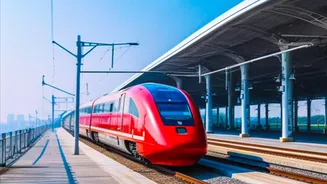
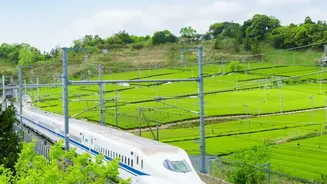
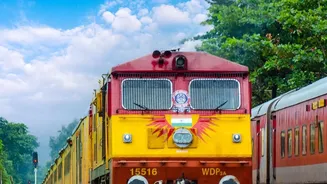
The Northern Bullet Train Corridor is a proposed high-speed rail line that aims to connect Delhi with Varanasi, and eventually extend all the way to Guwahati. The first phase of this ambitious project is the Delhi-Varanasi High-Speed Rail (DVHSR) corridor,
an approximately 813-kilometre track designed for trains operating at speeds up to 350 km/h. This initiative, managed by the National High-Speed Rail Corporation Limited (NHSRCL), is one of several new corridors announced by the government to create a 'Diamond Quadrilateral' connecting India's major metro cities. The project has been approved by the Prime Minister, and the Detailed Project Report (DPR) has been submitted to the Ministry of Railways, marking a crucial step forward in its development.
The Strategic Triangle: Delhi, Kanpur, and Lucknow
The inclusion of Delhi, Kanpur, and Lucknow is no coincidence; it forms a strategic economic and administrative triangle. Delhi, as the national capital, is the starting point and a massive hub for commerce and governance. Kanpur, historically known as the 'Manchester of the East', remains a vital industrial and manufacturing centre in Uttar Pradesh. Lucknow, the state capital, is the administrative and political heart of India's most populous state. Connecting these three cities with high-speed rail is designed to supercharge economic activity, facilitate faster business travel, and improve administrative efficiency. The proposed travel times are transformative: Delhi to Kanpur could be reduced to just 1 hour and 45 minutes, and Delhi to Lucknow in about 2 hours and 12 minutes.
Current Status and What's Next
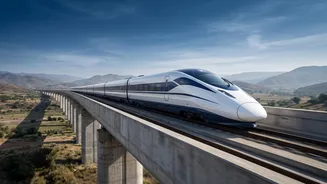
While the project is still in its planning stages, significant groundwork has been laid. NHSRCL has completed survey work for the final alignment and submitted the DPR for approval. In recent updates from late 2026, officials confirmed that the alignment in key areas like Noida has been finalized, and utility surveys to identify and plan the relocation of pipelines and cables are underway. The project will feature a mix of elevated tracks and underground sections, particularly near sensitive areas like the Noida International Airport at Jewar, which will have a dedicated underground station to ensure seamless integration. Though a final completion date has not been announced, a target of 2029 has been mentioned for related projects in the region. The corridor is set to be developed under the 'Make in India' initiative, emphasizing the use of domestic manufacturing and engineering talent.
A Catalyst for Regional Development
The impact of this corridor extends far beyond just reducing travel times. High-speed rail networks are globally recognized as powerful catalysts for economic growth. By connecting major industrial, administrative, and tourism hubs, the project is expected to boost trade, create employment opportunities, and spur real estate and commercial development along the route. The enhanced connectivity will benefit a wide range of people, from business travellers and students to pilgrims and tourists visiting spiritual centres like Varanasi and Ayodhya, which is also part of the planned network. Officials have stated the project will improve convenience for middle-class families and small business owners, with fares expected to be economical.
Overcoming the Hurdles
A project of this magnitude is not without its challenges. The estimated cost for the Delhi-Varanasi section alone is around ₹1.21 lakh crore, a significant investment. Land acquisition, though minimized by using elevated tracks along existing highways for much of the route, remains a complex process. Furthermore, the technical complexity of building infrastructure for speeds of 350 km/h, including tunnels and major bridges, requires precise engineering and execution. However, NHSRCL is working to standardize designs to streamline construction for this and future corridors, learning from the experience of the Mumbai-Ahmedabad project. Despite the hurdles, the approval and ongoing preliminary work signal a strong commitment to bringing this transformative project to life.