




A Game-Changing Vision
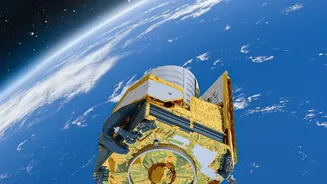
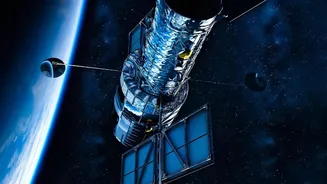
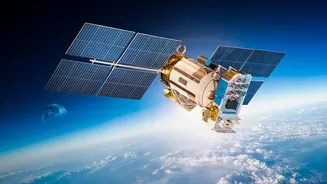
The mission, originally known as GISAT-1 or EOS-03, was designed to be a significant leap for the Indian Space Research Organisation (ISRO). Unlike conventional Earth observation satellites that orbit a few hundred kilometres up and pass over a location
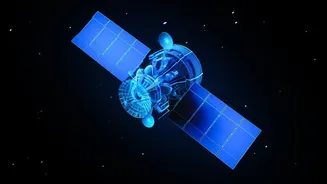
only periodically, this satellite was destined for a geosynchronous orbit nearly 36,000 kilometres away. From this high perch, it would be synchronized with Earth's rotation, allowing it to continuously monitor the Indian subcontinent. This capability promised near-real-time imagery, a fundamental shift from the intermittent glimpses provided by satellites in low-Earth orbit. The goal was to have an unblinking eye providing a constant stream of data.
The Promise of Constant Watch
The strategic and civilian applications for such a satellite were immense. For a country prone to natural disasters, it offered the ability to track the rapid development of cyclones, monitor floods and landslides as they happened, and detect forest fires in their early stages. This would enable quicker and more effective disaster management responses. Beyond weather, its powerful multi-spectral and hyperspectral cameras were intended to monitor agriculture, water bodies, and changes in vegetation. Furthermore, the satellite was described as having strategic importance, with the ability to aid in border surveillance and other security-related monitoring, making it a powerful asset for national security.
The Fateful 2021 Launch
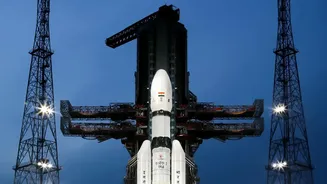
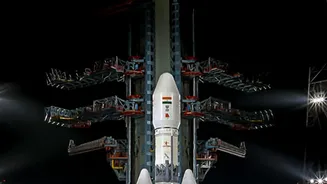
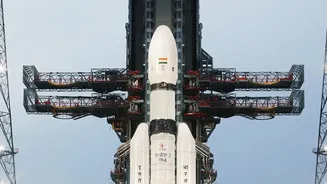
Hopes were high on August 12, 2021, as the GSLV-F10 rocket lifted off from the Satish Dhawan Space Centre carrying the precious EOS-03 satellite. The initial stages of the launch proceeded flawlessly, clearing the tense first few minutes of flight. However, the mission's success hinged on the crucial third and final phase: the ignition of the indigenously developed cryogenic upper stage. This advanced stage, which uses super-cooled liquid propellants, is essential for pushing heavy satellites into high orbits. It was at this critical moment that the mission ran into a catastrophic problem.
What Went Wrong?
ISRO mission control watched as the cryogenic stage failed to ignite. The rocket was unable to achieve the velocity needed to place the satellite into its designated orbit, and the mission was declared a failure. A thorough investigation by a Failure Analysis Committee later pinpointed the cause. A minor leak in a valve led to a loss of pressure in the liquid hydrogen tank. This seemingly small issue had a cascading effect, preventing the fuel booster turbo pump from functioning correctly at the moment of ignition. As a result, the engine never fired, and the satellite, along with its immense potential, was lost.
Resilience and the Path Forward
In the demanding field of space exploration, failures are often as important as successes. Setbacks are not just disappointments but crucial learning opportunities. ISRO has a long history of demonstrating resilience, meticulously analyzing failures to strengthen its future missions. The lessons learned from the GSLV-F10 failure were vital for improving the reliability of the cryogenic stage, a technology that is not only central to launching heavy satellites but also a cornerstone of India's ambitious human spaceflight program, Gaganyaan. Every component and every procedure was re-evaluated to prevent a recurrence.
Why the Mission Still Matters
Though the 2021 mission failed, the ambition behind it remains more relevant than ever. The need for a dedicated, geo-stationary imaging satellite for India is undeniable. The EOS program, with EOS-05 designated as the replacement for the lost satellite, represents a critical national capability that ISRO is determined to achieve. The failure did not diminish the strategic importance of the goal; it only reinforced it, while providing invaluable, hard-won experience. It highlighted the unforgiving nature of rocketry and underscored the perseverance required to master such complex technology.