
What Is a Hanging Glacier?
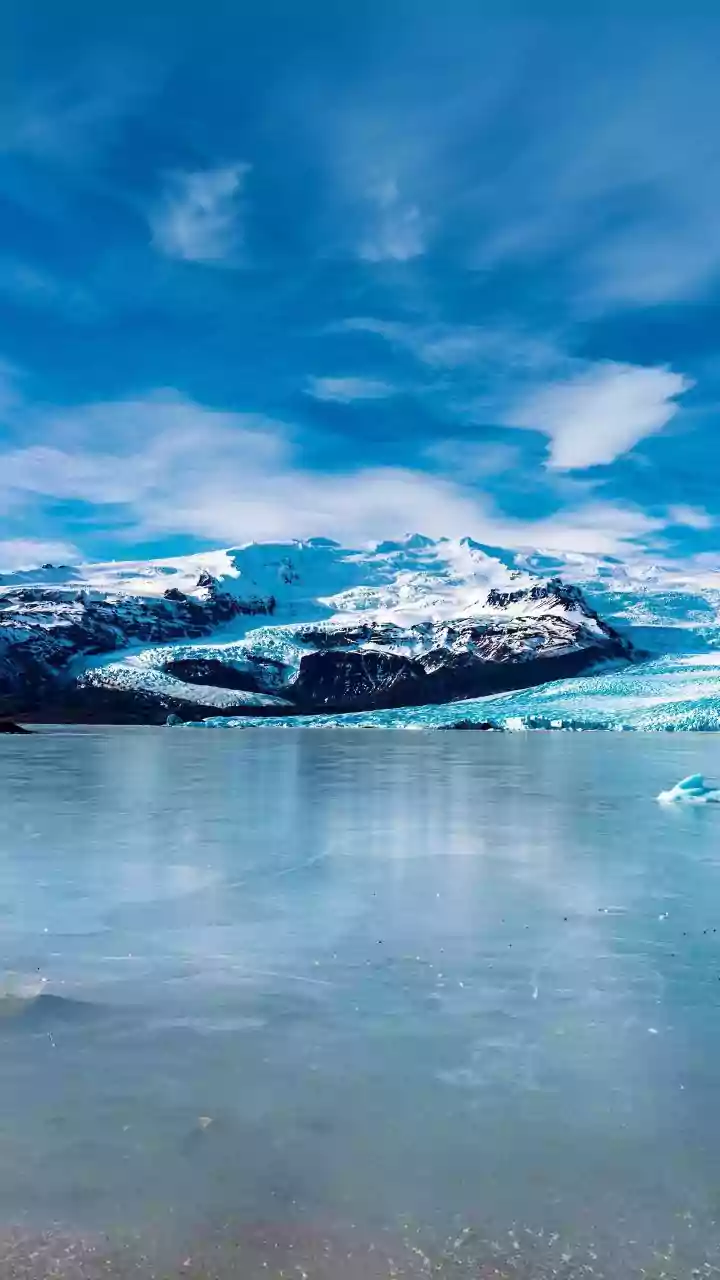
Imagine a river of ice that doesn't flow all the way down a valley. Instead, it stops abruptly at a steep cliff, 'hanging' high above the valley floor. That's a hanging glacier. They form when tributary glaciers in smaller valleys can't carve as deeply
as the main glacier below, leaving them perched precariously. Unlike valley glaciers that move slowly, the primary way a hanging glacier transfers its ice to the valley below is through sudden, dramatic events like icefalls and avalanches. This inherent instability is what makes them so different and so dangerous.
The Science of Unpredictability
Predicting when a hanging glacier will collapse is incredibly difficult. They are often partially frozen to the bedrock, which allows them to stick to steep slopes. However, climate change is weakening this bond. Rising temperatures can cause meltwater to seep into cracks and reach the base of the glacier, lubricating the surface and making it more prone to a sudden, catastrophic slide. This process isn't linear or easily observable from the surface. Factors like the weight of new snow, the complex internal stresses of the ice, and the thermal weakening of the glacier itself create a perfect storm of unpredictability. Traditional monitoring that works for slower-moving glaciers often fails to capture the rapid changes that can lead to a hanging glacier's collapse.
A Cascade of Catastrophic Events
The danger from a hanging glacier doesn't end with the initial icefall. When millions of tonnes of ice and rock break off, they create a powerful avalanche that hurtles down the mountain. The kinetic energy released can be immense, with some collapses registering as seismic events. As this mass of ice and rock hits the valley floor, the friction can generate enough heat to melt the ice, creating a fast-moving, destructive slurry of water, mud, and debris. This torrent can temporarily dam rivers, causing water to build up before bursting through in a devastating flash flood, known as a Glacial Lake Outburst Flood (GLOF), that can wipe out infrastructure and villages miles downstream.
The Himalayan Hotspot
For India, this is not a distant problem. The Himalayas are home to thousands of glaciers, including a significant number of hanging ones. One recent study identified at least 858 hanging glaciers along India's Himalayan stretch, while another pinpointed 219 in Uttarakhand's Alaknanda basin alone. Events like the 2021 Chamoli disaster, where a collapse of rock and hanging glacier ice led to a flood that killed over 200 people and destroyed hydropower projects, are a grim reminder of the threat. As the climate continues to warm, these glaciers are becoming increasingly unstable, putting millions of people, as well as critical infrastructure like roads and dams in states like Uttarakhand, Himachal Pradesh, and Sikkim, at heightened risk.
The Race to Mitigate Risk
In response to these growing threats, scientists and disaster management authorities are scrambling for solutions. Agencies like the National Disaster Management Authority (NDMA) are working to identify and monitor high-risk glaciers and glacial lakes. The focus is on developing early warning systems that can provide crucial time for evacuation. However, the sheer number of glaciers and the difficulty in predicting their behavior make this a monumental task. A recent study warned that exposure to avalanche-related risks in the Alaknanda basin is projected to increase dramatically by 2030, with 120% more infrastructure at risk. This highlights the urgent need for risk-informed land-use planning, better cross-border data sharing, and robust monitoring technology to protect the vulnerable communities living in the shadow of these frozen giants.