







The Mystery of the Missing Minis
For over 150 million years, dinosaurs dominated almost every corner of the planet. They were the giants of the land, sea, and air. Yet, paleontologists have long been puzzled by a strange gap in the fossil record: a distinct lack of genuinely tiny dinosaurs.
While their descendants, modern birds, can weigh as little as a few grams, the smallest non-avian dinosaurs discovered were still substantial, weighing around 400 grams or more. This is odd because in most ecosystems, small-bodied animals are usually the most common. A new study published in the journal Evolution proposes a compelling reason for this absence, and it has everything to do with our own distant ancestors.
A World Ruled from the Undergrowth
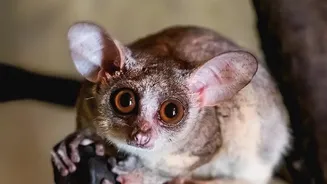
The research suggests that the reason dinosaurs never evolved to be mouse-sized is that those ecological niches were already taken. During the Mesozoic Era, while giant reptiles ruled the day, the world's undergrowth was bustling with small, shrew-like mammals. These early mammals, though living in the shadow of giants, were perfectly adapted to life on a small scale. They thrived as insectivores and seed-eaters, filling the very roles that a tiny dinosaur might have otherwise occupied. The study used energetic fitness models, which link an animal's body size to its efficiency at turning food into offspring. The models predicted that tiny dinosaurs in the 100 to 300-gram range should have existed, but the fossil record shows they are conspicuously absent, while small mammals from the same period are found regularly.
Competition, Not Just Predation
The classic view of the dinosaur age is one where massive dinosaurs kept mammals small and scared. This new research flips that idea on its head, suggesting a two-way street of competition. While dinosaurs prevented mammals from evolving into large forms, mammals may have returned the favor by effectively locking dinosaurs out of the small-bodied niches. It wasn't about predator versus prey, but about two distinct groups competing for the same limited resources at the lower end of the food chain. This intense competition from mammals may have created an evolutionary barrier, preventing dinosaurs from shrinking. In essence, our furry ancestors were so good at being small that there was simply no room left for a 'dinosaur mouse' to evolve.
Setting the Stage for a New Era
This insight provides a clearer picture of the complex ecosystems that existed 66 million years ago. It shows that mammals were not just passively waiting for the dinosaurs to disappear. They were active, successful competitors carving out their own space. Other recent research supports the idea that the story of mammal evolution is more complex than previously thought. Studies show that early mammal relatives were already diversifying and even exhibiting social behaviors like burrowing together long before the dinosaurs vanished. This constant pressure to survive in a world of limited resources likely gave mammals the adaptability and resilience that proved crucial. When the asteroid impact triggered a mass extinction, wiping out the large dinosaurs, mammals had already spent millions of years perfecting the art of survival on a small scale. They were perfectly positioned to emerge from the shadows and inherit a changed world, eventually diversifying into the vast array of species we see today.