




The Sky's Own Traffic Jam
The most frequent reason for circling is simple: traffic. Just like cars on a highway, planes need to be safely spaced out. Major airports handle a tremendous volume of flights, and air traffic controllers (ATC) are the choreographers of this complex
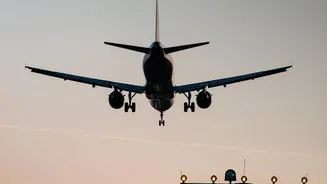
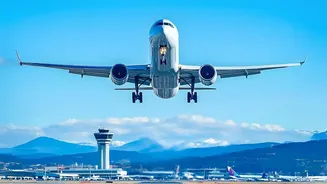
sky-dance. When more planes are scheduled to arrive than the airport can safely handle at once, ATC places them into a 'holding pattern'. This is a predetermined, oval-shaped path where aircraft can wait their turn to land, ensuring an orderly and safe flow of traffic without clogging up the airspace near the runway.
Keeping a Safe Distance
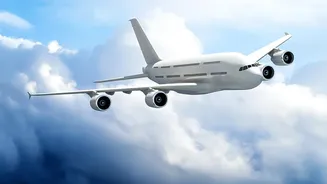
It’s not just about the number of planes, but also their size. Large aircraft, like an Airbus A380 or Boeing 747, generate powerful invisible currents of air called 'wake turbulence'. These swirling vortices can be strong enough to affect a smaller aircraft following too closely, potentially causing it to roll unexpectedly. To prevent this, aviation authorities mandate strict separation distances between different types of aircraft. If a smaller plane is scheduled to land behind a heavy one, it may be instructed to circle for a few minutes to allow this turbulence to dissipate, ensuring a smooth and stable approach.
Unpredictable Weather Conditions
Weather is another major factor that can disrupt a straight-in landing. A sudden thunderstorm, dense fog reducing visibility, or strong crosswinds can make a landing unsafe. In these situations, ATC will put arriving aircraft into a holding pattern to wait for the weather to improve. This pause gives pilots and controllers time to assess the situation and ensures the plane only attempts to land when conditions are favourable. Safety is always the top priority, and no pilot will risk a landing in hazardous weather.
Keeping the Runway Clear
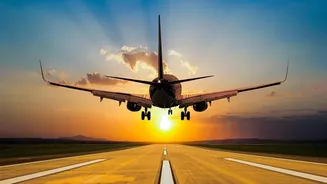
Sometimes the delay isn't in the air but on the ground. A runway might be temporarily unavailable for several reasons. The aircraft that landed just ahead might be slow to exit the runway, or there could be a vehicle performing a routine inspection. In rare cases, debris or even wildlife on the tarmac can force a temporary closure. When a pilot is on final approach and the runway is not clear, they will perform a 'go-around'. This is a standard and safe procedure where the pilot applies full power, climbs back to a safe altitude, and circles around for another attempt.
Final Checks and Minor Issues
A holding pattern also gives pilots a valuable buffer of time. They might need a few extra minutes to complete their landing checklists or to properly configure the aircraft's flaps and landing gear. Occasionally, a non-critical technical issue, like a sensor giving an unusual reading, may prompt the crew to circle while they work through the procedures to verify it. In some instances after an immediate return to the airport after takeoff, a large, heavy aircraft might need to circle to burn off fuel to get down to a safe landing weight. In all these cases, circling provides a safe, stable environment to resolve any issues before committing to the landing.