






The Core Mission: India in Orbit
The fundamental goal of the Gaganyaan programme, which translates to "celestial vehicle," is to demonstrate India's capability for human spaceflight. The mission plans to launch a crew of three astronauts into a Low Earth Orbit of 400 kilometres. They
will circle the Earth for up to three days before returning for a safe splashdown in the Arabian Sea off the coast of Gujarat. A successful mission will make India the fourth country in the world to independently send humans into space, joining the ranks of the Soviet Union (Russia), the United States, and China. The project, led by the Indian Space Research Organisation (ISRO), is not just about exploration but also about advancing science, technology, and inspiring a new generation.
Meet the Vyomanauts: The Chosen Four
The nation was introduced to the four astronaut-designates in February 2024. They are Indian Air Force (IAF) test pilots: Group Captain Prasanth Balakrishnan Nair, Group Captain Ajit Krishnan, Group Captain Angad Pratap, and Wing Commander Shubhanshu Shukla. All four have undergone extensive training, which began in Russia in early 2020 at the Yuri Gagarin Cosmonaut Training Centre and has since continued in India. The training regimen is rigorous, covering everything from mission-specific simulations to survival training. While four astronauts have been selected and trained, the final crew for the first mission will consist of up to three members. One of the astronauts, Shubhanshu Shukla, also gained valuable spaceflight experience on the commercial Axiom Mission 4 to the International Space Station in 2025.
The Technology Behind the Flight
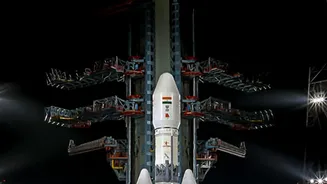
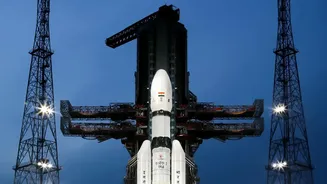
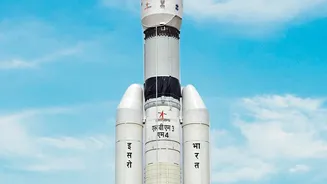
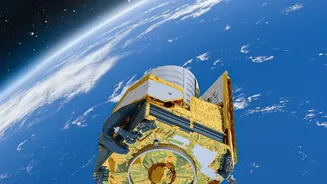
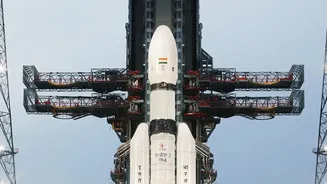
Several key technologies are crucial for Gaganyaan's success. The launch vehicle is a human-rated version of the LVM3 rocket (Launch Vehicle Mark 3), ISRO's most powerful rocket. This rocket has been modified to meet the stringent safety and reliability standards required for carrying astronauts. The spacecraft itself is called the Orbital Module, which has two parts: the Crew Module and the Service Module. The Crew Module is a habitable space with a life support system to provide an Earth-like environment for the astronauts. The Service Module contains the propulsion systems needed for orbital manoeuvres. ISRO has also developed a robust Crew Escape System, which can safely eject the Crew Module and its occupants away from the rocket in case of an emergency during launch.
The Road to Launch: A Series of Critical Tests
Before astronauts strap in, ISRO is conducting a series of uncrewed test flights to validate every system. These demonstrator missions are essential for ensuring crew safety. A key component of this testing phase involves Integrated Air Drop Tests (IADT) to perfect the parachute-based deceleration system for the crew module's safe return. The first successful IADT was conducted in August 2025, with a second following in September 2026. The programme also includes at least two uncrewed orbital flights. The first of these, the G1 mission, is slated for late 2026 and will carry a humanoid robot named Vyommitra. Vyommitra, meaning "space friend," will simulate human functions, allowing ISRO to gather critical data on the life support systems and cabin environment before the crewed launch.
Timeline and Future Ambitions
While initially planned for an earlier launch, the complexity of developing human-rated systems and delays due to the COVID-19 pandemic have adjusted the timeline. According to the latest updates from ISRO, the first crewed Gaganyaan flight is now targeted for the first quarter of 2027. The first uncrewed test flight carrying Vyommitra is expected by the end of 2026. Gaganyaan is just the beginning of India's long-term human spaceflight ambitions. ISRO has already laid out plans for a successor to Gaganyaan, aiming to establish an Indian space station, the Bharatiya Antariksh Station, by 2035 and to send an Indian astronaut to the Moon by 2040.