


A Knot of a Problem
Imagine trying to tell two tangled pieces of string apart without untying them. This is, in essence, the challenge of knot theory, a branch of pure mathematics with surprising applications in fields like biology and physics. Mathematicians study knots
by assigning them characteristics, or 'invariants', to tell them apart. For decades, they have sought a connection between a knot's geometric invariants (related to its shape) and its algebraic invariants (related to its abstract properties). Despite strong intuition that a link existed, no one could find it. It was a problem that seemed tailor-made for a new kind of thinking.
The AI's Unexpected Insight
This is where AI entered the picture. Researchers at companies like DeepMind trained a machine learning system to analyze vast datasets of different knots and their known properties. By processing millions of examples, the AI did something no human had managed: it detected a subtle, previously unseen pattern connecting the two different types of invariants. It didn't just crunch numbers; it identified a new relationship and proposed a novel conjecture—an educated guess—that has since been proven. The AI guided the intuition of human mathematicians, pointing them toward a fruitful area of inquiry they had previously missed.
More Than Just a Faster Calculator
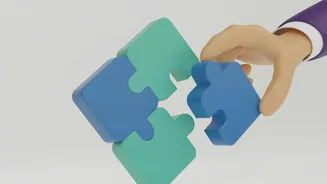
This breakthrough represents a fundamental shift. AI has been used in math for decades, but primarily for verifying proofs or handling massive calculations. This new generation of AI, however, is being used for discovery. It's becoming a partner that can generate hypotheses and offer novel strategies. Mathematicians describe working with these tools as collaborating with a smart, broadly educated colleague who is occasionally prone to error but can uncover surprising connections. The technology is transforming research that might have taken months or years into a process of days or weeks. It's not about replacing human creativity but augmenting it, allowing mathematicians to focus on deeper, more original thinking.
A New Era of Collaboration
The success in knot theory is not an isolated incident. Across different fields of mathematics, from combinatorics to geometry, AI is beginning to make its mark. Systems are now capable of solving problems at the level of the International Mathematical Olympiad, a feat considered shocking just a few years ago. While some in the field remain wary of AI's tendency to 'hallucinate' or make mistakes, the consensus is shifting. The technology is being integrated into the workflow of top mathematicians, who see it as a powerful tool for exploring the vast, uncharted territories of their discipline. This isn't the end of human mathematics, but the beginning of a powerful partnership between human intuition and machine intelligence.