




A Fortuitous Excavation
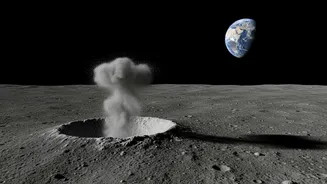
When a multi-ton piece of space hardware slams into the Moon at thousands of kilometres per hour, it doesn't just create a new crater. The immense energy of the impact excavates lunar soil, or regolith, from beneath the surface and hurls it upwards in a giant
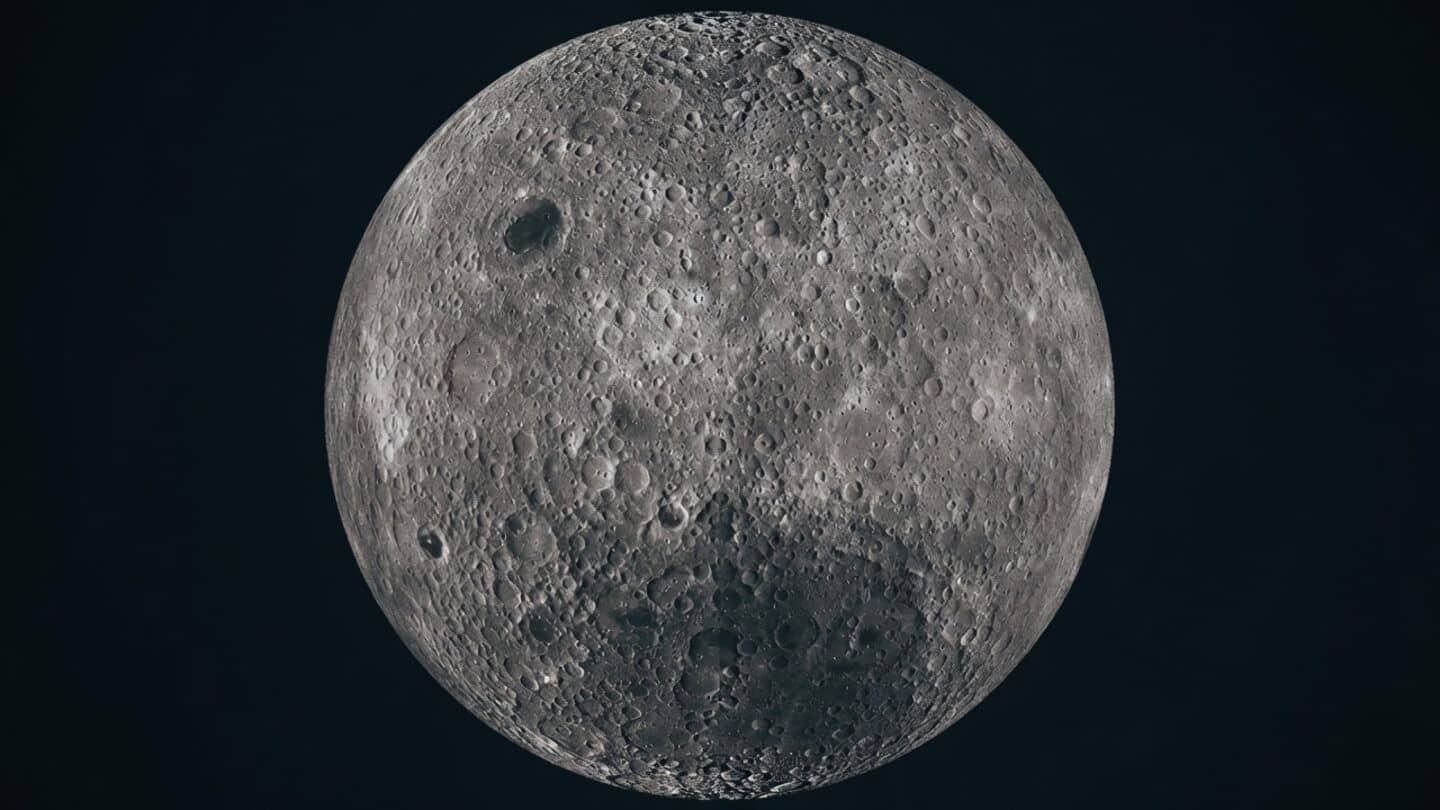
plume of dust and gas. This material, which has been hidden from view for potentially billions of years, is suddenly exposed to the sunlight and to the instruments of orbiting spacecraft. For planetary scientists, this is the equivalent of a free, high-speed drilling operation. Unlike Earth, the Moon has no atmosphere or weather to erode its surface, making it a pristine historical record of the solar system. An impact, planned or not, acts like a page turn in that history book, revealing a chapter that was previously sealed shut.
The Search for Lunar Water
One of the most sought-after discoveries in these plumes is water ice. For decades, scientists have seen evidence of hydrogen at the Moon's poles, but confirming its presence as water was a major goal. This is where impacts become invaluable. NASA’s deliberate LCROSS mission in 2009 crashed a Centaur rocket stage into a permanently shadowed crater near the Moon's south pole. A shepherding spacecraft flew through the resulting plume, analyzing its composition before making its own impact. The results were groundbreaking, confirming the presence not just of water ice, but also other useful compounds like methane and ammonia. These materials, potentially delivered by comets over eons, could one day be harvested to produce breathable air, drinkable water, and even rocket fuel for future explorers, making the Moon a more sustainable outpost for humanity. Unplanned crashes offer a chance to repeat this type of experiment, however accidentally, potentially identifying other resource-rich locations.
Ringing the Moon Like a Bell
Beyond what is thrown up, an impact also sends energy down. The seismic shockwaves from a crash travel through the Moon's interior, and listening to them can reveal its internal structure. During the Apollo era, astronauts left seismometers on the surface. These instruments detected thousands of "moonquakes," including from meteorite strikes and the intentional crashes of lunar module ascent stages after they were no longer needed. The seismic signals from these impacts were unusually long, suggesting the lunar crust is far more fractured and dry than Earth's, causing sound to reverberate. By studying how these P- and S-waves travel, scientists can deduce the size and composition of the Moon's crust, mantle, and core. Every new impact, even from a wayward rocket booster, provides another data point for this complex geological puzzle.
Accidents Become Experiments
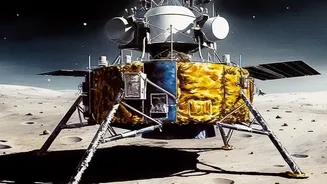
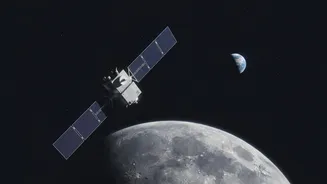
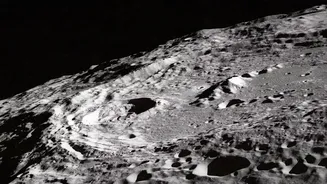
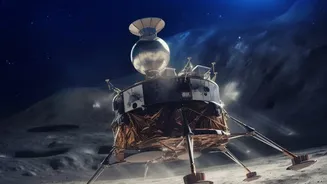
History is filled with these accidental experiments. In recent years, both Israel’s Beresheet lander (2019) and Russia’s Luna-25 (2023) crashed during landing attempts. While the missions failed in their primary objective, their final moments created new, known impact sites. Orbiting spacecraft like NASA's Lunar Reconnaissance Orbiter (LRO) can then study these fresh craters. By comparing before-and-after images, scientists can learn about crater formation mechanics. Since the mass, velocity, and impact angle of the spacecraft are often known, these crashes provide a controlled dataset that is impossible to get from random meteoroid strikes. This helps refine models of how impacts shape planetary surfaces across the solar system.
The Future of Impact Science
As more missions from different nations and private companies target the Moon, the number of spent rocket stages and potential landing failures will inevitably increase. An abandoned SpaceX Falcon 9 upper stage, for instance, is anticipated to hit the Moon in August 2026. Scientists are already preparing to observe the event, hoping to analyse the ejecta plume for composition and study the resulting crater. While these events raise important questions about space debris and planetary protection, they also represent a unique scientific resource. Each unplanned crash is an uncontrolled experiment that, with careful observation, can answer fundamental questions about the Moon's formation, its geological evolution, and its potential to support future human exploration.