


The Promise of a Sky-High Solution
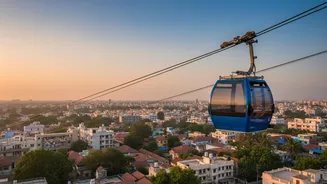
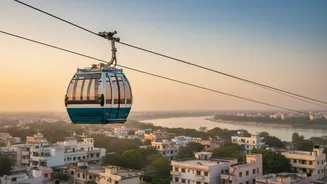
Varanasi, one of the world's oldest living cities, is on the verge of launching India's first-ever ropeway system designed purely for public transport. This is not the familiar tourist gondola found in hill stations, but a genuine mass transit solution
aimed at solving the chronic congestion that plagues the city's ancient, narrow streets. The project, part of the national Parvatmala Pariyojana program, will connect the bustling Varanasi Cantonment railway station to Godowlia Chowk, a key hub near the Kashi Vishwanath Temple and Dashashwamedh Ghat. For locals, pilgrims, and tourists who currently face a frustrating 45-to-60-minute journey by road, the ropeway promises to cut that travel time down to a mere 16 minutes. This ambitious aerial corridor represents a major shift, placing Varanasi alongside a select few cities globally, like La Paz in Bolivia and Mexico City, that use ropeways as an integral part of their public transport network.
Engineering the Future Above the Streets
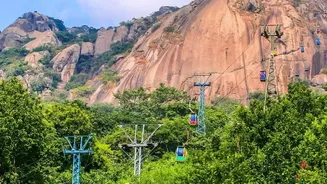
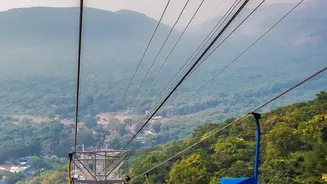
The Kashi Ropeway is an impressive feat of engineering. The system will span approximately 3.75 kilometres, supported by 30 towers of varying heights. A fleet of around 153 ten-passenger cabins will glide along the cables, moved by a single electric engine, showcasing the system's energy efficiency. The project is being constructed by Indian firm Vishwa Samudra Engineering in partnership with Swiss ropeway specialist Bartholet Maschinenbau AG, bringing global expertise to the table. With an expected capacity to transport up to 3,000 passengers per hour in each direction, and a total daily ridership nearing 96,000, the system is built for high volume. The development authority has even finalized an affordable fare structure, with a full journey costing around ₹50, and options for smart passes for regular commuters. Construction, which began in 2023, is in its final stages, with trial runs underway and a projected opening in 2026.
More Than Just Beating Traffic
The benefits of an urban ropeway extend far beyond just saving time. Proponents highlight its significant environmental advantages. The electric-powered system produces minimal emissions compared to the thousands of cars, auto-rickshaws, and buses it will help replace, leading to cleaner air. Furthermore, the construction footprint is remarkably small. Instead of acquiring vast swathes of land for road widening—an often impossible task in a dense heritage city like Varanasi—the ropeway only requires small parcels of land for its towers and stations. This allows the city to modernize its transport infrastructure without disrupting its historic urban fabric. The system is also designed for high reliability and safety, with multiple rescue systems in place and technology proven in challenging alpine environments.
A Blueprint for Other Indian Cities?
While Varanasi is the pioneer, it is unlikely to be the last. The Parvatmala program is already exploring the feasibility of similar projects in other Indian cities and pilgrimage sites. The challenges faced in Varanasi, including land acquisition delays and complex engineering, have provided valuable lessons. The success of this project will be watched closely by urban planners across the country who are grappling with similar issues of congestion, pollution, and the difficulty of expanding road networks in crowded urban cores. While ropeways are not a silver bullet for all traffic woes—they have limitations in speed over very long distances and can be affected by extreme weather like high winds—they present a compelling and cost-effective option for 'last-mile' connectivity and for navigating particularly congested corridors.