








The Promise of the Flying Taxi
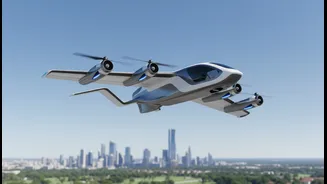
The dream is officially known as Advanced Air Mobility (AAM), and its star players are electric Vertical Takeoff and Landing (eVTOL) aircraft. Think of them as a cross between a helicopter and a drone, but quieter, cheaper, and emissions-free. Companies
like Joby Aviation, Archer Aviation, and Boeing-backed Wisk Aero have poured billions into developing these machines, promising to revolutionise urban transport. The vision is compelling: a 90-minute car ride through Mumbai or Bengaluru traffic could become a 15-minute flight. These aircraft are designed to carry a handful of passengers on short-hop routes, bypassing the gridlock below. Prototypes are already flying, showcasing incredible technology. However, building a working prototype is one thing; getting permission to carry paying passengers is another challenge altogether.
The Great Wall of Regulation
In aviation, nothing is more important than safety. Before any new aircraft can enter service, it must receive a Type Certificate from an aviation authority like the US Federal Aviation Administration (FAA) or the European Union Aviation Safety Agency (EASA). This is a rigorous, multi-year process that scrutinises every single component, system, and line of software code. For traditional airplanes, this process is well-established. But eVTOLs represent an entirely new class of vehicle. They are not quite airplanes and not quite helicopters. Regulators have had to create a new category called “powered-lift” and write the rulebook from scratch. This means every assumption is tested, and every new technology, from distributed electric propulsion to autonomous flight systems, must be proven to be as safe as, or safer than, today’s commercial airliners.
A Marathon, Not a Sprint
The certification process is a marathon run in stages. It begins with agreeing on the certification basis—the specific rules the aircraft must meet. This is followed by years of analysis, component testing, and eventually, flight testing with government pilots at the controls. Companies must prove how the aircraft handles everything from bird strikes and battery fires to catastrophic system failures. Every test generates mountains of data that regulators must review. Some companies, like Joby Aviation, are in the final phases of this process, targeting commercial launch in the next few years. However, timelines often slip. Vertical Aerospace recently pushed its target to 2029. This is not necessarily a sign of failure, but a reflection of the immense complexity involved in certifying a brand-new type of aircraft to the world’s highest safety standards.
What Mid-2031 Really Means
While pioneers like Joby and Archer are aiming for service in the late 2020s, the headline's 2031 date is crucial for understanding the difference between a launch and a rollout. The first certifications will likely enable limited operations in specific markets, such as air taxi services for the LA 2028 Olympics or in dedicated corridors in cities like Dubai. This is the “crawl” phase. “Wider commercial rollout”—the “walk” and “run” phases—is a much larger undertaking. It involves mass production of aircraft, building a network of vertiports (mini-airports for eVTOLs), developing a new air traffic management system for low-altitude flight, and training a new generation of pilots and technicians. Some companies developing more complex, next-generation, or autonomous aircraft are indeed targeting the early 2030s for certification. For the average person, 2031 is a more realistic timeframe for when you might actually see and use these services regularly.
The View From India
While most of the initial certification activity is concentrated in the US and Europe, the implications for India are enormous. Once these aircraft are proven safe and reliable under stringent international standards, it paves the way for their introduction into other markets. Indian aviation regulators will likely look to the precedents set by the FAA and EASA when creating their own frameworks. For a country with some of the world's most congested cities, the potential of AAM is transformative. The long road to certification is not a barrier to that future, but a necessary guarantee that when air taxis finally do arrive in Indian skies, they will be as safe as they are revolutionary. The wait, though long, is what will make the entire system work.