





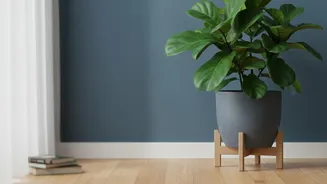


The Science of the Lean
That determined lean towards the window isn't your plant being stubborn; it's a natural survival instinct called phototropism. Plants are biological powerhouses that convert light into energy through photosynthesis, and they will physically move to get
as much of it as possible. This process is driven by growth hormones called auxins. These hormones accumulate on the shaded side of the stem, causing the cells there to grow longer and faster than the cells on the sunlit side. This uneven growth is what causes the stem to bend towards the light, ensuring the leaves are in the best position to soak up energy. So, when your plant leans, it's essentially telling you it needs more light.
The Problem with Constant Turning
Giving your plant a quick turn seems like the logical fix, and for promoting even, all-around growth, a regular rotation can be beneficial. However, if you're constantly spinning a plant just to keep it upright, you're only addressing the symptom, not the cause. The plant is leaning because its current location doesn't provide adequate light. Continually forcing it to reorient itself can be a source of stress. More importantly, it doesn’t solve the underlying issue of insufficient light, which can lead to weaker, leggier growth—a condition known as etiolation—where stems stretch out and become thin and pale.
Position is Everything
The most effective and lasting solution for a leaning plant is to move it to a better spot. Finding the right position is about understanding the direction your windows face and the type of light your specific plant needs. South-facing windows offer the most intense, direct light, ideal for sun-lovers like succulents and cacti. East-facing windows provide gentler morning sun, perfect for many tropical plants that prefer bright, indirect light. West-facing windows get strong afternoon sun, while north-facing windows offer the least amount of light, suitable only for low-light tolerant species like snake plants and some ferns. Moving a plant just a few feet closer to a window can make a world of difference.
How to Find the Perfect Spot
Start by identifying your plant and its specific light requirements. A quick search will tell you if it needs “direct sun,” “bright, indirect light,” or “low light.” Then, assess your home. Spend a day observing how the light moves through your rooms. A spot that seems bright in the morning might be in deep shade by the afternoon. For plants that need bright but indirect light, placing them a few feet back from a south or west-facing window, or right near an east-facing one, is often ideal. If your space truly lacks natural light, consider investing in a full-spectrum grow light placed directly above the plant to encourage straight, upward growth.
When a Little Turn Is Good
This isn't to say you should never turn your plants. Once you've found an optimal location, a slow, regular rotation is an excellent practice for maintaining balanced growth. Giving your plant a quarter turn every week or every time you water it ensures that all sides receive light over time. This prevents one side from becoming much fuller and leafier than the other, resulting in a more aesthetically pleasing, symmetrical plant. The key is that this rotation is for maintenance in a good spot, not a rescue mission in a bad one.
Correcting an Existing Lean
If your plant already has a significant curve, don't despair. After moving it to a brighter location, you can often correct the posture. Turn the plant so the lean is directed away from the new light source; it will gradually start to straighten itself out. For top-heavy or severely bent plants, providing physical support is a great idea. A simple bamboo cane or a moss pole for climbing varieties can be gently secured to the stem with plant clips or twine. This gives the plant a structure to rely on as it corrects its growth pattern.