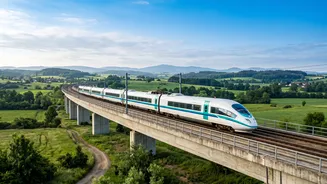









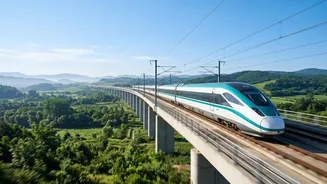
A high-speed rail link promises to shrink the capital region, and North Haryana is already feeling the change. The Delhi-Panipat Namo Bharat plan is sparking an investment surge, even before the final green light for the entire corridor is in place.
The High-Speed Promise
The
Delhi-Panipat-Karnal Namo Bharat corridor is a 136.3-km semi-high-speed rail line designed to slash travel times and redefine commuting in the National Capital Region (NCR). Part of the wider Regional Rapid Transit System (RRTS), this project aims to connect Sarai Kale Khan in Delhi to Karnal, passing through key Haryana towns like Sonipat and Panipat. With trains operating at speeds of 160 km/h, the journey from Delhi to Panipat, which currently takes over two hours, is expected to be cut to just one hour. The trip to Karnal could be reduced from nearly four hours to about 90 minutes. The service, running every five to ten minutes, is designed for daily commuters, offering a reliable alternative to the congested National Highway 44. This is not a metro, which serves short-distance urban travel, but a regional connector built for speed over longer distances.
North Haryana's New Appeal
Even with the final approvals for the full corridor falling into place, the project's promise is already triggering a significant real estate boom. Developers and homebuyers are looking at Sonipat, Panipat, and Karnal with fresh eyes, seeing them not as distant towns but as future well-connected suburbs of Delhi. Real estate experts report a surge in demand for residential and commercial properties along the proposed route. Yashank Vasan, Managing Director of Royal Green Realty, noted that with fast and easy access to Delhi, people will take these cities more seriously as places to live, especially families and professionals looking for more affordable housing. This renewed interest is fuelled by the prospect of transit-oriented development, with integrated townships and commercial hubs planned around the 22 proposed stations.
The Economic Ripple Effect
The impact of the Namo Bharat plan extends far beyond residential real estate. The project is seen as a catalyst for balanced urban development and the emergence of new economic hubs across North Haryana. Abhay Kumar Mishra, President and CEO of Jindal Realty, stated that the corridor will help cities like Sonipat and Panipat connect better with major economic centres, unlocking their full potential. The improved connectivity is expected to spur the growth of commercial properties, retail centres, schools, and healthcare facilities around the new stations. Furthermore, the line will integrate with other key transport networks, including the Delhi Metro, Indian Railways, and the Haryana Orbital Rail Corridor, creating a seamless multi-modal transit system that supports both industrial and logistical growth in the region.
The Path to Completion
While the headline notes the project awaits final clearances, recent developments show significant progress. The project, estimated to cost around ₹33,051 crore, has received crucial approvals from the Haryana government and the National Highways Authority of India (NHAI) for land use. The central government has also provided clearances, with the project's Public Investment Board approval happening in late 2025. The final sanction from the Union Cabinet is a key remaining step for the full corridor. In the meantime, preliminary work has already started on a 22-km stretch between Narela and Murthal, indicating that the implementing agency, NCRTC, is moving forward where it can. The entire corridor is targeted for completion by 2030, marking a new era of connectivity for the region.