


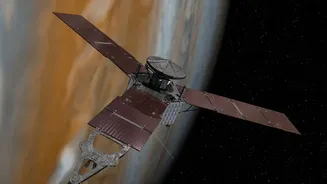

Meet Pandora: A New Kind of Explorer
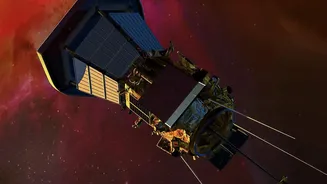
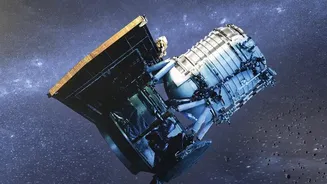
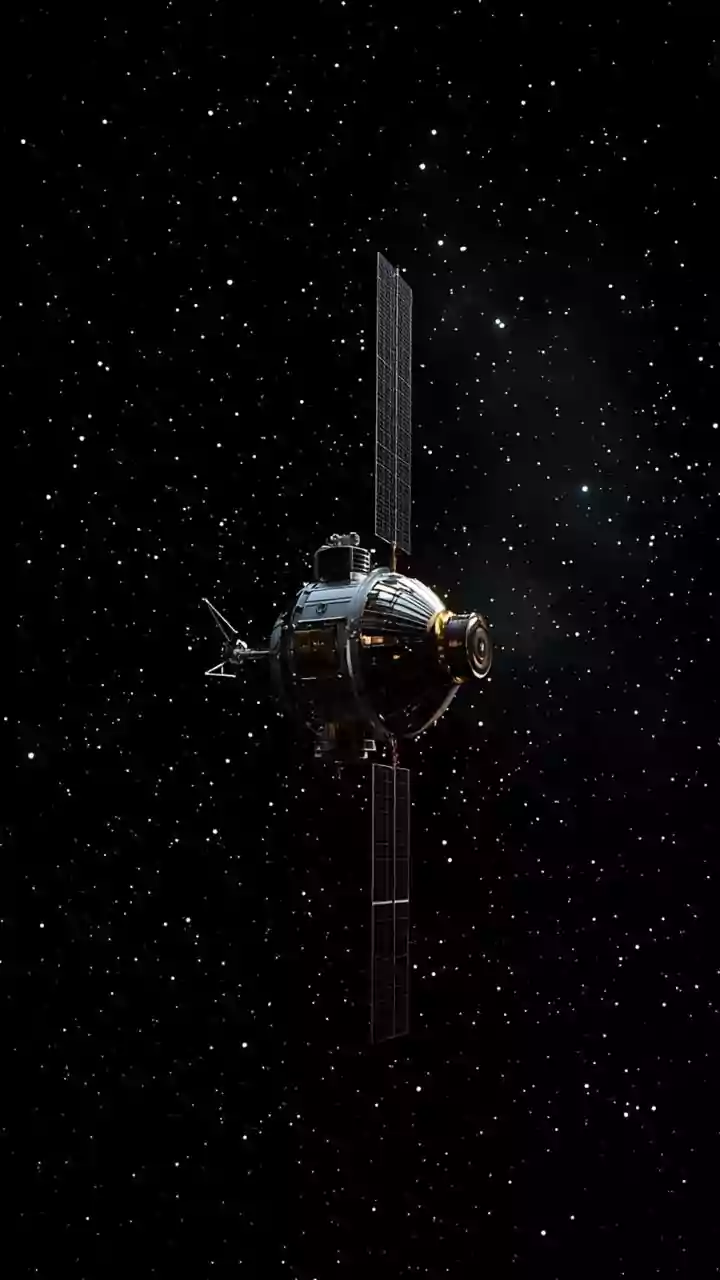
Launched in January 2026, Pandora is a small satellite, or SmallSat, with a very specific job: to study the atmospheres of at least 20 planets outside our solar system, known as exoplanets. As the first mission in NASA's Astrophysics Pioneers program,
Pandora represents a shift in strategy. Instead of building one massive, all-purpose observatory, the Pioneers program focuses on faster, lower-cost missions designed to answer targeted scientific questions. Pandora's primary goal is to determine the atmospheric makeup of these worlds, looking for tell-tale signs of clouds, hazes, and especially water. Led by NASA's Goddard Space Flight Center and Lawrence Livermore National Laboratory, this compact explorer is set to make a big impact on our understanding of worlds beyond our own.
The Science of Starlight and Shadows
Pandora doesn’t travel to these distant worlds. Instead, it uses a technique called transmission spectroscopy. When an exoplanet passes in front of its host star from our point of view—an event called a transit—a tiny fraction of the starlight filters through the planet's atmosphere. Molecules in that atmosphere, like water vapor, absorb light at very specific wavelengths, leaving a unique chemical "fingerprint" in the starlight that reaches Pandora's telescope. By analyzing this spectrum of light, scientists can identify which gases are present. The big challenge, however, is that stars themselves are not stable. They have active regions like starspots that can create signals that mimic or mask the signature of a planet's atmosphere.
Untangling Star from Planet
This is where Pandora truly shines. Its key innovation is its ability to disentangle the signal of the planet's atmosphere from the 'noise' of its host star. The spacecraft observes the star system simultaneously in both visible and near-infrared light. The visible light data helps scientists track the star's activity, such as rotating starspots, while the near-infrared observations are ideal for spotting the signature of water in the planet's atmosphere. By observing both at the same time over an extended period—each of its 20 target planets will be observed for a 24-hour window at least 10 times—Pandora can create a baseline of the star's behavior. This allows scientists to confidently subtract the star's activity from the data, isolating the true atmospheric composition of the exoplanet.
A Powerful Partner for Webb
While NASA's James Webb Space Telescope (JWST) is a powerful tool for studying exoplanets, its time is in extremely high demand. Pandora is designed to complement, not compete with, flagship missions like Webb. Since Pandora is a smaller, dedicated mission, it has the advantage of being able to stare at its targets for much longer periods than Webb can afford to. This long-duration monitoring is crucial for understanding stellar variability. In fact, Pandora's findings will provide essential context for interpreting Webb's more detailed, high-precision measurements. By identifying which targets are most promising and providing a clean dataset corrected for stellar contamination, Pandora helps maximize the scientific return from the massive investment in JWST.