







A New, Clearer Picture
An international team of polar scientists, in a project supported by NASA and the European Space Agency (ESA), has provided the most complete picture of polar ice loss ever assembled. By combining data from 42 separate satellite surveys and 27 different
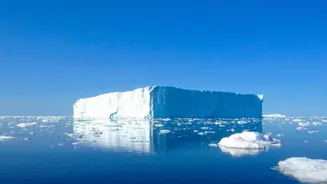
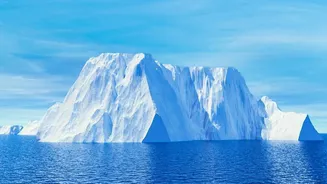
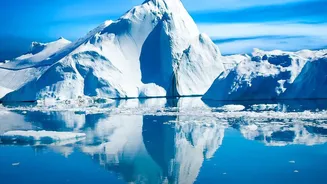
missions, researchers have extended the observational record back to the 1970s. The findings, published in the journal Scientific Data, confirm that between 1979 and 2023, Greenland and Antarctica experienced a combined net loss of 11,309 billion tonnes of ice. This isn't just a story about melting; a striking 84% of this loss came from glaciers speeding up and discharging more ice directly into the ocean. This crucial detail tells scientists that the long-term trend is being driven by the ice sheets' dynamic response to a warming ocean, not just warmer air.
Visualising 11 Trillion Tonnes
The scale of 11.3 trillion tonnes is almost impossible to comprehend. To put it in perspective, this amount of ice is enough to submerge the entire continental United States in about 1.5 metres of frozen water. Another way to picture it is a layer of water 25 metres deep covering the entire area of a country like Sweden. The rate of loss has also accelerated dramatically. In the 1980s, Antarctica was losing about 48 billion tonnes of ice per year; by the 2010s, that figure had soared to 202 billion tonnes annually. Greenland saw a similar surge, from around 60 billion tonnes per year in the 1980s to 264 billion tonnes in the 2010s. Together, these two ice sheets are now responsible for about a quarter of all global sea-level rise.
From the Poles to India's Shores
While the melt is happening thousands of kilometres away, its consequences are arriving directly at India's 7,500-kilometre coastline. The 3.14 centimetre (about 1.2 inches) rise in global sea levels from this specific ice loss is part of a larger trend that poses a direct threat to India's coastal megacities. Major economic hubs like Mumbai, Kolkata, and Chennai are all low-lying and increasingly vulnerable to more frequent and severe flooding. Beyond the cities, the impact on rural coastal communities is severe. Rising seas lead to coastal erosion, which has already forced villagers in places like Odisha to relocate inland. Furthermore, saltwater intrusion contaminates fresh groundwater and renders agricultural land unusable, threatening both livelihoods and food security for millions.
What 'Looks Different' Now
What this new, long-term data makes clear is the primary driver of the problem. While surface melting from warm air is a factor, the more significant issue is the faster flow of glaciers into the sea, destabilised by warming ocean waters. This 'dynamic' ice loss is harder to predict and underscores the deep connection between the oceans and the ice sheets. Researchers did note a temporary slowdown in ice loss from 2020 to 2023, but they caution this is not a reversal of the trend. It was caused by unusually heavy snowfall in parts of Antarctica and milder summers in Greenland, which are considered short-term weather fluctuations within a long-term pattern of decline. The new data provides a stronger foundation than ever for understanding future changes.