





A 'Once-in-a-Century' Scar
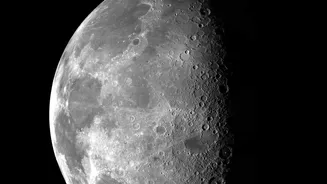
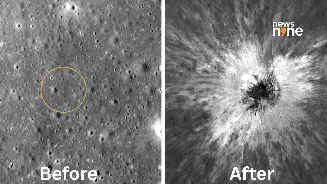
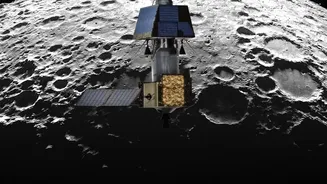
Scientists using NASA's Lunar Reconnaissance Orbiter (LRO) have identified a massive new crater, named McGetchin. This isn't just any crater; it's the result of what's being called a 'once-in-a-century' impact event that occurred sometime between April
and May of 2024. An object estimated to be the size of a small building slammed into the Moon's eastern edge, carving out a hole 728 feet across and 141 feet deep. The discovery itself happened more than a year later, in late 2025, when an image specialist noticed the tell-tale signs of a fresh impact while reviewing LRO data. What makes this event truly extraordinary is not just the size of the crater, but the bizarre phenomenon surrounding it.
The Counterintuitive Chill
You would expect the site of a violent, high-energy impact to be hot. Instead, the LRO's Diviner instrument, which measures surface temperature, found the opposite. Surrounding the McGetchin crater is a vast 'cold spot' stretching over four miles (about 7 kilometers) wide. During the frigid lunar night, this area is about 16 degrees Fahrenheit cooler than its surroundings. This finding puzzled scientists, as it runs counter to the initial logic of impact physics. The energy released during such a collision is immense, so discovering a widespread zone of cold required a deeper explanation of what happened to the lunar surface.
The Science of Fluffy Soil
The leading theory for this strange chill comes down to dirt, or as lunar scientists call it, regolith. The immense force of the impact didn't just dig a hole; it blasted away the dense, compacted top layer of lunar soil and threw out a deep, wide blanket of material from underneath. This newly exposed material is described as being 'fluffy' and less dense. Think of the difference between a hard-packed path and freshly tilled garden soil. This fluffy regolith is a terrible conductor of heat. It acts like a layer of insulation, preventing heat from the Sun from being absorbed efficiently during the day and causing it to lose what little heat it has very quickly during the long lunar night. The result is a persistent cold spot that stands out dramatically against the more thermally stable ground around it.
A Natural Laboratory
This discovery is more than just a celestial curiosity. It provides scientists with a perfect natural laboratory. By studying McGetchin crater and its cold halo, they can learn about the properties of the Moon's subsurface without ever digging. These cold spots don't last forever; over hundreds of thousands of years, micrometeorite bombardment and seismic waves will gradually compact the fluffy material, causing the thermal anomaly to fade. The presence of such a distinct cold spot is a clear sign of a very young crater, giving researchers a new tool to estimate the age of lunar features. For future lunar missions, like those under the Artemis program, this knowledge is invaluable. Understanding how impacts alter the soil's density and thermal properties is crucial for designing rovers that won't get stuck and for selecting safe and stable locations for future lunar bases.