







A Famous Volcano Awakens
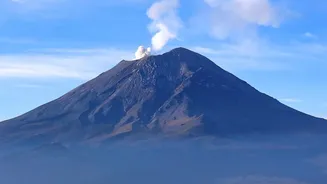
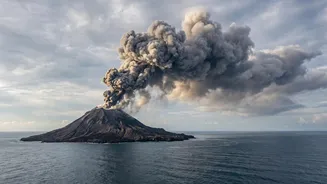
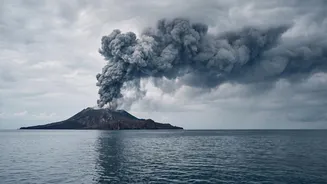
Situated in the Sunda Strait between the Indonesian islands of Java and Sumatra, Anak Krakatau, or “Child of Krakatau,” has been in an active phase since early July 2026. However, activity intensified dramatically starting late on September 4, 2026, with
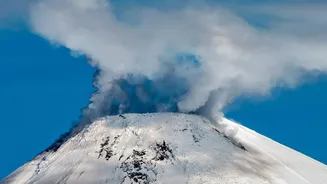
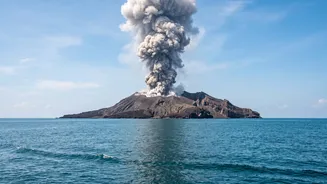
a series of powerful eruptions. These events sent vast plumes of ash thousands of metres into the atmosphere. Indonesia's Center for Volcanology and Geological Hazard Mitigation (PVMBG) has maintained a Level III alert status, the third-highest level, and established a 3-kilometre exclusion zone around the active crater. While authorities have assured that the current eruption does not pose a tsunami risk, the primary and most immediate impact has been felt in the skies.
The Microscopic Threat to Jet Engines
To the naked eye, a volcanic ash cloud might look like a regular weather cloud, but for a modern jet aircraft, it represents an extreme hazard. Volcanic ash is not soft like soot; it is composed of tiny, sharp particles of rock, minerals, and volcanic glass. The danger is twofold. First, the abrasive nature of these particles can 'sandblast' an aircraft, stripping paint, scratching cockpit windows to obscure pilot vision, and eroding sensitive navigation instruments and fan blades. Even more critically, modern jet engines operate at temperatures hotter than the melting point of volcanic ash. When ash is ingested into an engine, it melts into a molten glass and then re-solidifies on cooler components like turbine blades and fuel nozzles. This process can quickly lead to a loss of engine power, a compressor stall, or a complete and catastrophic engine flame-out.
A Cascade of Cancellations
In response to the ash cloud drifting from Anak Krakatau, Indonesian authorities took drastic but necessary action. On Sunday, September 6, operations at eight airports were halted, including the country's main international hub, Soekarno-Hatta International Airport in Jakarta. The closures led to a cascading effect across the region and beyond. By Monday, the transport ministry reported that the disruptions had affected more than 270,000 passengers, with over 2,300 flights cancelled, delayed, or diverted. Major international carriers, including Singapore Airlines and Qantas, cancelled numerous services to and from Jakarta. The chaos left thousands of travellers stranded, forcing many to seek arduous and lengthy alternative journeys by train and ferry.
The Global Safety Net
The widespread grounding of flights is not a sign of panic, but of a well-established global safety protocol. A network of nine Volcanic Ash Advisory Centers (VAACs) around the world is responsible for monitoring and forecasting the movement of ash clouds. Using satellite data and atmospheric models, these centers provide critical advisories to air traffic controllers and airlines, allowing them to reroute or cancel flights to avoid dangerous airspace. The decisions are guided by a simple, non-negotiable principle: safety is the highest priority. The memory of past incidents, such as the 2010 eruption of Eyjafjallajökull in Iceland which paralysed European air travel, serves as a constant reminder of the risks involved.
What Travellers Should Do
For passengers with travel plans in or through the affected region, the situation remains fluid. Indonesian officials stated that Jakarta's main airport had resumed operations early on September 8, but the volcano's activity continues to be monitored. Airlines are working to clear the backlog, with carriers like Singapore Airlines adding relief flights to assist stranded customers. The best course of action for travellers is to check directly with their airline for the most up-to-date information on their flight status before heading to the airport. Passengers have reported significant challenges, from sold-out trains to surging fares for alternative transport, underscoring the widespread impact of the eruption. Authorities have also urged the public to rely only on official sources for information and to avoid unverified reports.