

Why Dynamic Planks Are Superior
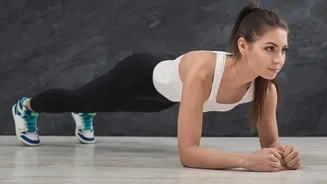
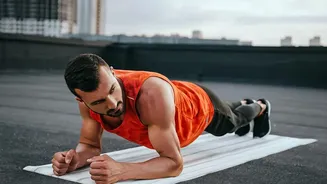
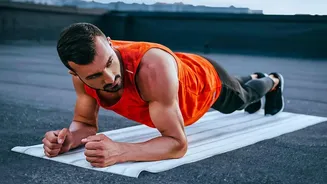
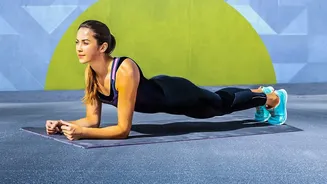
The traditional static plank is an isometric exercise, excellent for building baseline endurance. However, once you can hold a plank for 60 seconds, simply adding more time yields diminishing returns for strength. Dynamic planks, which involve moving
your limbs while maintaining a stable torso, offer a significant upgrade. This movement creates instability, forcing your deep core muscles to work harder to prevent your body from rotating or falling. This process builds functional stability, which is more applicable to real-life activities and sports than static endurance. By constantly challenging your balance and control, dynamic variations lead to greater muscle activation and can help you achieve more comprehensive core fitness, all while being more engaging than staring at the floor.
1. Plank with Shoulder Taps
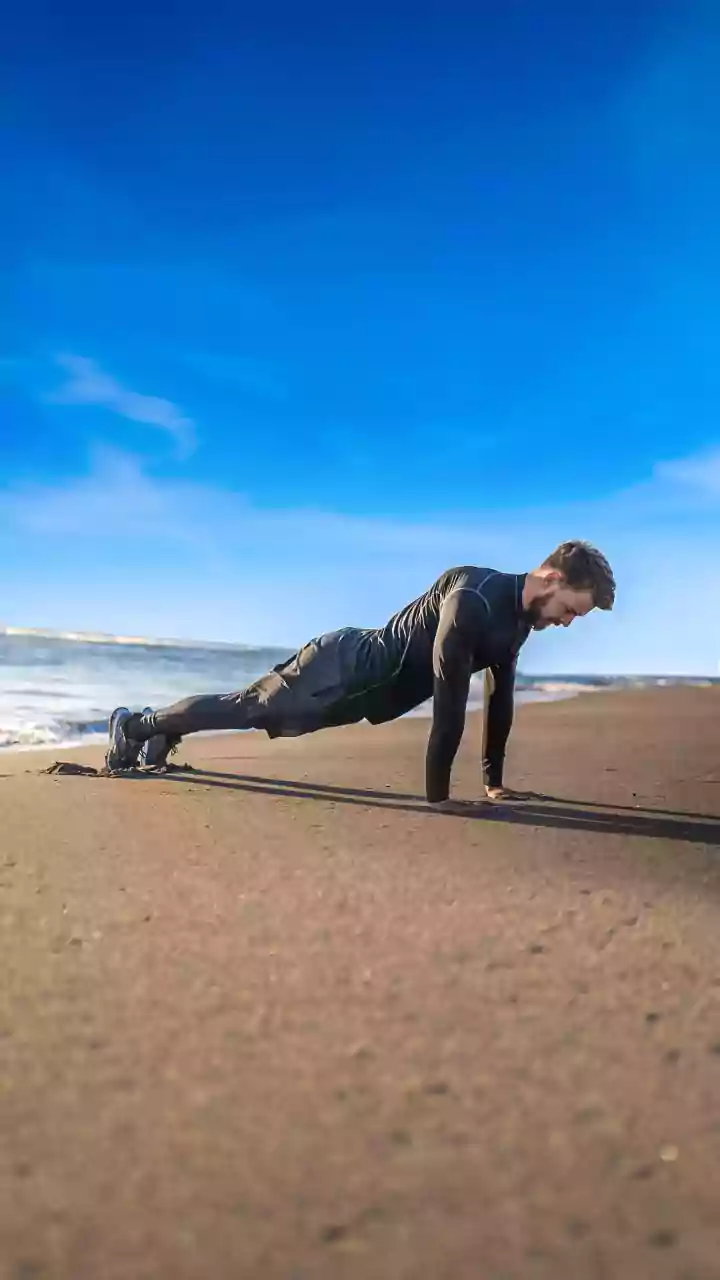
This variation is a fantastic introduction to dynamic stability. By lifting one hand, you create an unstable three-point base, forcing your core to fire intensely to keep your hips square. It strengthens the abs, glutes, arms, and shoulders. How to do it: Start in a high plank position with your hands directly under your shoulders and feet slightly wider than hip-width for a more stable base. Brace your core and glutes. Without rocking your hips, slowly lift your right hand to tap your left shoulder. Place it back down with control and repeat on the other side, lifting your left hand to your right shoulder. The key is to minimize any swaying or rotation in your hips; if they're moving, slow down and focus on keeping your core tight.
2. Walking Plank (Up-Down Plank)
Also known as the Commando Plank, this exercise adds an upper-body push element that targets your shoulders, chest, and arms while still demanding serious core control. It's a full-body challenge that improves strength and endurance. How to do it: Begin in a high plank position on your hands. Keeping your hips as still as possible, lower your right forearm to the floor, followed by your left, so you are now in a forearm plank. To come back up, place your right hand on the floor directly under your shoulder and push up, followed by your left hand to return to a high plank. Alternate the leading arm with each repetition to ensure balanced muscle development.
3. Side Plank with Rotation
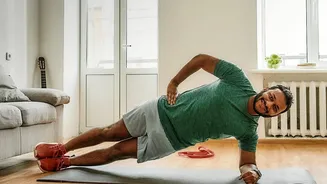
Standard side planks are phenomenal for targeting the obliques, the muscles along the sides of your core that are crucial for rotational movements and protecting your spine. Adding a rotation, or a "thread the needle" movement, enhances this benefit, improving thoracic (upper back) mobility and anti-rotational strength. How to do it: Get into a side plank position, resting on your right forearm with your elbow directly under your shoulder and your body in a straight line. Extend your left arm toward the ceiling. From here, slowly rotate your torso downwards and 'thread' your left arm through the space underneath your body. Go as far as you can without losing your balance or letting your hips drop, then reverse the movement to return to the start. Perform all reps on one side before switching.
4. Lateral Plank Walk
This move challenges your coordination and core stability in a new plane of motion. By moving sideways, you force your obliques and shoulder stabilizers to work overtime to prevent your hips from swaying. How to do it: Start in a high plank position. Simultaneously step your right hand and right foot about six inches to the right. Follow by bringing your left hand and left foot to meet them, returning to your plank stance. Take several “steps” in one direction before reversing and walking back to the other side. The goal is to keep your plank line perfectly straight and your hips level throughout the entire movement.
5. Reverse Plank
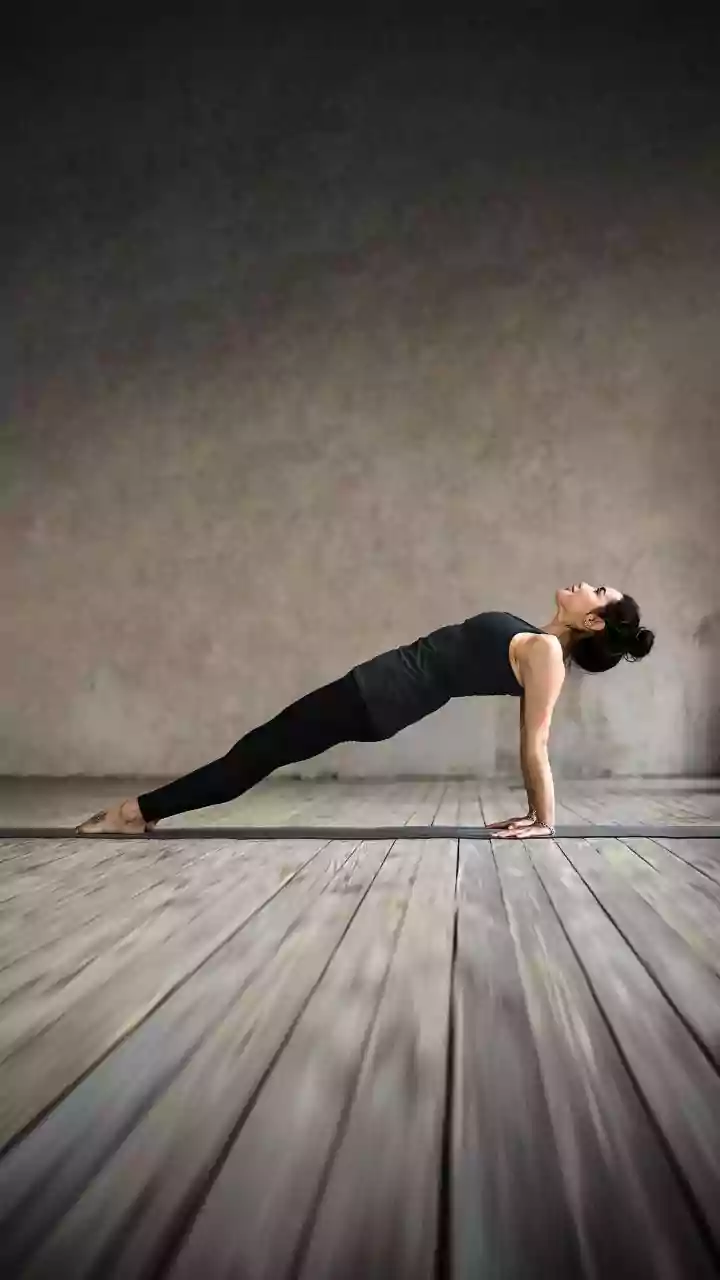
While most planks focus on the anterior (front) chain of your body, the reverse plank shifts the focus to your posterior chain: the glutes, hamstrings, and lower back. It's also an excellent exercise for opening up the chest and shoulders, helping to counteract the slouching posture many of us adopt at a desk. How to do it: Sit on the floor with your legs extended in front of you. Place your hands on the floor slightly behind and outside your hips, with your fingertips pointing toward your feet. Press into your hands and lift your hips and torso toward the ceiling until your body forms a straight line from your heels to your head. Keep your arms and legs straight and engage your core and glutes to prevent your hips from sagging. Hold the position, focusing on squeezing your glutes and keeping your body elevated.