







A Visionary Leap for Indian Space Tech
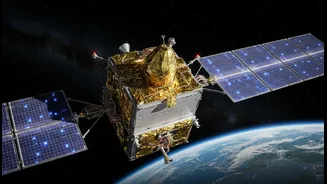
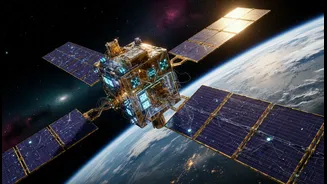
Launched on May 3, 2026, Mission Drishti was not just another satellite. Developed by Bengaluru-based startup GalaxEye, it was India's largest privately built Earth observation satellite and a global first. Its promise lay in its revolutionary 'OptoSAR'
technology, which combined two powerful sensors on a single platform: a traditional optical camera and a Synthetic Aperture Radar (SAR). This hybrid 'eye in the space' was designed to do what few others could. While optical sensors provide clear, intuitive images, they are useless against clouds, smoke, or darkness. SAR, on the other hand, can peer through all weather conditions, day or night. By fusing these two capabilities, Mission Drishti was engineered to provide an uninterrupted stream of high-resolution, analysis-ready imagery, a game-changer for disaster management during floods, strategic border surveillance, and precision agriculture during monsoon seasons.
The Silence After the Storm
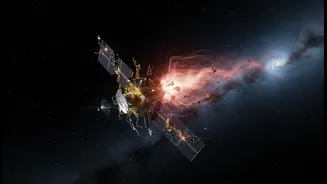
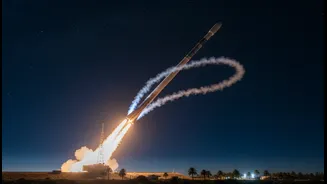
The mission began with great promise. After its launch on a SpaceX Falcon 9 rocket, GalaxEye confirmed it had established stable communication. The satellite successfully completed a large part of its initial in-orbit tests, validating critical systems from deployment to attitude control right from its Bengaluru mission control centre. But during the final phase of its deployment, disaster struck. The satellite flew into a severe geomagnetic solar storm, an event that bombards spacecraft with high-energy radiation. Communication became intermittent before it was lost completely. After weeks of recovery efforts, GalaxEye officially announced on July 7 that the likelihood of re-establishing contact was low. An initial analysis points to the solar storm affecting a critical onboard system, effectively silencing India's most advanced private satellite.
More Than a Technical Glitch
Losing a satellite is always a setback, but the loss of Mission Drishti stings particularly hard because of what it represented. It was a tangible symbol of the 'Aatmanirbhar Bharat' vision in the high-stakes world of space technology, a field long dominated by government agencies. GalaxEye, a startup founded by IIT Madras alumni, had achieved a significant milestone, proving that India's private sector could not only compete but innovate on a global scale. The failure is a financial and strategic blow, delaying the availability of a sovereign, all-weather imaging capability that would have reduced reliance on foreign data providers, especially during times of crisis. It’s a stark reminder of the brutal challenges of space exploration, where years of work can be undone in moments by the unforgiving environment of orbit.
Valuable Lessons from the Void
However, to frame this as a complete failure is to miss the point. Even in its shortened lifespan, Mission Drishti was a partial success. Suyash Singh, the CEO of GalaxEye, emphasised that the mission provided invaluable engineering insights and successfully validated numerous critical technologies and operational systems. This was a shakedown cruise on the most challenging racetrack imaginable. The data gathered during its weeks of operation will directly inform the design of future spacecraft, making them more resilient. In response to the loss, GalaxEye has already announced plans to accelerate its in-house manufacturing and component sourcing to improve reliability and quality control, a strategic pivot that will strengthen its foundations for the long run.
The Mission's True Legacy
The end of this specific satellite is not the end of the mission's vision. The demand for all-weather, high-resolution Earth observation has not disappeared. In fact, the attention this mission garnered has likely reinforced its importance among potential customers in defence, agriculture, and disaster management. The company has already stated its intention to launch two more, larger satellites within the next two years, built upon the hard-won lessons from Drishti. The spirit of innovation that drove a small team of engineers to build the world's first OptoSAR satellite has not been extinguished by a solar storm. It has been tested, and it has adapted. The silence from orbit is a setback, a costly and public one, but it is not the end. It is the prologue to the next, more robust chapter in India's private space journey.