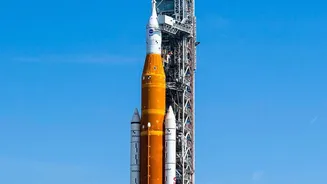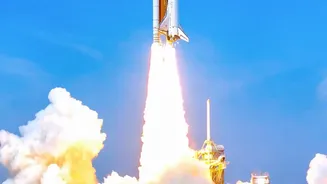






Humanity's journey to Mars requires more than just a powerful rocket; it needs a revolution in power and propulsion. NASA is taking a giant leap in that direction, signing key agreements to develop nuclear technology for future civil space missions.
A New Era of Space Power
NASA
is moving forward with its goal of establishing a long-term human presence on the Moon and eventually Mars. A crucial part of this ambition involves solving one of the biggest challenges in space exploration: the need for abundant, reliable power. To that end, NASA, in partnership with the Department of Energy, has awarded contracts to several industry partners to advance the development of nuclear-powered systems. These agreements focus on two distinct but equally vital technologies: Nuclear Thermal Propulsion (NTP) to get astronauts to deep space destinations faster, and Fission Surface Power (FSP) to provide the energy needed to live and work on other worlds. Recent contracts worth approximately $5 million each were awarded to companies like Lockheed Martin, Westinghouse, and Intuitive Machines' joint venture, IX, to create preliminary designs for a lunar fission power plant.
The Fast Lane to Mars
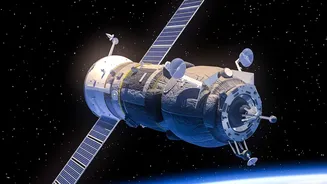
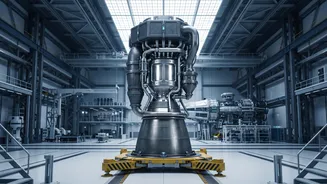
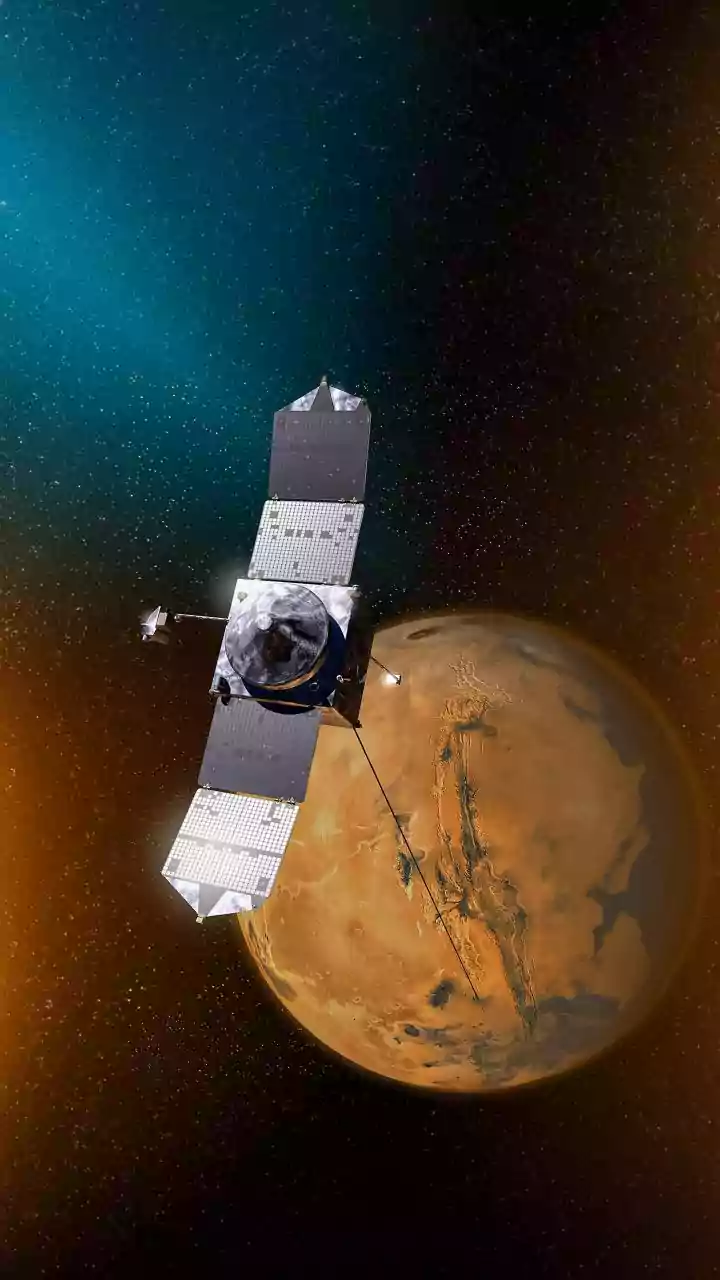
The vast distance between Earth and Mars presents a major hurdle for crewed missions. Using conventional chemical rockets, the journey could take seven to nine months, exposing astronauts to prolonged periods of space radiation and increasing mission complexity. This is where Nuclear Thermal Propulsion comes in. An NTP system uses a nuclear reactor to heat a liquid propellant, like hydrogen, which then expands into a gas and is shot out of a nozzle to create thrust. According to NASA, this method is up to five times more efficient than the chemical propulsion systems used today. This leap in efficiency could dramatically shorten the transit time to Mars, potentially cutting the trip to just four or five months. To prove the concept, NASA is collaborating with the Defense Advanced Research Projects Agency (DARPA) on the DRACO mission, which aims to launch an NTP-powered demonstration spacecraft as early as 2027.
Powering a Lunar Base
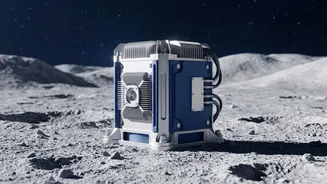
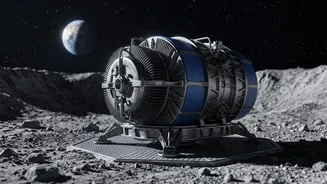
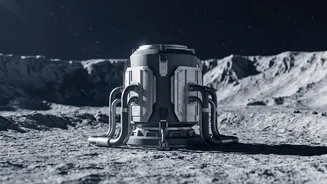
Once astronauts arrive on the Moon or Mars, they will need a steady, reliable power source to run their habitats, life support systems, and scientific equipment. Solar power is a viable option but has significant limitations. On the Moon, a single lunar night lasts for 14 Earth days, and on Mars, massive dust storms can block sunlight for weeks at a time. A small, portable nuclear fission reactor would be a game-changer. The Fission Surface Power project aims to develop a 40-kilowatt class fission system, which is enough to continuously power several households on Earth. The goal is to create a system that is small and light enough to be transported to the lunar surface but durable enough to operate for at least a decade. The initial designs being developed by industry partners are the first step toward a planned lunar demonstration in the early 2030s.
Addressing the Safety Question
The word 'nuclear' understandably raises safety concerns. However, NASA has a long and successful history of using nuclear power in space. For decades, missions like the Voyager probes and the Curiosity and Perseverance Mars rovers have been powered by Radioisotope Power Systems (RPS), which use the heat from decaying plutonium to generate electricity. The fission systems now under development are different, but they are being designed with safety as the highest priority. The reactors will use a special type of fuel known as High-Assay Low-Enriched Uranium (HALEU), which is robust and far less suitable for proliferation than weapons-grade materials. Furthermore, a critical safety feature of the design is that the reactor will be launched in a 'cold' state, meaning it will not be turned on and begin generating significant radiation until the spacecraft has reached a safe, stable orbit far from Earth or is on its final trajectory in deep space.