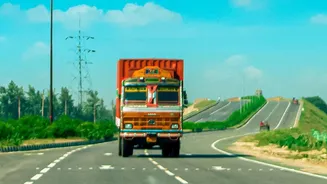









The Scale of the Slowdown
Recent data presented to Parliament reveals a stark picture of the delays plaguing the country's road-building ambitions. Of 1,191 National Highway (NH) projects currently under construction, a staggering 629 have overshot their original completion dates.
This means that for every two highway projects underway, one is officially delayed. The issue is widespread, affecting numerous states. Maharashtra leads with 60 delayed projects, followed by Karnataka with 47 and Uttar Pradesh with 44. In some smaller states like Kerala and Nagaland, nearly all ongoing highway projects have missed their deadlines, highlighting a systemic challenge rather than an isolated one.
The Primary Roadblock: Land Acquisition
The single biggest reason for these extensive delays is the complex and often contentious process of land acquisition. According to parliamentary committee reports, disputes related to acquiring land account for roughly 35 percent of all project delays. These issues stem from a variety of factors, including inaccurate land records, resistance from local communities, and protracted negotiations over compensation. Beyond land, securing necessary environmental and forest clearances is another major bottleneck, particularly for projects that pass through ecologically sensitive zones. The Ministry of Road Transport and Highways has acknowledged these challenges, noting that obtaining statutory permissions remains a critical hurdle.
Financial and Material Headwinds
It isn't just red tape holding things up. Economic factors also play a significant role. Contractors and construction companies have been grappling with financial constraints, which affects their ability to execute projects on time. This financial distress is often worsened by rising input costs. Geopolitical events and supply chain disruptions have led to price increases of 5-8% for key materials like steel, cement, and bitumen, putting further pressure on project budgets and timelines. In response to poor performance, the government has also taken a stricter stance, penalising or blacklisting over 100 contractors in recent years for quality issues and execution lags.
The Ripple Effect on the Economy
Delayed highways are more than just an inconvenience for travellers; they have a tangible impact on the national economy. Inefficient road networks lead to higher logistics costs for businesses, which in India are already estimated at 13-14% of GDP, compared to 8-10% in more developed nations. Delays mean slower movement of goods, affecting everything from manufacturing supply chains to the delivery of perishable agricultural products. According to NITI Aayog, traffic congestion and delays result in a productivity loss equivalent to 1.5% to 2.0% of the country's GDP annually. Ultimately, these stalled projects hinder the seamless economic integration that modern highways are designed to create, slowing overall growth.
The Government's Path Forward
Recognizing the severity of the problem, the government has initiated several measures to get projects back on track. To streamline land acquisition, digital platforms like the BhoomiRashi portal have been implemented to expedite compensation payments. Similarly, the PARIVESH portal has been revamped to fast-track environmental clearances. There is also a concerted effort to resolve disputes and clear the backlog of stalled projects. Stricter monitoring of contractors and leveraging technology, such as using AI-based tools to identify accident-prone corridors for engineering interventions, are also part of the strategy to improve both the pace and quality of highway construction.