






Beyond Webb: A New Cosmic Challenge
The James Webb Space Telescope (JWST) has been a spectacular success, peering deeper into the universe's past than ever before. Yet, for all its power, it has limitations. JWST was primarily designed to capture faint infrared light from the dawn of time,
not to directly image small, rocky, Earth-like planets orbiting nearby stars. It can study the atmospheres of large, gassy planets, but finding a true Earth 2.0—and looking for signs of life, or biosignatures, in its atmosphere—is a different challenge altogether. The faint light from a small planet is easily drowned out by the glare of its host star, a problem that requires a new generation of technology to solve. Without a plan to overcome this, the search for life risks hitting a technological wall, making current methods increasingly obsolete as the questions we ask become more specific.
Enter the Habitable Worlds Observatory
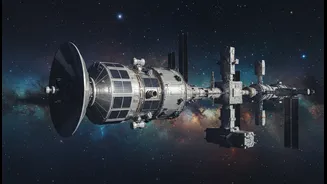
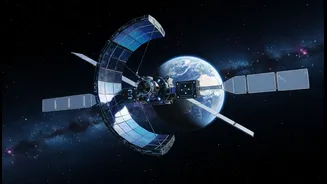
This is where the Habitable Worlds Observatory (HWO) comes in. Recommended as the top priority for a large space mission by the U.S. National Academies' 2020 Decadal Survey, HWO is a flagship mission planned for the 2040s. Its primary goal is groundbreaking: to directly image and study about 25 potentially Earth-like planets around stars similar to our sun. This isn't just about finding planets; it's about characterizing them. With a large, segmented mirror estimated to be at least 6 meters wide and operating in ultraviolet, optical, and infrared light, HWO will be an all-purpose astrophysics powerhouse. But its key function is to act as the first telescope specifically engineered to find signs of life on other worlds.
The High-Tech Hunt for Biosignatures
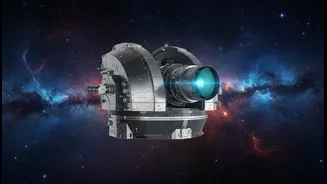
So, how will HWO actually look for life? The key is in analyzing a planet's atmosphere for chemical 'biosignatures'—gases like oxygen, methane, and ozone that could be evidence of biological processes. To do this, HWO will be equipped with an advanced coronagraph, a device designed to block the overwhelming light from a star so the faint light reflected by its planets can be seen. But blocking starlight to the required degree—a suppression factor of 10 billion—demands almost unimaginable stability. The entire observatory must be about 100 times more stable than JWST, with fluctuations no larger than the width of a single hydrogen atom during observations. This will allow its spectrographs to analyze the planetary light for the tell-tale chemical fingerprints of life.
A Serviceable and Sustainable Future
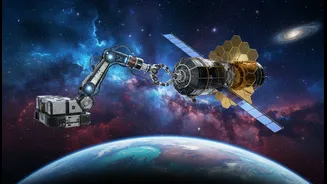
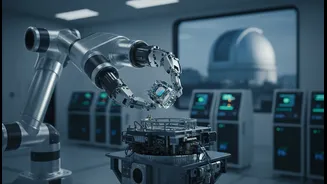
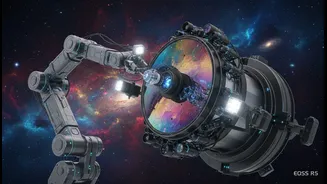
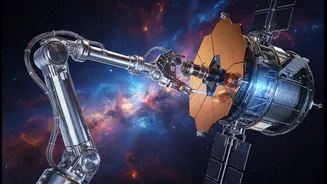
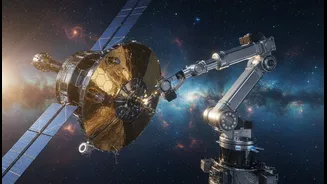
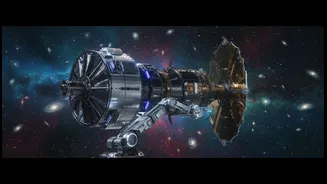
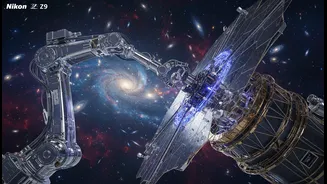
Perhaps the most revolutionary aspect of the HWO plan is its design philosophy. Unlike JWST, which was sent to its deep-space post with no ability to be repaired or upgraded, HWO is being designed from the ground up for serviceability. The observatory will be positioned at the L2 Lagrange point, about 1.5 million kilometers from Earth, making human astronaut servicing missions like those for Hubble unfeasible. Instead, NASA is mandating that HWO be serviceable by robots. This means that, decades from now, autonomous spacecraft could visit HWO to repair components, install new, more advanced instruments, and refuel it. This modular, upgradeable approach is a direct lesson from the Hubble Space Telescope, whose five servicing missions have kept it scientifically productive for over 30 years.
Preventing Obsolescence by Design
This commitment to robotic servicing is the core of how HWO will avoid obsolescence. Technology advances at a blistering pace; an instrument considered state-of-the-art today could be surpassed in a decade. By building HWO as an evolvable platform, NASA is not just launching a telescope; it's creating a permanent piece of infrastructure in deep space. If a more sensitive camera or a next-generation spectrograph is invented in 2050, it could potentially be installed on HWO, dramatically enhancing its capabilities without needing to launch an entirely new, multi-billion-dollar observatory. This ensures HWO can adapt to new scientific questions and technological opportunities, extending its operational life and maximizing the scientific return on this massive investment for decades to come.