




The Case for a Broader Canvas
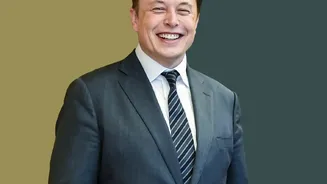
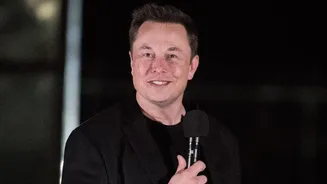
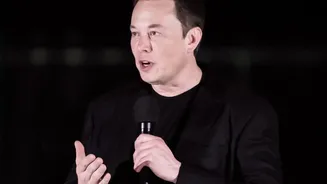
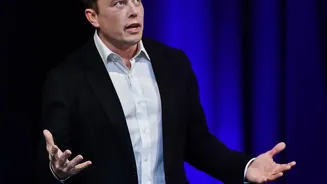
In a recent interview, Elon Musk urged young people to pursue a wide-ranging education across arts, sciences, and engineering. His core argument is that in an era of rapid technological change, a narrow skill set can be a fragile asset. He suggests that instead
of digging deep into one subject from the very beginning, students should build a broad foundation of general knowledge. This isn't a new idea for Musk, who has consistently championed learning from first principles and drawing knowledge from diverse fields. He himself studied both physics and business, a combination that has visibly influenced his ventures from SpaceX to Tesla. The advice stands in stark contrast to the educational philosophy in many parts of the world, including India, where students are often pushed into hyper-specialised streams like engineering or medicine from a very young age.
Beyond the 'Jack of All Trades' Cliche
The common saying warns that a 'jack of all trades is a master of none'. Musk’s advice, however, points towards a more modern interpretation: the expert-generalist. This is someone who develops deep expertise in at least one area but cultivates a broad enough knowledge base to connect ideas from different domains. The value of this approach lies in the ability to see the bigger picture and identify opportunities that specialists, with their laser-focus, might miss. As automated systems and AI begin to handle highly specific, repetitive tasks, the ability to think creatively and solve problems by combining disparate ideas becomes a uniquely human advantage. This requires a 'semantic tree' of knowledge, as Musk has described it—understanding the fundamental principles (the trunk and big branches) before getting lost in the leaves (minor details).
Rethinking India's Education Rat Race
Musk's perspective is particularly resonant in the Indian context. Here, the educational journey for many is a high-stakes race towards a handful of coveted professional degrees. The immense pressure to crack entrance exams often forces students to abandon interests in the humanities, arts, and even basic sciences in favour of a curriculum geared entirely towards a single goal. While this system produces excellent specialists, Musk’s advice suggests it might not be the best preparation for a future where adaptability is paramount. A broader education could equip young Indians with the flexibility to pivot their careers, to communicate complex ideas more effectively, and to innovate at the intersection of different fields, rather than just executing tasks within one.
How to Cultivate a Broader Mindset
Putting this advice into practice doesn't necessarily mean abandoning a chosen specialisation. Instead, it’s about supplementing it. Students can consciously choose elective courses outside their primary field of study. Reading widely—from history and philosophy to science fiction and economics—is a powerful tool for building general knowledge that Musk himself has long advocated. Engaging with people from different professional backgrounds can also broaden one's perspective. The goal is not to become an expert in everything, but to develop a curiosity that extends beyond the defined boundaries of a syllabus or a job description. It is about fostering the ability to learn continuously and apply knowledge across different contexts, a skill that will remain valuable no matter how much the world changes.