
More Than Just Snow
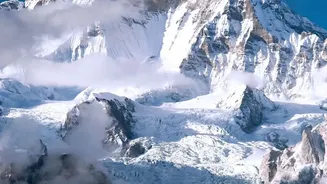
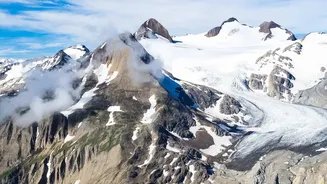
When we think of an avalanche, we often picture a cascade of fluffy white snow. The reality in the high Himalayas is far more complex and dangerous. Today’s avalanches are frequently a chaotic mixture of not just snow, but also vast quantities of rock
and glacial ice. This occurs when a trigger—be it an earthquake, heavy precipitation, or simply the stress of a warming slope—causes a massive chunk of a mountain's face to break free. In February 2021, a deadly event in Chamoli, Uttarakhand was caused by a colossal rock and ice avalanche from Ronti Peak, consisting of about 80% rock and 20% glacier ice. This initial collapse is just the first step in a devastating chain reaction.
The Deadly Transformation
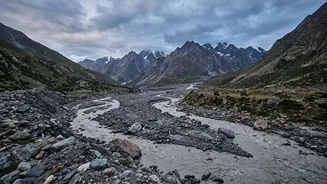
The transformation from a solid avalanche to a liquid torrent happens with terrifying speed. As the immense mass of rock and ice plummets thousands of metres down steep slopes, incredible friction generates intense heat. This heat can melt the ice within the avalanche itself, turning a tumbling mass of solids into a churning, high-speed debris flow. This slurry behaves like a liquid, but with the density and destructive power of wet concrete, capable of carrying boulders larger than cars. If this flow encounters a river or a glacial lake in its path, the situation becomes even more catastrophic. The flow's volume swells instantly, turning into a flash flood that surges down narrow valleys at unimaginable speeds, scouring everything in its path. The Chamoli disaster saw the avalanche travel over 3 kilometres in elevation, the energy of the fall converting the ice into water that fueled the subsequent debris flood wave.
A Warming 'Third Pole'
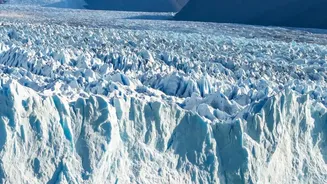
This phenomenon is not entirely new, but its frequency and intensity are increasing, and the primary driver is climate change. The Hindu Kush Himalaya region, often called the 'Third Pole' for its vast ice reserves, is warming at a rate significantly faster than the global average. This warming has a twofold effect. Firstly, it causes glaciers to retreat and thin, leaving behind unstable slopes that were previously supported by ice. Secondly, it thaws permafrost—the frozen ground that acts as a cement for high-altitude rock faces—further weakening the mountainsides. Warmer temperatures also mean that precipitation is more likely to fall as rain instead of snow, even at high altitudes, which can seep into the snowpack and destabilise it. This creates a landscape primed for catastrophic failures.
The Human Cost in the Valleys
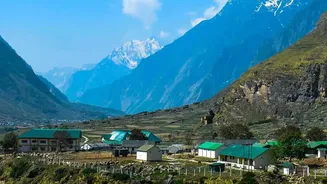
The ultimate victims of these cascading hazards are the communities and infrastructure in the valleys below. The 2021 Chamoli flood claimed over 200 lives, with most victims being workers at two hydropower projects that were severely damaged or completely destroyed. The floodwaters, thick with sediment and debris, act like a battering ram, obliterating bridges, roads, and entire buildings within seconds. The recent disaster on the Nepal-Tibet border in August 2026, which started with a glacier collapse, resulted in a flood wave that rose by as much as nine meters in 30 minutes, giving people no time to escape. These events highlight the extreme vulnerability of the infrastructure being built in these increasingly fragile environments.
Racing Against the Thaw
In response to the growing threat, efforts are underway to mitigate the risks. Scientists are using satellite imagery and seismic sensors to monitor vulnerable slopes and expanding glacial lakes. The formation of Glacial Lake Outburst Floods (GLOFs), where dams of ice or moraine holding back massive lakes fail, is a closely related and monitored threat. India has launched a National GLOF Risk Mitigation Project in key Himalayan states to improve monitoring and establish early warning systems. However, the sheer scale and remoteness of the Himalayas make comprehensive monitoring a monumental challenge. Predicting the exact moment a slope will fail is still incredibly difficult, making preparedness and resilient infrastructure more critical than ever.