







The Three Pillars of a Stable Morning
The formula for a blood sugar-friendly breakfast isn't about restriction; it's about combination. The goal is to slow down how quickly your body converts food into glucose. The three key players are protein, healthy fats, and fibre. When these nutrients
are present, they slow stomach emptying and blunt the glucose spike that comes from eating carbohydrates alone. This prevents the classic energy rollercoaster, keeping you on a more even keel. For instance, studies show that adding protein and fat to a carbohydrate-rich meal can lower the glucose spike by 20-40%.
Breakfast Idea: The Savoury Start
Shifting from a sweet, carb-heavy breakfast to a savoury one is a powerful strategy. Think eggs, which are a powerhouse of protein with zero carbs. A quick scramble with spinach and a slice of wholegrain toast provides a perfect balance of protein, fibre, and slow-release carbs. Another excellent option is cottage cheese or full-fat Greek yoghurt paired with a handful of nuts and seeds. The protein and fat from the dairy and nuts keep you satiated for hours, while the low sugar content prevents an early morning glucose surge.
Breakfast Idea: Reimagining Grains and Fruit
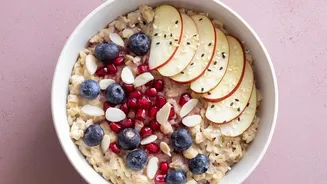
You don't have to give up classic breakfast staples like porridge or fruit, but you may need to rethink how you eat them. Instead of instant oats, which are highly processed, opt for steel-cut or rolled oats. Their high fibre content, particularly beta-glucan, is proven to reduce the glucose response after eating. Crucially, add a source of protein and fat, like a scoop of nut butter or a handful of walnuts. For fruit, choose low-glycaemic options like berries and pair them with a protein source like Greek yoghurt to buffer the sugar absorption.
The 'Why' Behind General Advice
So, where does this advice come from? It's the foundation of general dietary guidelines, like those from the American Diabetes Association or the Dietary Guidelines for Americans. These guidelines are designed for population health and are based on extensive research showing that, on average, diets rich in whole foods, fibre, and lean protein, while lower in processed carbohydrates and sugar, lead to better health outcomes. They are intentionally broad because they need to be a safe and effective starting point for millions of people. Think of them as the fundamental, evidence-backed rules of the road for nutrition.
The Rise of Personalised Nutrition
While general guidelines are an excellent foundation, they don't account for a crucial fact: we are all different. Two people can eat the exact same meal and have wildly different blood sugar responses. This is the driving force behind personalised nutrition. This emerging field uses data about your unique biology—including your genetics, gut microbiome, and real-time responses measured by devices like continuous glucose monitors (CGMs)—to tailor recommendations. For example, your gut bacteria can significantly influence how your body processes carbohydrates, and genetic variants can affect your insulin response.
General Guidance vs. A Plan for You
The key difference is specificity. General advice provides the 'what' (eat more fibre and protein), while personalised nutrition provides the 'what for you' (your body handles bananas well, but oats cause a spike). Studies have shown that personalised diets based on an individual's glycemic response can be more effective at improving blood sugar control and even achieving diabetes remission compared to non-personalised approaches. However, it's important to note that a one-size-fits-all healthy diet, when followed, still produces significant benefits. For most people, starting with general principles is the most practical first step. Personalisation is a powerful next step for those who need more specific guidance or aren't seeing results with standard advice.