







The Real Cost of Sitting Still
For millions of people in desk-bound professions, the day is a marathon of sitting. While it may not feel strenuous, this prolonged state of inactivity takes a significant toll. Research links extensive sitting to a host of health issues, including increased
risk of obesity, high blood pressure, and even certain types of cancer. More immediately, it leads to musculoskeletal problems. Hunching over a keyboard shortens the hip flexor muscles, puts pressure on the spinal discs, and leads to the all-too-familiar neck, shoulder, and lower back pain. This physical discomfort doesn't just hurt; it can decrease job satisfaction and drain your energy throughout the day, a phenomenon sometimes called 'sitting disease'.
The Rise of the Micro-Break
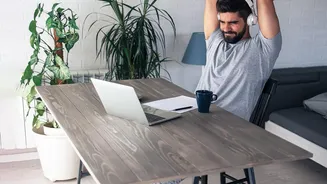
In response to the growing awareness of sedentary work's impact, both employees and companies are turning their focus to simple, accessible solutions. This isn't about fitting a full-hour workout into your lunch break. Instead, the trend is toward 'desk yoga'—also known as chair yoga or office yoga—and other back-friendly stretches. These are micro-interventions, short bursts of movement that can be done right at your workstation. The goal is to counteract the stiffness, improve blood flow, and release muscle tension before it becomes chronic. As workplace wellness becomes a bigger priority, these small, consistent movements are being recognised as a powerful tool for boosting not only physical health but also mental clarity and productivity.
For Your Neck and Shoulders
The neck and shoulders are often the first to protest after hours of computer work. To find relief, try these simple stretches. First, the Neck Tilt: while seated, gently drop your right ear toward your right shoulder, holding for 15-20 seconds. You should feel a light stretch along the left side of your neck. Repeat on the other side. Next, Shoulder Rolls: sit tall and inhale as you lift your shoulders up toward your ears. Exhale and roll them back and down, squeezing your shoulder blades together. Repeat this 5-10 times to release tension. Finally, a Chest Opener: clasp your hands behind your back, straighten your arms, and gently lift your hands away from your body. This counteracts the slumped posture we often adopt at our desks.
Essential Stretches for Your Back
Your back bears a significant burden from sitting. A Seated Spinal Twist is a great way to relieve tension. Sit tall on your chair with both feet on the floor. Gently twist your torso to the right, using your left hand on the outside of your right knee for a light leverage. Hold for a few breaths and repeat on the left side. Another classic is the Cat-Cow stretch, which can be adapted for your chair. Place your hands on your knees. On an inhale, arch your back and look up (Cow). On an exhale, round your spine and drop your chin to your chest (Cat). This simple flow helps to improve spinal flexibility and relieve stiffness.
Don't Forget Hips and Wrists
Prolonged sitting also leads to tight hips, which can contribute to lower back pain. To stretch them, try a Seated Figure-Four. While on your chair, cross your right ankle over your left knee. Gently press down on your right knee until you feel a stretch in your right hip and glute. Hold for 20-30 seconds and switch sides. Your wrists and hands also need care from constant typing. Extend one arm forward, palm facing up. With your other hand, gently bend your wrist down, holding for 15 seconds. Then, bend it up. Repeat on the other hand to help prevent strain.
Making It a Daily Habit
The key to reaping the benefits of these stretches is consistency. Knowledge is one thing, but practice is everything. The most effective strategy is to build these movements into your existing routine. Set a timer on your phone or computer to remind you to stretch every hour. A good rule of thumb is the 20-20-20 rule: every 20 minutes, look at something 20 feet away for 20 seconds to rest your eyes. You can add a simple stretch to this routine. Or, make it a habit to do a spinal twist after every long phone call or a few neck rolls before you break for lunch. By linking these micro-breaks to established work patterns, you're more likely to make them a seamless part of your day rather than another task to remember.