








India's Leap into Urban Air Mobility
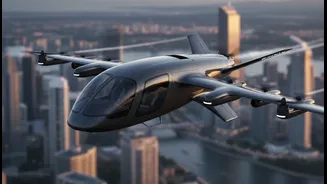
In a major milestone for India's tech ambitions, The ePlane Company, a startup incubated at IIT Madras, has officially unveiled its full-scale e200X prototype in Chennai. This isn't just another electric vehicle; it's an electric Vertical Take-Off and
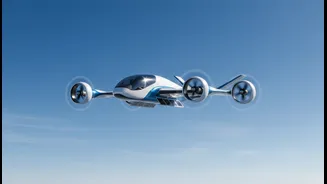
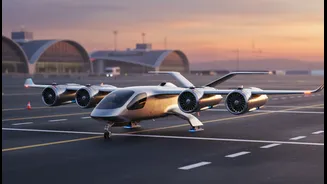
Landing (eVTOL) aircraft, commonly known as an air taxi. Designed to carry a pilot and two passengers or 200 kg of cargo, the e200X is being developed for a range of services, from passenger transport and logistics to critical air ambulance operations, promising to navigate cities from above.
The Challenge of Lightweight Strength
Building any aircraft is a battle against weight. For an eVTOL, this challenge is magnified. The vehicle must be powerful enough to lift itself, its batteries, and its payload vertically off the ground before transitioning to forward flight. At a maximum gross weight of 2,200 kilograms, the e200X is a substantial machine. To make electric flight viable, especially for vertical lift, every component must be as light as possible without compromising on strength or safety. This engineering puzzle demands materials that were once reserved for supercars and spacecraft.
Why Carbon Fibre is the Answer
The ePlane Company's solution lies in its choice of primary material: the entire airframe of the e200X is constructed from carbon-fibre composites. Carbon fibre is renowned for its exceptional strength-to-weight ratio, being significantly lighter than aluminium and far stronger than steel. This allows the aircraft to have a rigid, durable, and safe structure while keeping its overall mass low enough for its electric motors to handle. Using carbon fibre on this scale is a complex manufacturing feat and is fundamental to the e200X's design, enabling the power-to-weight ratio needed for efficient flight.
Designed for Real-World Cities
Beyond its advanced materials, the e200X is designed for practicality. With a compact footprint of just eight by eleven metres, it is intended to operate from existing urban infrastructure like helipads, rather than requiring the construction of massive new 'vertiports'. Its planned operational range is approximately 110 kilometres, perfectly suited for short cross-city hops that could bypass hours of road traffic. The design also prioritises safety, using separate, fixed propellers for vertical lift and forward flight. This reduces mechanical complexity compared to tilting rotor systems and provides redundancy if a motor fails.
From Concept to Credible Contender
The e200X isn't just a concept model; it's the result of five years of intensive research and development. The company has already logged over 10,000 kilometres in test flights with smaller sub-scale prototypes, validating its designs and flight control systems. Crucially, The ePlane Company has received a Design Organisation Approval (DOA) from the Directorate General of Civil Aviation (DGCA), a formal endorsement that paves the way for official certification. This positions the e200X as a serious contender in the global race for advanced air mobility.
The Flight Path Ahead
With the full-scale prototype unveiled, the e200X will now undergo rigorous ground testing at the company's Chennai facility. The next major step is to begin uncrewed flight trials, which are targeted for mid-2027. The company's strategy is to first deploy the aircraft in an air ambulance role, where speed can be life-saving, before expanding into airport shuttles and wider passenger taxi services. This phased approach allows the technology to prove its reliability and safety in a critical service before it becomes a common sight in the skies above India's cities.