






Beyond the Bar: What Are Ring Dips?
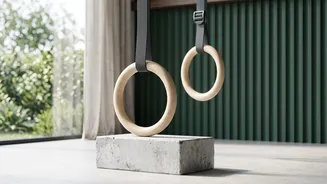
The ring dip is a compound upper-body exercise performed on a pair of gymnastic rings. Unlike dips done on parallel bars, the rings are unstable, forcing your body to work much harder to maintain control throughout the movement. This instability is precisely
what makes the exercise so 'technical' and effective. It's not just about pushing your bodyweight; it’s about controlling your body in space, demanding a synthesis of strength, stability, and coordination that fixed equipment can't replicate. The primary muscles targeted are the triceps, chest, and shoulders, with significant engagement from the core and forearms to keep you steady.
The Instability Advantage
The defining feature of ring dips is the 'instability advantage'. On a fixed dip station, you can often power through reps with less-than-perfect form. The rings, however, provide immediate feedback. If your shoulders roll forward, elbows flare out, or your core disengages, the rings will wobble, exposing the weakness. This forces you to recruit smaller stabilizing muscles around the shoulder joint, which is crucial for building injury resilience and functional strength. Because the rings can rotate freely, they allow your wrists, elbows, and shoulders to move along their natural path, often making the exercise more joint-friendly than its fixed-bar counterpart despite being more difficult.
How to Perform a Ring Dip Correctly
Proper form is non-negotiable for safety and effectiveness. Start by adjusting the rings to about chest height. Grasp the rings with a neutral grip (palms facing each other) and press up to a 'support hold' position with arms straight, shoulders down and back, and rings close to your body. Keeping your core and glutes engaged, slowly lower yourself by bending your elbows. Descend until your shoulders are slightly lower than your elbows, feeling a stretch in your chest. Your hands should remain close to your body. Pause for a moment at the bottom, then drive back up by pushing through your palms, returning to the starting support position. Avoid any explosive or jerky movements, which can compromise stability.
Common Mistakes and How to Avoid Them
Mastering the ring dip means avoiding common pitfalls. The most frequent error is letting the shoulders 'dump' or roll forward at the bottom of the dip, which places excessive stress on the shoulder joint. To prevent this, actively keep your shoulder blades pulled back and down. Another mistake is flaring the elbows out too wide. Keep your arms and the rings close to your torso throughout the movement. Finally, many people lean their torso too far forward, which again stresses the shoulders. Aim to keep your torso relatively upright to better target the triceps and protect your joints. If you're shaking uncontrollably, it's a sign you're not ready for the full movement and should work on progressions first.
Your Path to the First Rep
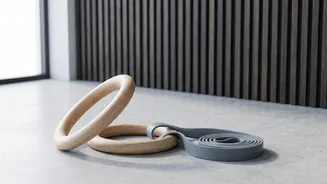
Ring dips are notoriously difficult, so a progressive approach is key. Don't jump straight into full reps. Start by building foundational strength with push-ups and regular bar dips. Once you're comfortable with those, move to the rings. Begin with 'support holds', simply holding yourself at the top of the dip position with straight arms for increasing durations of time. This builds crucial stability. Next, practice 'negative' ring dips: start at the top and lower yourself as slowly and controllably as possible, then place your feet on the ground to get back up. You can also use resistance bands for assistance by looping a band over the rings and placing your knees or feet in it to reduce the bodyweight you have to lift.