





Forget the Numbers Game
One of the most common questions from new divers is, 'How deep will we go?'. The answer is almost always shallower than you think. Introductory experiences like a Discover Scuba Dive have a maximum depth of 12 metres (40 feet), but most instructors will keep
the dive even shallower, often in the 6-to-10-metre range. This isn't to short-change your experience; it's by design. The most vibrant marine life and best light are often in shallow waters. More importantly, these depths are the perfect, low-pressure environment to focus on what really matters: getting comfortable. The goal isn't to hit a specific number on your dive computer, it's to feel safe, relaxed, and in command of your new environment.
Your Breath Is Your Greatest Tool
The first, and most important, rule of scuba is to never, ever hold your breath. Your primary task is simply to breathe continuously: a slow, relaxed inhale followed by a long, steady exhale. This rhythmic breathing does more than just keep you alive; it's the foundation of all control underwater. A calm breathing pattern tells your brain that everything is okay, helping to override the initial, natural fear of being submerged. It also dramatically impacts your air consumption, meaning a relaxed diver gets to enjoy more time underwater. Think of your lungs as an internal buoyancy device; a deep, full inhale will cause you to rise slightly, while a complete exhale will let you sink gently. Mastering your breath is the first step to mastering the dive.
The Art of Weightlessness
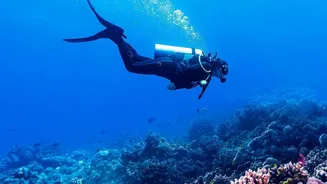
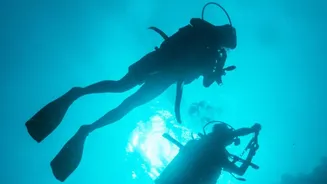
The single most crucial skill you will begin to learn is buoyancy control. This is the art of achieving a state of 'neutral buoyancy', where you neither sink to the bottom nor float to the surface. You simply hover, weightless, like an astronaut. This is achieved through a combination of proper weighting, small adjustments to the air in your Buoyancy Control Device (BCD), and your breathing. While it takes practice to perfect, even the initial feeling of getting it right is magical. Good buoyancy control is the difference between struggling against the water and becoming part of it. It allows you to conserve energy, see more marine life, and, most critically, protect the fragile underwater environment from accidental bumps with fins or hands.
Winning the Mental Game
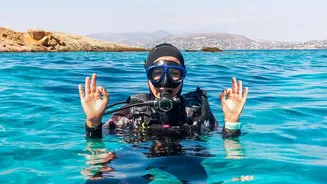
Beyond the physical skills, your first dive is a mental exercise. It's normal to feel a mix of excitement and anxiety. Your brain may initially feel strange about breathing with your face in the water, and common fears about equipment, running out of air, or marine life are frequent. Your training is designed to address all of this. You'll learn to trust your gear by seeing it work in a controlled setting. You'll learn that you constantly monitor your air supply, making it extremely unlikely to run out. And you'll learn to handle minor challenges, like clearing a leaky mask, which builds immense confidence. The key is to listen to your instructor, communicate clearly using hand signals, and focus on the incredible sensations of this new world. By conquering your mind, you unlock the freedom of the experience.