


Decoding the 'Wellness' Hype
You've likely seen cast iron praised as a “non-toxic” or “chemical-free” alternative to modern non-stick pans. While it's true that a well-maintained cast iron pan doesn't rely on synthetic coatings, these wellness claims are mostly marketing. Cast iron is a simple
alloy of iron and carbon; its primary benefits are its incredible heat retention and durability, not any inherent health-boosting properties. The real magic isn't in the iron itself, but in the surface you build on top of it. A bare iron pan is reactive and prone to rust. The goal isn't just to buy a chunk of iron, but to cultivate a perfect cooking surface.
The Simple Science of Seasoning
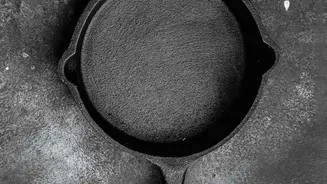
So, what is this mystical 'seasoning'? It’s not about herbs and spices. Seasoning is the process of baking a thin layer of cooking oil onto the pan. When the oil is heated past its smoke point, it undergoes a chemical transformation called polymerization. The fat molecules bond to each other and to the porous surface of the iron, creating a hard, slick, and protective layer. This is what gives cast iron its non-stick properties and its signature black patina. Every time you cook with fat, you are subtly adding to and reinforcing this layer, meaning the pan genuinely gets better with age and use.
Factory vs. Home Seasoning
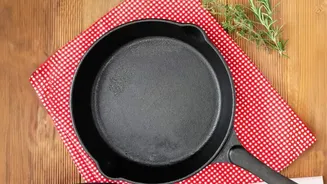
Most new cast iron skillets today are sold “pre-seasoned.” Manufacturers apply a layer of oil (often soy-based) at the factory to protect the pan from rust during shipping and provide a basic starting point for the user. While this is convenient, a factory season is just a kickstart. It's rarely as durable or non-stick as the seasoning you will build yourself over time. Think of it as a primer coat of paint. It’s functional, but the rich, deep finish comes from the layers you add on top. You don't need to strip this factory layer; just start cooking, cleaning, and applying a thin coat of oil after each use to begin building your own robust seasoning.
What to Actually Look for When Buying
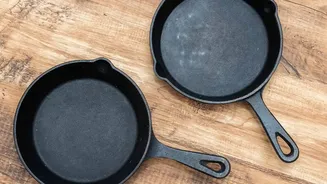
Instead of focusing on marketing claims, pay attention to the physical attributes of the pan. First, check the cooking surface. Pricier, artisan pans are often polished to a smooth finish, while budget-friendly models have a rougher, pebbly texture from the sand-casting process. A smoother surface can make it slightly easier to build the initial layers of seasoning, but a rough pan will smooth out over years of use and care. Next, consider the handle design. A long primary handle and a smaller 'helper handle' are crucial for safely lifting a heavy, hot pan. Also, check for pouring spouts, which are invaluable for draining fat or pouring sauces. Finally, ensure the pan sits flat and doesn't wobble, which can indicate warping.
The Price Tag: Is Expensive Better?
Cast iron skillets can range from under thirty dollars to several hundred. Does the price reflect performance? For the most part, no. An affordable, heavy pan will sear a steak just as beautifully as a high-end one, provided both are well-seasoned. The extra cost of premium pans often goes toward a smoother surface finish and more ergonomic designs, which can be nice but aren't essential for great results. Cheaper pans might be a bit heavier and have a rougher texture, but the seasoning is the great equalizer. A dedicated cook can turn a basic, inexpensive pan into a prized family heirloom through proper care.