




Meet 'Pushpak', India’s Space Shuttle
The Indian Space Research Organisation (ISRO) is making significant strides with its Reusable Launch Vehicle-Technology Demonstrator (RLV-TD), affectionately named 'Pushpak'. This winged vehicle is at the heart of India's ambition to drastically reduce
the cost of launching satellites. For decades, rockets were single-use machines; their expensive components would be discarded after every launch. The RLV program aims to change this paradigm completely. By developing a vehicle that can be reused for multiple missions, ISRO intends to make space access more affordable and sustainable, positioning India as a key player in the global space industry. The RLV-TD is designed to act as a flying testbed, allowing scientists to perfect the critical technologies needed for a full-scale reusable rocket.
A Hat-Trick of Perfect Landings
The most recent phase of testing, known as the Landing Experiment (LEX), has been a resounding success. ISRO has now completed a 'hat-trick' of autonomous landing missions, with the third and final test in the series conducted successfully. During these tests, the 'Pushpak' vehicle was lifted to an altitude of 4.5 km by an Indian Air Force Chinook helicopter and then released. From there, the vehicle had to autonomously navigate, handle challenging cross-winds, approach a runway, and perform a precise, high-speed horizontal landing—all by itself. The final test, RLV-LEX-03, pushed the vehicle under even more difficult conditions, and it performed flawlessly, landing at a speed of over 320 kmph before using a brake parachute to slow down. These successful tests validate ISRO's expertise in the crucial technologies required for an orbital re-entry vehicle.
Why Reusability Is a Game-Changer
The primary driver behind the global push for reusable rockets is economics. Launching anything into space is incredibly expensive, largely because the launch vehicle—a piece of high-tech engineering worth crores—is typically thrown away after a single flight. This is like scrapping an airplane after just one trip. By developing a vehicle that can fly to space and return safely, ISRO aims to cut launch costs by up to 80 percent. A significant cost reduction would not only make India's own scientific and communication satellite launches cheaper but also make ISRO a highly competitive option for international customers looking to launch their satellites. This technology is fundamental to enabling more frequent and ambitious space missions, including satellite constellations, deep space exploration, and potentially even human spaceflight in the future.
From Suborbital Tests to Orbit
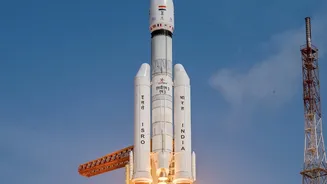
The successful LEX missions are a critical step, but they are part of a much larger journey. These tests were suborbital, meaning the vehicle demonstrated landing from a high altitude, but it has not yet flown to orbit. The next major milestone for ISRO is the Orbital Re-entry Experiment (ORE). In this future mission, a scaled-up version of the RLV will be launched into orbit by a conventional rocket. After circling the Earth, it will have to endure the fiery heat of re-entry into the atmosphere and then perform an autonomous landing on a runway. This will be the ultimate test of the vehicle's design, thermal protection system, and autonomous control, paving the way for a fully operational Two-Stage-to-Orbit (TSTO) launch vehicle.
India’s Place in the New Space Race
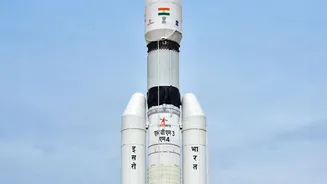
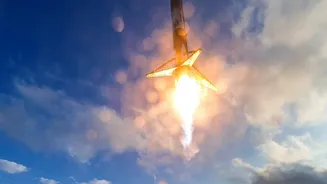
ISRO is not alone in the pursuit of reusability. Companies like SpaceX have already operationalised partially reusable rockets like the Falcon 9, transforming the commercial launch market. However, ISRO's approach with the winged 'Pushpak' is different, focusing on a horizontal landing capability similar to the American Space Shuttle, but with modern, autonomous technology. While ISRO has stated it is not in a 'race' with anyone, the successful development of its own indigenous, cost-effective RLV is a matter of strategic importance. Mastering this technology will ensure India's self-reliance in space, boost its commercial launch prospects, and cement its status as a leading space-faring nation committed to sustainable and economical innovation.