








The Arteries of Global Trade
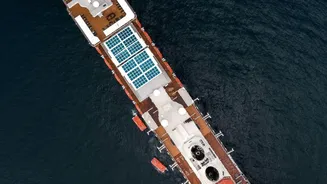
Maritime trade is the circulatory system of the global economy. When nations are in conflict, keeping these arteries open—or selectively closing them—becomes a critical point of negotiation. Any ambiguity in the rules governing ships can cause a deal
to collapse. The Black Sea Grain Initiative is a powerful recent example. Brokered by the UN and Türkiye, the deal was designed to allow Ukrainian grain to reach world markets, staving off a food crisis. However, the agreement’s effectiveness was constantly hampered by procedural disputes. Russia was accused of slowing down the process by limiting the number of daily inspections and refusing to register new incoming ships. This weaponization of procedure demonstrates that simply agreeing to let ships pass is not enough. A durable deal must specify exactly which vessels can travel, what cargo they can carry, which ports they can use, and how they will be insured and inspected, leaving no room for tactical obstruction. For a trading nation like India, which depends heavily on secure sea lanes for its imports and exports, the stability that comes from such clear, predictable maritime rules is a matter of profound economic and strategic interest.
When Sanctions Have No Teeth
Sanctions are the international community's primary tool for applying pressure without resorting to military force. Yet, their announcement is often mistaken for their effect. For sanctions to work, they must be meticulously designed and enforced. A lasting agreement that uses sanctions as an enforcement tool needs absolute clarity. Who, specifically, is being sanctioned? Which transactions are forbidden? Which countries are responsible for enforcement, and what are the penalties for evasion? Without these details, sanctions become porous, allowing targeted regimes or individuals to find loopholes. Sanctions can be comprehensive trade embargoes or highly targeted, such as asset freezes and travel bans on specific individuals. To be effective, these measures require constant monitoring and international cooperation to prevent sanctioned entities from simply moving their assets or operations to more permissive jurisdictions. Vague sanctions not only fail to change behaviour but can also harm unintended populations and create uncertainty in global markets. The goal of a well-crafted sanctions regime is not just to punish, but to create a clear incentive for compliance with the broader agreement.
The Trust-But-Verify Mandate
No pillar is more crucial to building confidence in a high-stakes deal than inspections. This is the 'trust, but verify' component that ensures promises are being kept. The landmark 2015 Iran nuclear deal, formally known as the Joint Comprehensive Plan of Action (JCPOA), was built on this foundation. Its core strength lay in the extensive and intrusive inspection regime it granted to the International Atomic Energy Agency (IAEA). IAEA inspectors had access to declared nuclear sites, employed real-time monitoring technology, and had a process for requesting access to undeclared sites where suspicious activity was suspected. This system was designed to provide the world with assurance that Iran's nuclear program remained exclusively peaceful. The JCPOA's inspection provisions were so detailed because trust was low. The ability of inspectors to detect even trace amounts of nuclear material and monitor centrifuge production provided a powerful deterrent to cheating. When a deal requires one party to limit sensitive activities, a rigorous, impartial, and well-funded inspection mechanism is non-negotiable. It replaces suspicion with data, providing the verification needed for all sides to remain invested in the agreement's success.
Weaving a Resilient Framework
These three elements—ships, sanctions, and inspections—are not independent but deeply intertwined. A robust inspection regime is necessary to verify compliance and trigger sanctions if violations occur. Clear rules for shipping are essential to prevent the circumvention of sanctions on goods and materials. Weakness in one area undermines the others, creating a framework destined to fail. For instance, without a clear inspection process for cargo, it becomes easy for a sanctioned state to import or export banned goods under a false pretext. Similarly, if sanctions are not enforced on entities that violate shipping agreements, the rules of passage become meaningless. A successful international agreement functions like a well-engineered machine where each part reinforces the others. This requires painstaking negotiation over technical details that rarely make headlines but are far more consequential than the ceremonial signing of a document. It is in the weeds of these regulations that the true strength and longevity of a deal are forged.