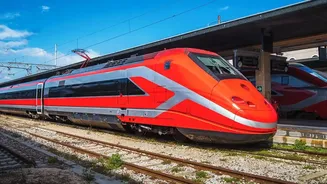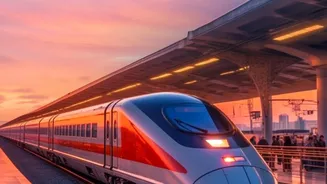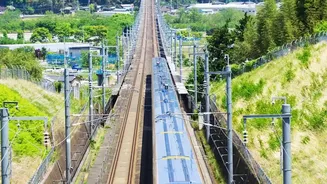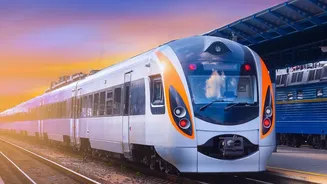






The Vision for High-Speed Rail
The Mumbai-Ahmedabad High-Speed Rail (MAHSR) project is a 508-kilometre line connecting India's financial capital, Mumbai, with the major economic hub of Ahmedabad. This flagship project is being developed by the National High Speed Rail Corporation Ltd
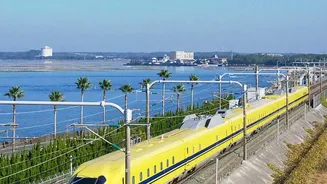
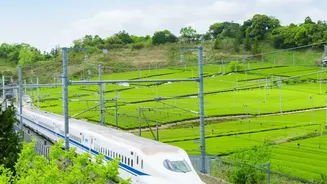
(NHSRCL). Once complete, it will slash travel time between the two cities from over six hours to approximately two hours for limited-stop services. The project utilises Japan's famous Shinkansen technology, known for its remarkable safety and punctuality record. The total corridor passes through Maharashtra, Gujarat, and Dadra and Nagar Haveli, featuring 12 stations designed to become modern, multimodal transport hubs.
Current Construction Progress
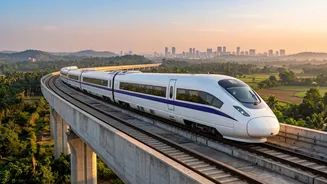
Construction is advancing at a significant pace, especially in the Gujarat section of the corridor. As of late 2026, pier work and viaduct construction have been completed across substantial stretches of the route. For instance, civil construction on the Vapi-Surat section is expected to finish by December 2026. Work is proceeding simultaneously on various fronts, including the erection of girders, track bed preparation, and the installation of overhead electrical equipment and noise barriers. In Mumbai, challenging work continues on the underground Bandra Kurla Complex (BKC) station, the corridor's starting point. In contrast, the Surat station's structural framework is complete, with interior finishing now underway.
Timeline and Phased Launch
According to Union Railway Minister Ashwini Vaishnaw, the project is on track for a phased launch. The first high-speed service is expected to commence in August 2027. This initial run will be on the Surat-Bilimora section in Gujarat, which is targeted for commissioning next year. An indigenously developed bullet train is slated to begin testing on the tracks by May or June of 2027, following a trial period of two to four months before its official inauguration. While the first sections are set to become operational soon, the target for completing the entire 508-km line is currently estimated to be around 2029.
Technology and Speed
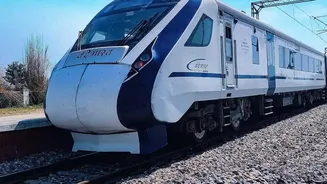
The corridor is designed for a maximum speed of 350 km/h, with trains expected to operate at a speed of 320 km/h. This leap in speed is made possible by Japan's Shinkansen system, which encompasses not just the trains but the entire ecosystem of tracks, signalling (ETCS Level-2), and power supply. While the initial trains will be based on Japanese technology, a significant 'Make in India' effort is also underway. India is developing its own high-speed train capable of running at 280 kmph, with the first prototype expected by early 2027 for extensive testing.
Beyond Just Faster Travel
The bullet train's impact extends far beyond reducing travel time. The project is a massive economic catalyst, expected to boost development in the industrial and business hubs along its route. It is a significant source of employment, with reports indicating that it has already created a large number of jobs during the construction phase. Furthermore, the project represents a major step towards sustainable and efficient transportation, aiming to ease congestion on highways and reduce the burden on domestic air travel. The development also includes the modernisation of railway infrastructure, with 280 stations redeveloped and thousands of kilometres of new tracks laid across the country in recent years.