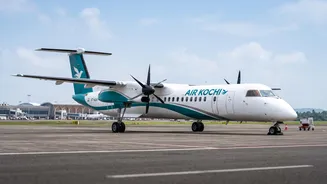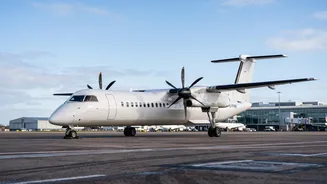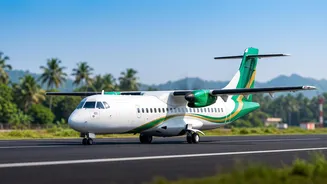









Kerala is embarking on an ambitious journey to launch India's first airline backed by the co-operative sector. Tentatively named 'Co-Keralam', the initiative aims to enhance regional connectivity and make air travel more affordable.
What is the Co-Operative Airline Plan?
The Kerala government
has given its approval for a new airline to be launched under the state's robust co-operative sector. This innovative venture, spearheaded by the Kerala Civil Aviation Development Cooperative Society, plans to operate under the name 'Co-Keralam'. The project is led by C.N. Vijayakrishnan, the chairman of the MVR Cancer Centre and Research Institute, an existing successful co-operative enterprise. The airline aims to follow the successful public-private partnership model of Cochin International Airport Ltd (CIAL), which was also established with broad-based investor participation. The state's Chief Minister is expected to serve as the company's chairman, with the Cooperation Minister as vice-chairman, signalling strong governmental backing for the governance structure.
A Unique Funding Model
Unlike traditional airlines that rely on corporate investors or government bailouts, Co-Keralam proposes a unique grassroots funding strategy. The plan involves raising an initial capital of around ₹400 crore from approximately 200 co-operative societies across Kerala, with each society investing about ₹2 crore. This approach means the airline would not require direct financial investment from the state government, relieving the burden on public funds. The model is designed to leverage the financial strength and community trust of Kerala's extensive co-operative network, which has traditionally focused on sectors like banking and agriculture. The recent approval allows the project to move forward with collecting these shares.
The Planned Regional Routes
The core of the airline's strategy is to bolster regional connectivity within and beyond Kerala. The initial plan is to lease two 72-seater aircraft, which will be based at the airport in Kochi (Nedumbassery). From this hub, Co-Keralam intends to operate flights connecting major destinations. The proposed network includes routes to two other key cities within Kerala: Kozhikode and Kannur. Beyond the state's borders, the airline plans to connect to important regional centres in neighbouring states. The proposed destinations are Bengaluru, Mangaluru, Chennai, Coimbatore, and Madurai. This network is designed to provide faster and more accessible travel options for passengers who currently rely on road or rail for these journeys.
Affordability and Future Expansion
A key objective of the Co_Keralam initiative is to make regional air travel more affordable. Promoters have indicated that ticket prices are expected to range between ₹3,500 and ₹7,000, making it a competitive alternative to other modes of transport. The airline also plans to introduce a dynamic pricing system, offering unsold seats at discounted rates up to an hour before departure to maximize occupancy and provide last_minute travel deals. While the initial phase starts with two aircraft, the vision is to expand the fleet to four and eventually six planes as the operations stabilize and demand grows. In addition to passenger services, the project is expected to create around 200 jobs initially and has floated plans for establishing aviation training facilities.
Hurdles and Next Steps
While the state government's approval is a significant milestone, Co_Keralam still has a long runway ahead before its first flight takes off. The promoters have formally submitted the company's registration certificate and bylaws to the government, marking the completion of a key formal step. However, the venture must now navigate the complex regulatory landscape of Indian aviation, which includes securing all necessary licenses and clearances from the Directorate General of Civil Aviation (DGCA). The process of leasing aircraft, finalising route schedules, and setting up operational infrastructure requires meticulous planning and execution. The success of this pioneering model will depend on overcoming these regulatory and logistical challenges to turn its ambitious blueprint into a functioning airline.