
A Barcode in the Starlight
The discovery began not with a picture, but with a puzzle in the data. Astronomers were studying the light from a distant star when they noticed a strange pattern. Instead of a smooth spectrum of light, there were tiny, specific dips, like a barcode.
This pattern was a telltale sign—a chemical fingerprint that could only be left by an atmosphere. Specifically, the data showed the distinct absorption lines of carbon monoxide, a feature expected in the atmospheres of giant planets. The team, using Webb's Near-Infrared Spectrograph (NIRSpec), had stumbled upon evidence of a hidden world while actually studying a different, already-known planet in the same system. This unexpected signal was the first clue that a previously unknown giant was orbiting the star.
How to 'Hear' an Atmosphere
So, how can a telescope 'hear' a chemical signal from trillions of kilometres away? The technique is called transit spectroscopy. When an exoplanet passes in front of its host star from our perspective, a tiny fraction of the starlight filters through the planet's atmosphere. Different gases in that atmosphere absorb very specific colours, or wavelengths, of light. Imagine shining a bright white light through a coloured glass—only certain colours get through. The JWST is so sensitive it can detect these minuscule dips in the starlight, creating a spectrum that shows which 'colours' are missing. By reading this spectrum, scientists can determine precisely what chemicals are present, like methane, water vapour, or in this case, carbon monoxide. This method allows them to not just find a planet, but to start characterising it immediately.
Meet the New Giant
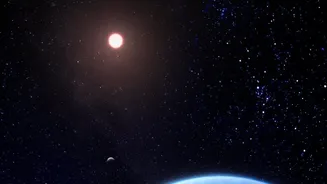
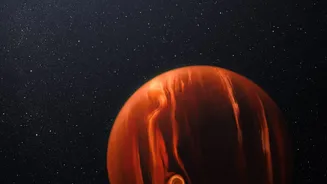
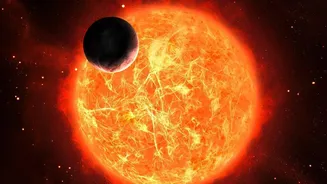
With its existence confirmed by this chemical evidence, astronomers have begun to piece together a portrait of the newfound world, temporarily designated Beta Pictoris d. It resides in the Beta Pictoris system, a relatively young and well-studied stellar neighbourhood just 63 light-years from Earth. This system was already known to host two other giant planets. The new planet is estimated to be at least twice the mass of Jupiter, making it a true goliath. Unlike its siblings, which were found using direct imaging (taking an actual picture), Beta Pictoris d was hidden in the glare and dust of its star system, making this spectroscopic detection a major technological achievement. Follow-up observations have already detected water vapor and methane, giving scientists an even richer picture of this giant's atmosphere.
A Game-Changer for Planet Hunting
This discovery is about much more than adding one more planet to our ever-growing galactic census. It represents a powerful new way to find worlds that are otherwise impossible to see. Traditional methods often rely on seeing the dimming of a star as a planet passes in front or, very rarely, capturing a direct image. Both methods have limitations. By focusing on the chemical makeup of an atmosphere, the JWST can identify planets that are hidden from these other techniques. This is a crucial capability of the multi-billion dollar telescope, demonstrating its power to revolutionise exoplanet science. This method accelerates the process, moving directly from detection to characterisation. It will be essential in the ongoing search for smaller, rocky worlds and analysing their atmospheres for the chemical building blocks that might indicate a potential for life.