







The Big Change: A Conditional Visa-Free Entry
The most significant recent change for Indian travellers is the introduction of a conditional 30-day visa-free stay. This new rule, which came into effect at the beginning of September 2026, is a major step towards boosting tourism and business ties between
the two nations. However, it's crucial to understand that this is not a blanket visa-free policy for all Indian passport holders. It is specifically designed for Indians who are already seasoned international travellers. Previously, most Indians needed to apply for an electronic visa (e-Visa) online before their trip, a process that, while straightforward, still required advance planning and a fee. This new update streamlines the process considerably for those who qualify.
Who Is Eligible for the 30-Day Visa-Free Stay?
The visa-free access is not universal. To be eligible, an Indian citizen must hold a valid multiple-entry visa from one of a specific list of developed countries. According to an announcement from the Indian Embassy in Tashkent, these countries are the USA, the United Kingdom, Canada, Australia, New Zealand, Japan, the Republic of Korea, and any of the Schengen Agreement member states. The visa from one of these countries must be a valid multiple-entry Business or Tourist visa. The goal of this policy is to facilitate travel for Indians who already travel internationally on a regular basis. If you do not hold one of these specific visas, you are not eligible for the visa-free scheme and must still apply for a standard Uzbek visa.
Mandatory Requirements for Eligible Travellers
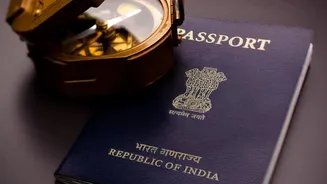
Even if you hold a qualifying visa, there are a couple of other mandatory requirements you must meet to be granted visa-free entry. Firstly, the stay is strictly limited to a maximum of 30 days. Secondly, and just as importantly, you must hold a confirmed return air ticket to India or a confirmed onward air ticket to a third country. Airlines and border officials will check for this documentation upon your departure and arrival. Travellers who do not meet these conditions will be denied entry under the visa-free rule. It is also wise to ensure your passport is valid for at least three to six months from your date of entry and has at least one blank page.
What If I Don't Qualify? The E-Visa Option Remains
For the many Indian travellers who may not have a multiple-entry visa for one of the specified countries, the process remains unchanged. You will still need to obtain a visa to enter Uzbekistan. The most common and convenient method is the electronic visa, or e-Visa. This can be applied for through the official government portal (e-visa.gov.uz) by filling out a form, uploading a photo and passport scan, and paying the fee online. The standard tourist e-Visa process is generally efficient, with approvals often sent via email within a few working days. It's essential to apply at least three business days before your intended travel date to avoid any last-minute issues.
What This Means for Your Travel Plans
This policy update is a game-changer for a specific segment of Indian tourists and business travellers. It opens the door for spontaneous trips to explore the Silk Road cities without the need for advance visa paperwork. For those eligible, a long weekend in Tashkent or a quick business trip becomes much simpler to arrange. This move is part of a broader strategy by Uzbekistan to attract more visitors from India, with tourist numbers already seeing significant growth in recent years. The country also plans to allow the use of India's UPI payment system, further simplifying transactions for tourists. With about 14 direct flights operating between the two countries weekly, connectivity is already strong and poised to grow.