






The Flavour Showdown: Umami vs. Adaptability
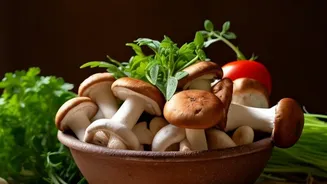
The most significant difference between mushrooms and zucchini lies in their inherent flavour. Mushrooms are renowned for bringing a powerful punch of umami, the fifth basic taste, which is described as savory, brothy, or meaty. This is thanks to high
levels of natural compounds called glutamates, which give mushrooms a depth and complexity that can make dishes feel richer and more satisfying. Varieties like shiitake and portobello are particularly high in these umami-producing compounds. Zucchini, on the other hand, has a very mild, slightly sweet flavour. Its true strength is its incredible ability to act like a culinary sponge, soaking up the flavours of whatever it's cooked with. This makes it exceptionally versatile, able to blend seamlessly into everything from spicy stir-fries and rich pasta sauces to sweet breads and even smoothies, adding bulk and texture without overpowering other ingredients.
In the Kitchen: Texture and Technique
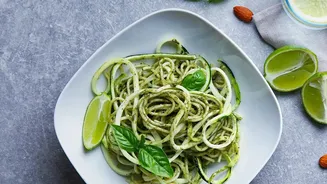
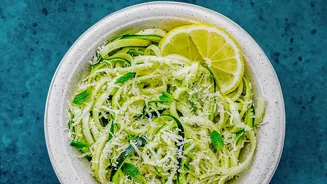
In terms of cooking, their distinct properties call for different approaches. Mushrooms have a firm, sometimes meaty texture, and are often used as a meat substitute in vegetarian dishes like burgers and tacos. When cooked, they release their water content, which concentrates their earthy flavour. They can be sautéed, grilled, roasted, or added to soups and stews for a boost of flavour. Zucchini's high water content means it cooks down to a soft, tender texture. It can be prepared in a multitude of ways: grilled in planks, spiralised into 'zoodles' as a pasta alternative, grated into fritters, or even added to baked goods for moisture. While its mild taste is a benefit, care must be taken to not overcook it, which can result in a mushy texture. Salting zucchini before cooking can help draw out excess water and improve its final texture.
A Tale of Two Nutrient Profiles
Nutritionally, both are low-calorie powerhouses, but they shine in different areas. Mushrooms are a fantastic source of B vitamins, including riboflavin and niacin, which are crucial for energy production. They are also one of the few non-animal sources of vitamin D, especially if they have been exposed to UV light. Furthermore, they are rich in minerals like selenium, potassium, and copper. Zucchini's nutritional claim to fame is its high content of vitamin C, an important antioxidant for immune function, and vitamin A, which supports vision. It is also packed with essential minerals like potassium and manganese. While both contain dietary fibre, zucchini generally provides a bit more per serving. The skin of the zucchini is particularly nutrient-dense, containing the highest levels of antioxidants.
Putting Them to Best Use
So, when should you reach for which? Choose mushrooms when you want to add a deep, savory, and meaty flavour to a dish without adding meat. They are perfect for elevating a simple pasta sauce, creating a robust soup, or as the star of a vegetarian main course. Reach for zucchini when you want to add volume, moisture, and nutrients to a meal without dramatically altering its flavour profile. It’s the ideal ingredient to bulk up chilis and stews, add to baked goods for a healthier twist, or use as a low-carbohydrate base for your favourite sauces. Ultimately, both mushrooms and zucchini are incredibly valuable ingredients in a healthy kitchen. Understanding their unique characteristics allows you to use each to its full potential, creating more flavourful and nutritious meals.