

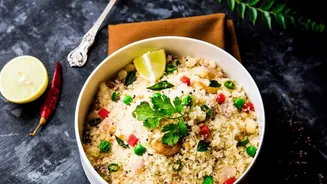
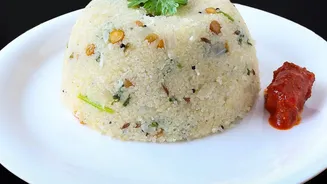
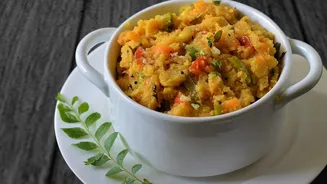
The Baseline: Classic Rava Upma
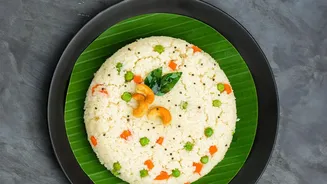
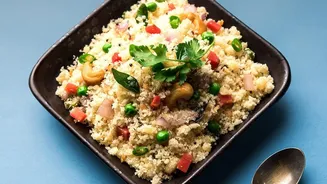
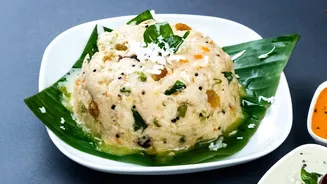
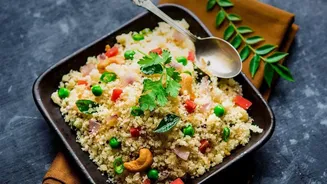
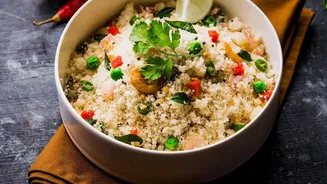
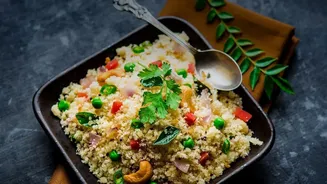
Before diving into regional variations, it's important to understand the foundation. The most common form of upma is made with dry-roasted coarse semolina, or rava. The classic preparation involves a tempering of mustard seeds, urad dal, chana dal, curry
leaves, and often green chillies and ginger in hot oil. Onions are sautéed until translucent before water is added. As the water boils, the rava is slowly stirred in to prevent lumps, cooking until it absorbs the liquid and becomes fluffy. Garnished with fresh coriander, this simple, savoury porridge is the comforting base upon which many other styles are built.
Karnataka: The Spicy Khara Bath
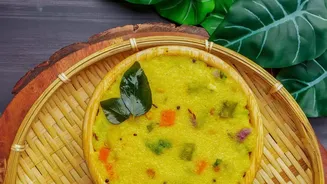
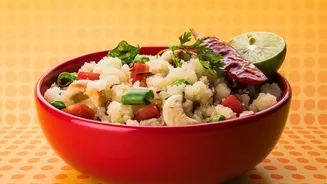
In Karnataka, upma is famously known as Khara Bath. What sets it apart is its bolder, spicier flavour profile and rich vegetable content. While standard rava upma can be mild, Khara Bath often includes a special masala powder, along with turmeric, giving it a yellowish hue and a more complex taste. It's typically loaded with finely chopped vegetables like carrots, beans, and peas. The texture is often softer and more moist compared to its drier counterparts elsewhere. A generous squeeze of lemon juice and a garnish of grated coconut at the end are classic touches that make this version a standout. It’s a full-bodied meal often served in 'darshinis' across the state, usually alongside a sweet version called Kesari Bath.
Tamil Nadu: The Rustic Arisi Upma
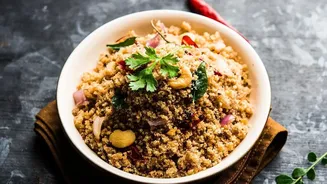
Moving to Tamil Nadu, the primary ingredient changes from semolina to rice. Arisi Upma, which translates to 'rice upma', is a traditional dish, especially popular in the Tamil Brahmin community. It is made by grinding raw rice and toor dal into a coarse, rava-like consistency. This mixture is then flavoured with whole black pepper and cumin seeds. The cooking process involves tempering spices in coconut oil, which imparts a distinct aroma and flavour. The rice-dal mixture is cooked in boiling water until soft and fluffy. The result is a more rustic and heartier dish with a wonderfully peppery kick, often served with coconut chutney or a tangy tamarind stew known as 'puli gotsu'.
Maharashtra: The Fluffy Kanda Poha
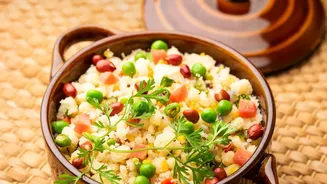
While Maharashtra also has its own version of rava upma, the state is more famous for a variation that uses flattened rice flakes, known as poha. Called Kanda Batata Poha, this beloved breakfast dish is a staple across the region. 'Kanda' means onion and 'batata' means potato, the two key ingredients. The poha is first rinsed to soften it, then added to a tempering of mustard seeds, turmeric, curry leaves, and green chillies. Sautéed onions, cooked potatoes, and often roasted peanuts for crunch are mixed in. The final dish is light, fluffy, and savoury, with a characteristic yellow colour from the turmeric. It's typically finished with a squeeze of lemon and a garnish of fresh coriander and sometimes grated coconut.
The Modern Twist: Bread Upma
Beyond regional grain-based variations, there's the ever-popular Bread Upma, a modern, resourceful take on the classic. This version is a quick-fix breakfast or snack found in homes across India. It’s made by tearing or cubing slices of bread, which are then tossed in a sautéed mixture of onions, tomatoes, and spices. The tempering often includes mustard seeds, curry leaves, and green chillies, similar to rava upma. Turmeric and sometimes a bit of red chilli powder are added for colour and heat. The bread cubes absorb the spicy and tangy flavours from the tomato-onion base, transforming into a soft yet slightly crisp savoury dish. It’s a delicious way to use up leftover bread and get a comforting, upma-like meal on the table in minutes.