






The Upcoming Price Adjustment
Honda Cars India has confirmed it will increase prices across its model range, including the popular City sedan and Elevate SUV, starting from August 1, 2026. The company attributes this move to rising input and operational costs, a common pressure point
across the automotive industry. While the exact variant-wise details are yet to be announced, this is not a flat hike; the revision will vary across different trims. This strategy allows Honda to selectively adjust pricing, potentially pushing customers towards higher-margin variants or models. This follows earlier price adjustments in 2026, underscoring the sustained cost pressures faced by manufacturers.
The Sedan vs. SUV Dilemma at Honda
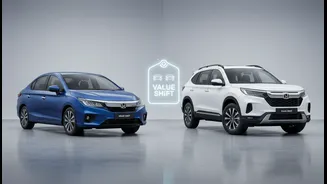
For years, the Honda City has been the go-to premium sedan, while the newer Elevate SUV has quickly become a strong contender in its segment. Before this hike, the pricing was distinct. The Elevate starts at a lower ex-showroom price (around ₹11.60 lakh) than the base Honda City (around ₹12.04 lakh). This gave the SUV an initial price advantage. However, top-end variants see a different story, with the fully-loaded City Hybrid costing significantly more than the top-spec Elevate. The impending price increase will likely shrink these gaps, especially in the mid-tier variants where the bulk of buyers make their choice. A price increase on certain Elevate variants could bring them closer to equivalently equipped City variants, forcing a direct comparison on space, features, and driving dynamics rather than just price.
How the City Stacks Up Against Rivals
The Honda City already commands a premium starting price compared to its main rivals like the Hyundai Verna, Volkswagen Virtus, and Skoda Slavia. For instance, the Verna and Virtus have more aggressive entry-level pricing. A further hike could make the City seem even more expensive, particularly for budget-conscious buyers. Where the City justifies its cost is through its refined engine, premium interior feel, and the availability of a highly efficient strong-hybrid powertrain, an option none of its direct competitors offer. The top-spec City Hybrid, however, is already the most expensive car in its segment by a wide margin, and any further increase will solidify that position.
The Elevate's Competitive Landscape
The Honda Elevate was launched into the fiercely competitive mid-size SUV market, going up against titans like the Hyundai Creta and Kia Seltos. Its pricing was strategic, undercutting some rivals in certain variants while offering Honda's signature reliability and a comfortable ride. The Creta and Seltos often have a slight edge on feature lists and powertrain options, including diesel and turbo-petrol engines, which the Elevate lacks. Interestingly, while Honda is increasing prices, the Elevate had significant discounts and benefits available in July 2026, including cash discounts and exchange bonuses, which temporarily made it a more attractive value proposition. The upcoming price hike could counteract these offers, tightening the race and making potential buyers weigh the Elevate’s robust suspension and spacious cabin against the feature-rich packages of its Korean competitors.
What This Means for Your Next Car Purchase
This price adjustment is more than just a numbers game; it reshuffles the value hierarchy. The narrowing price gap means a buyer cross-shopping between a mid-variant City and a mid-variant Elevate will have to think harder. Do they prioritize the classic, comfortable sedan experience and larger boot space of the City, or the high ground clearance and commanding road presence of the Elevate? The decision becomes less about which is cheaper and more about which lifestyle it fits. Against external competitors, the hike makes it crucial for buyers to compare the total cost of ownership, not just the ex-showroom price. While the City's starting price may move further from its rivals, its strong resale value and potential fuel savings from the hybrid model could balance the scales over a few years of ownership.